
The Cabinet has agreed to funding of €20 million for 400 beds on two sites to provide accommodation to refugees from Ukraine and people seeking international protection here.
The Government has not yet agreed where the accommodation will be, but sites under consideration are Thornton Hall and the Central Mental Hospital in Co Dublin, Knockalisheen Accommodation Centre in Co Clare, Columb Barracks in Mullingar and the Athlone Accommodation Centre.
Taoiseach Leo Varadkar said the €20m allocation was being used to refurbish "any building we can find to make it fit for people to live in."
He added the funding would also be used to look at five state-owned sites around the country as locations for small housing units of modular accommodation.
He said the sites would potentially take "thousands of people over the course of this year."
The Department of Integration said yesterday it is unable to offer accommodation to 187 international protection applicants.
In a statement the Government said accommodation had been sourced for almost 60,000 fleeing the war in Ukraine, in addition to 20,000 seeking asylum.
It said a programme of refurbishment of suitable buildings for the medium term is under way and a pilot initiative to provide rapid build houses is in progress.
Since 24 January some 282 people seeking international protection, who were previously without shelter, were subsequently offered accommodation.
"Government is stepping up action to maximise the pace and scale of delivery on this accommodation strategy," it said.
"An expanded programme of work has now been agreed by Government that will allow consideration of commercial properties and sites for development, refurbishment or purchase and the use of alternative modular buildings."
Separately, the Department of Housing is providing €50 million to refurbish a range of sites across the country for use by refugees from Ukraine.
It has also flagged to the Government that it may need a further supplementary estimate for more funds later this year.
The Cabinet has also been updated on steps to move staff from other agencies to the Department of Integration to speed up payments to hotels that have provided accommodation to refugees.
The total amount outstanding is more than €40 million.
The Government is also examining the possibility of using more temporary accommodation.
At present, it is planning to purchase modular accommodation with a 60-year life span, but is now considering buying homes with a 30-year life span in an effort to speed up delivery.
It is understood tents will also be provided on Columb Barracks which will then be replaced with Portacabins to house refugees.
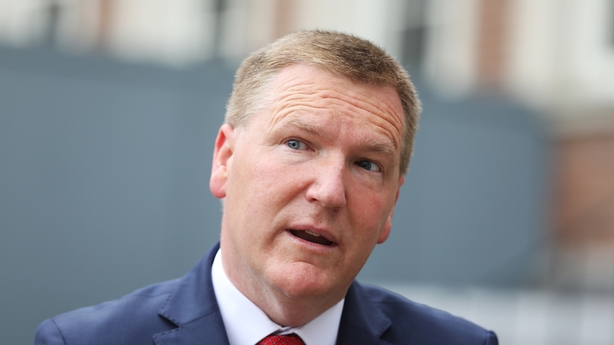
Minister for Finance Michael McGrath said the roll-out of additional measures to develop further sites for new accommodation will take place "in the months ahead".
However, he said he could not give a specific date as to when beds will be available.
Speaking on RTÉ's Morning Ireland, he said the system was "under pressure", adding that the Government will continue to add to the accommodation stock available around the country.
Minister for Enterprise, Trade and Employment Simon Coveney said that such incorporeal meetings aren't unusual as they happen every few weeks, when "we have something that's not controversial, where there's full support in Government and where there isn't a need for a long discussion or debate".
Mr Coveney said that was the case here.
He said this morning's meeting was to approve more funds to provide the right kind of accommodation for refugees and asylum seekers who are coming to Ireland and need government supports.
Mr Coveney added that it was about ensuring the Government was doing all it could to support asylum seekers, and in particular those fleeing war in Ukraine.
Ireland has a moral obligation to support predominantly women and children who are fleeing the brutality of the Russian invasion of Ukraine, he said, and that takes resources.
Further electricity credit not ruled out this year
Separately, Mr McGrath also said the Government was not ruling out a further electricity credit later in the year.
He said he believes they should retain resources for later in the year in the event that they are "needed".
"We haven't ruled out further electricity credit or further assistance later in the year, but we do believe that we should retain resources and have firepower for later in the year in the event that we need it," he told the programme.
We need your consent to load this rte-player contentWe use rte-player to manage extra content that can set cookies on your device and collect data about your activity. Please review their details and accept them to load the content.Manage Preferences
It comes after Taoiseach Leo Varadkar said last night that another energy credit over the winter months has not been ruled out.
Mr McGrath said energy customers should be treated "fairly and equally", and reductions in prices for wholesale energy should be passed on to consumers.
"It didn't take very long for the prices to go up when wholesale prices increased and now that they have come back down, we do need to see those reductions being passed on to customers who are under pressure because all of this can't fall on the Government," he said.
"We haven't ruled out a further electricity credit or further assistance later in the year," Minister for Finance Michael McGrath told RTÉ's Morning Ireland pic.twitter.com/1pDKzUpE3k
— RTÉ News (@rtenews) March 3, 2023
Mr McGrath said the rise in inflation in Ireland seen last month is not out of line with other countries.
The minister said the rise is explained by an unwinding of seasonal factors and the Government’s overall assessment on inflation is unchanged.
He said inflation will fall across the year, particularly from quarter two onwards.
"At the Budget time last year, we forecast that it would come in at over 7% across 2023," he said.
"We will be revising that downwards when we publish the stability programme update next month.
"If we were doing that today, we will be forecasting is between 4 and 5% across the year."
Additional reporting: Laura Fletcher