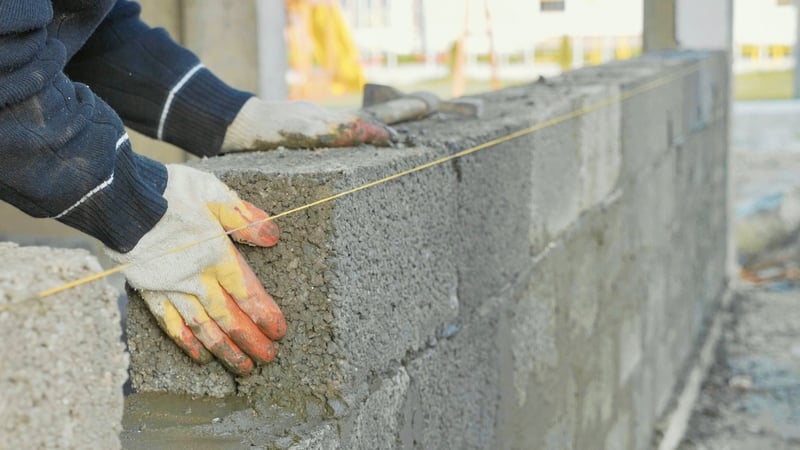

The concrete block levy will challenge the viability and affordability of construction projects, including new homes, an Oireachtas committee has heard.
Appearing before the Oireachtas Finance Committee, the Society of Chartered Surveyors Ireland (SCSI) warned that the 5% concrete block levy will add approximately €1,200 to the cost of building a three-bed semi-detached house.
This comes at a time when the price of concrete has already increased by around 37% in the year up to September, the SCSI told members.
However, these figures were different to those supplied by the Department of Finance. Representatives told members that the levy would add between €700 to €1,100 to the overall development cost of a typical three-bed semi-detached house.
Seán Armstrong, head of residential construction cost and innovation in the Department of Housing, explained that the estimation was based on prices in September.
A 10% concrete block levy was first announced in Budget 2023, as a way of raising funds for redress schemes for defective buildings.
However, given concern around the impact it could have on the cost of construction, the levy was revised down to 5% and will take effect in September 2023.
The SCSI recommended that "consultation with the industry is commenced to discuss workable solutions to meet Government's stated objectives whilst ensuring the delivery of much needed homes in the public interest".
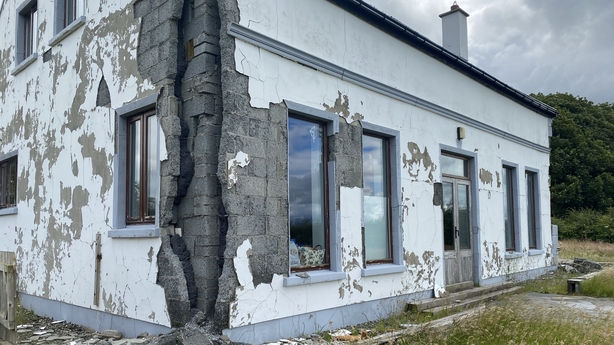
The Mica Action Group told the committee that the levy will also hit homeowners awaiting redress for defective homes.
Mica-affected homeowners have already criticised the redress scheme for not going far enough in helping them meeting reconstruction costs.
Chair of the group Lisa Hone said that construction inflation and the concrete levy will only exacerbate that situation.
Ms Hone also said that the redress scheme is still not operational, forcing families to continue living in dangerous properties.
She described the concrete block levy as a "smoke screen", as it did not target those responsible for the defective blocks.
Meanwhile, Mick Barry, Solidarity-PBP TD, accused the construction industry of trying to "wash its hands" of what happened in relation to the use of defective blocks, with future homeowners left to pick up the bill.
Mr Barry asked if companies involved in the construction of buildings with Mica, Pyrite or defects had been expelled from the Construction Industry Federation.
CIF Director General Tom Parlon said that he was not aware of any members involved in a "mica situation".
He added that while pyrite was a problem in the past, it had been "remedied".

Sinn Féin finance spokesperson Pearse Doherty was told that people who source blocks from Northern Ireland will also have to pay the concrete block levy and will be required to self-declare the value of the concrete products used through the Revenue website.
"There'll be some craic with this in the border counties," he told the committee.
Committee Chair John McGuinness also raised concern around the arrangement.
"How in the name of god are you going to police a fella bringing a load of blocks for a house across the border or cement", he asked representatives from Revenue.
Jackie O'Callaghan of Revenue explained that when a project begins, a commencement notice must be put in place, which becomes a public record.
Ms O'Callaghan added that there will be "risk profiling", as is the case with any similar levy or tax.