


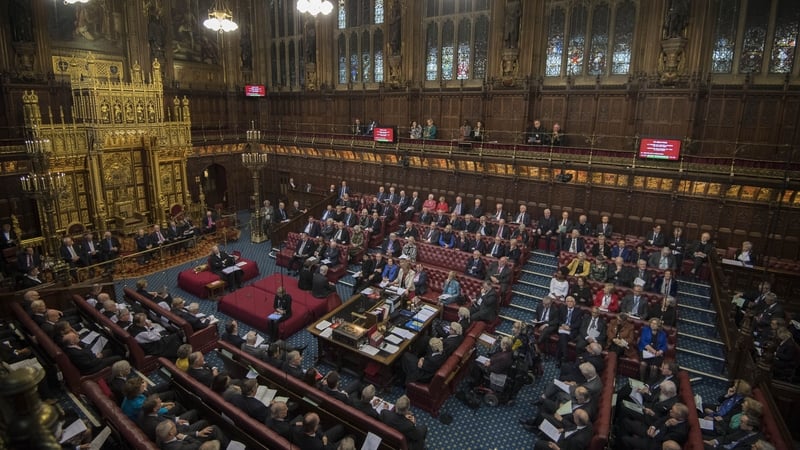
A centuries-old element of Britain's parliament has come to an end as hereditary peers took their seats in the House of Lords for the final time.
The Labour government has axed the 92 spots in the unelected upper chamber reserved for peers who inherit their position as a member of an aristocratic family.
They held titles such as dukes, viscounts, and earls, and their presence in parliament stretches back to its thirteenth century origins, with the peers meeting as a distinct house since the fourteenth century.
MPs approved their departure last month and it took effect today when the current parliamentary session ended ahead of local elections next week.
Speaker of the Lords Michael Forsyth paid tribute to those losing their seats.
RTÉ Archives: Irish Peer Lord Dunboyne in 1965
We need your consent to load this rte-player contentWe use rte-player to manage extra content that can set cookies on your device and collect data about your activity. Please review their details and accept them to load the content.Manage Preferences
"At the conclusion of this session, those noble lords who sit by virtue of hereditary peerages will cease to be members of this house," he said.
"On behalf of the house, I pay tribute to their distinguished service and offer them our sincere thanks."
Lesotho in southern Africa was the only other country in the world with a hereditary element in its legislature, according to the UK government.
Prime Minister Keir Starmer's administration has called the reform "one of the biggest ... in a generation".
The Lords comprises around 800 members, most of whom are appointed for life.
They include former MPs, typically appointed by departing prime ministers, along with people nominated after serving in prominent public- or private-sector roles.
Senior Church of England clerics, including the Archbishop of Canterbury, also sit in the chamber.
Several existing hereditary peers were made life peers recently to allow them to continue to sit.
Former prime minister Tony Blair removed 600 hereditary peers in the late 1990s, but 92 were retained in what was supposed to be a temporary compromise.
The primary role of the upper chamber is to scrutinise the government.
It cannot override legislation sent from the elected House of Commons, but it can amend and delay bills and initiate new draft laws.
MPs and peers will return to parliament on 13 May for the King's Speech, when the government will lay out its legislative plans for the next year.
