


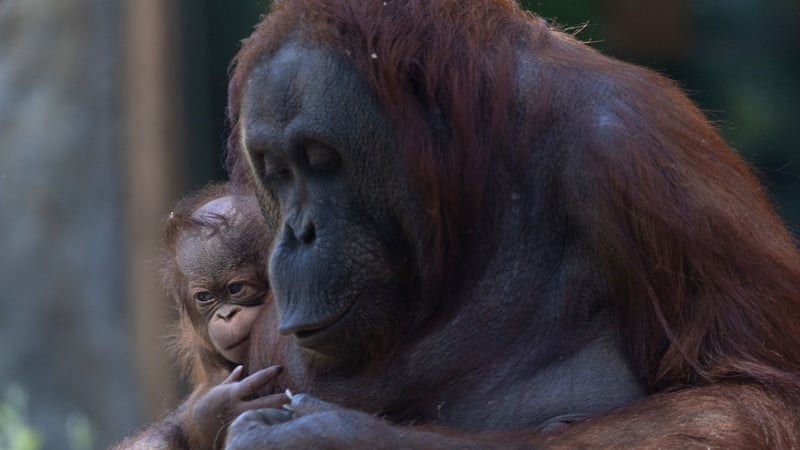
A critically endangered Borneo orangutan has been born at Madrid's zoo, described by keepers as strong and developing normally.
After an eight-and-a-half-month pregnancy, mother Surya gave birth to a male weighing about 1.5kg on 2 April, the Madrid Zoo Aquarium said in a statement.
The zoo released a video showing Surya cradling the newborn, which will be named through a public vote from a list of options proposed by the caretakers.
Surya has now given birth to four offspring, with keepers describing her maternal care from the outset as exemplary, and the baby feeding regularly, a key indicator of healthy development.
"When the baby is nursing, everything stops. She stays completely still until he finishes, and only then moves to eat or do anything else. She is a real supermom," said Maica Espinosa, a primate keeper at the zoo.
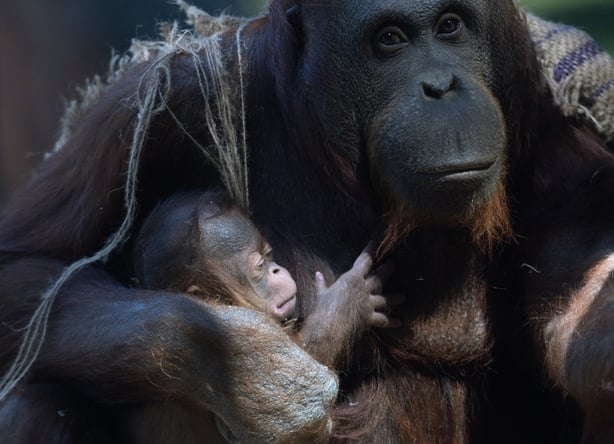
Orangutans usually give birth to a single baby or occasionally twins. They give birth, at the most, once every six years, and the interval between babies can be as long as 10 years.
The International Union for Conservation of Nature classifies Bornean orangutans - known for their dark brown fur and gentle temperament - as "critically endangered", citing rapid habitat loss and illegal wildlife trade as major threats.
The species lives in the wild only on the Indonesian island of Sumatra and on the island of Borneo, which is divided among Indonesia, Malaysia and Brunei.
