


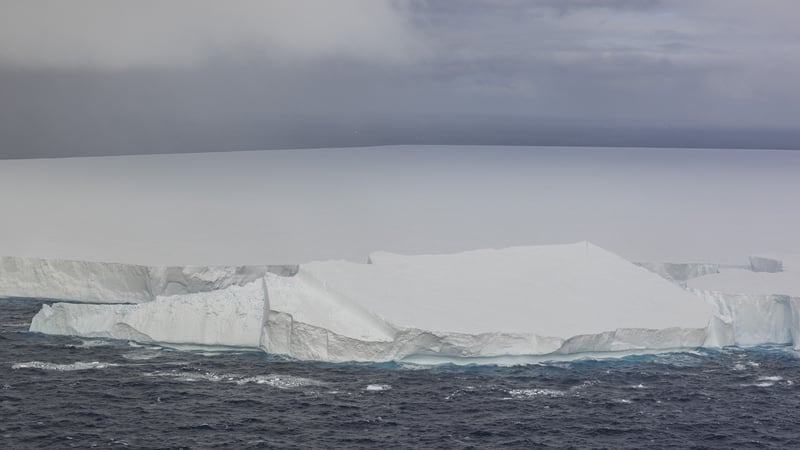
One of the oldest and largest Antarctic icebergs on the planet has begun to break apart as it enters warmer water.
Dr Michelle McCrystall, climate scientist who specialises on polar climates with Maynooth University, said that it is one of the longest known living icebergs.
The iceberg, called A23a, broke off from Antarctica's Filchner-Ronne Ice Shelf in 1986 and spent the first 30 years grounded and remained fairly intact.
It began to move in 2010 and has been moving closer towards the equator since.
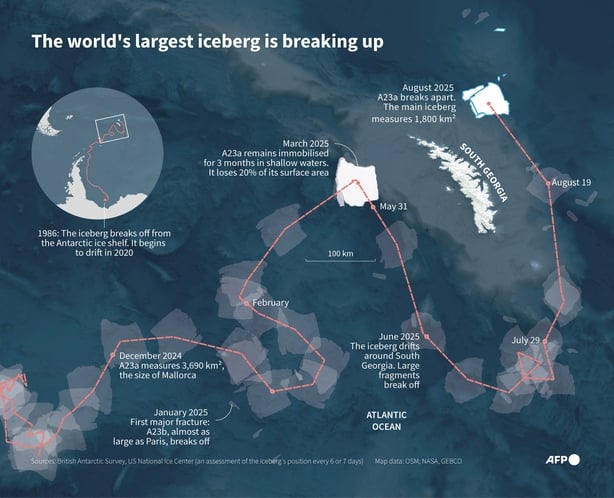
It has been melting from above and has been disintegrating quite a bit in recent weeks as it enters warmer water, Dr McCrystall explained.
It is now starting to break apart as water is going through the iceberg and causing cracks and is having both a positive and negative impact on the ocean’s ecosystem as it moves.
She said that movement and breakdown is a natural part of the life cycle for the iceberg, so it is not necessarily a climate change related impact but ice shelves are in a mass decrease globally.
She said that even if they cannot say for definite whether it is climate change-related, it brings interest back to what is happening in Antarctica.
