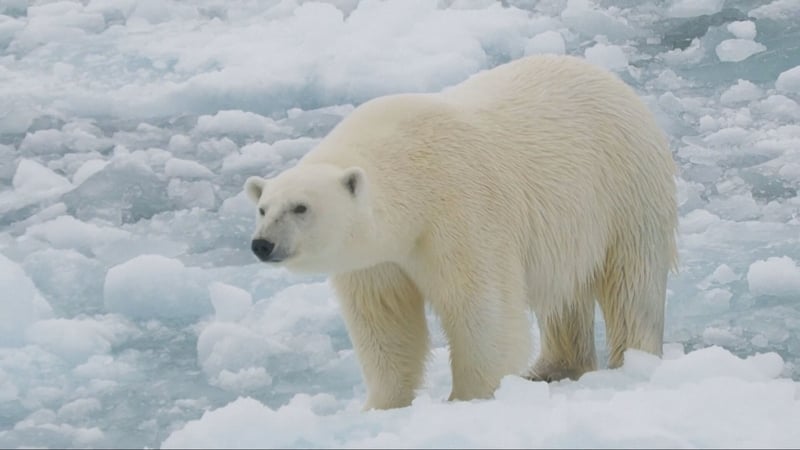
Adult polar bears around Norway's Svalbard archipelago have become fatter on average over the past two decades even as Arctic sea ice has shrunk, according to a new study.
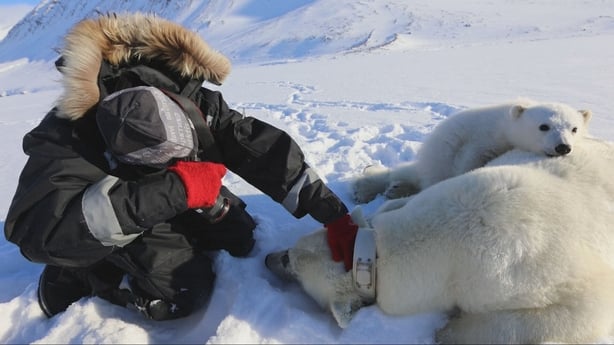
Researchers led by Jon Aars, a senior researcher at Norway's Norwegian Polar Institute, analysed 1,188 body measurement records from 770 adult polar bears captured on Svalbard between 1992 and 2019, and compared the animals' body composition index - a proxy for fat reserves and overall condition - with the number of ice‑free days in the surrounding Barents Sea region.
They found ice‑free days increased by about 100 over the 27‑year period, or roughly four days a year, yet the mean body condition of the adult bears improved after 2000, indicating rising fat reserves despite declining sea ice.
"They gained body weight for the last two decades of this period, rather than losing body weight," Mr Aars said.
He added: "It's a positive thing. And there are several studies showing the importance of being fat... If females are below a certain threshold in body weight in fall, they just won't be able to reproduce."
The authors said the pattern could reflect a rebound in land‑based prey previously over‑exploited by humans, such as reindeer and walrus. They also suggested that as sea ice retreats, prey like ringed seals may concentrate in smaller remaining areas of ice, potentially making hunting more efficient.
The team cautioned that further sea‑ice losses could still harm Svalbard bears by forcing longer travel distances to reach hunting grounds, as observed in other polar bear populations, and said more research is needed on how different groups will respond to a warming Arctic.
"We think there will be a threshold. We do think that in the future, at some stage we will see the bears starting to get thinner. So the good news is that we're not there yet. The bad news is we think we will get there," added Mr Aars.