


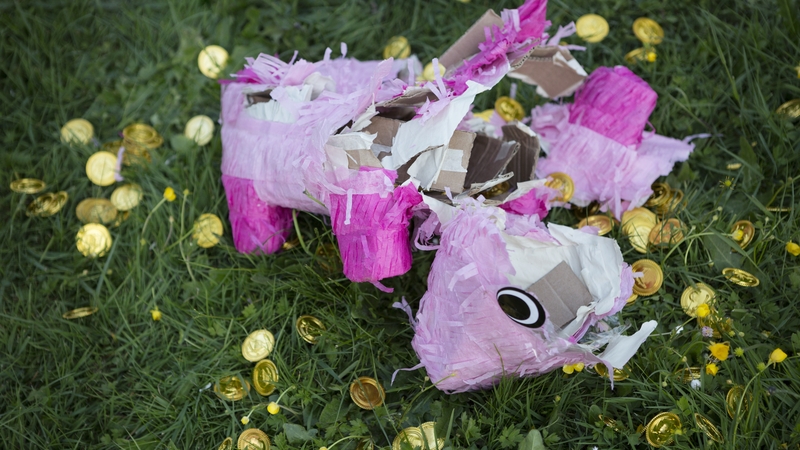
The humble piñata has become one of the latest targets to take a whacking in US President Donald Trump's trade war.
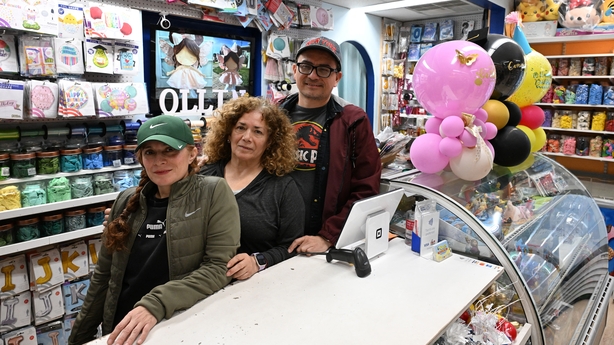
Party store owner Patricia Loperena said she has supplied fewer parties this year than last, which means she is selling fewer of the colourful candy-filled papier mache favours at her southern California establishment.
Another blow to Ms Loperena's business? The rising cost of the raw materials to make trinkets and custom piñatas, a traditional game of children's parties in Latin America that are now popular in much of the United States.
"People stop spending. Instead of, like, making a bigger party, they make it a lot smaller," the 45-year-old said.
Prices are jumping, and that has customers on edge. "They just know there's a lot of unpredictability, and they just want to be cautious," she said.
They are spending less overall because of jitters over how Mr Trump's policies will unfold.
Ms Loperena is worried about Mr Trump's new tariffs, too -- especially the outright trade war under way with China.
To adjust and help protect Ollin Party Store in this Los Angeles suburb, Ms Loperena has already placed supply orders early to get ahead of the tariffs and build up inventory.
That may help keep her prices stable for a few months but Ms Loperena's supplier, based in the United States, selling imported products, has already warned that the next order will be pricier.
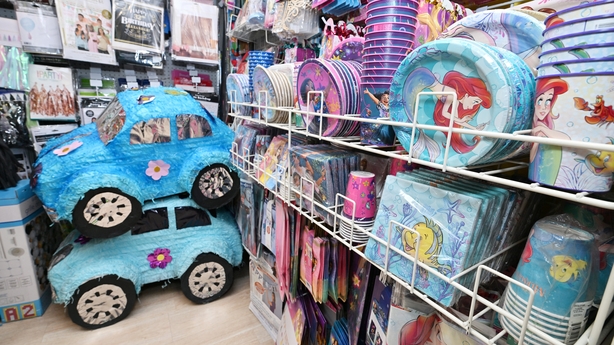
Most of the napkins, plates, balloons and other goods in her store are labelled "Made in China".
Some might say tariff policy has been a piñata-esque moving target under Mr Trump, chaotic swings followed by an economy that has taken a beating.
On what he called "Liberation Day" in early April, Mr Trump dramatically hiked levies globally, standing with a chart of country-specific tariff rates to announce a new era.
He threatened allies and close trading partners like Canada and Mexico.
Then he slapped tariffs on much of the world, including triple-digit ones against China.
President Trump has since lessened many of the immediate levies to 10%, saying a 90-day suspension was needed to negotiate.
That leaves American business owners dangling in suspense to see what happens next.
In the San Fernando Valley, many small businesses like Ms Loperena's are already struggling to compete with online outlets.
Service providers and retailers all depend on imports to one extent or another, for parts or products.
"Everything comes from overseas, from China, Taiwan and stuff," said Angel De Luna, who runs a store that sells sewing machines and vacuum cleaners.
For this 28-year-old taking over his father's shop, which survives not so much on sales but on repairing and servicing appliances people already own, the tariffs are shaping up to be the last straw.
"We're just hanging in there the best we can," said Mr De Luna. "But it's probably going to get worse."
The service sector is not immune either to Mr Trump's trade war, and neither are his supporters.
While the President says he is fighting unfair trading practices to erase trade deficits, many are bracing for bad economic news.
OJ Longmire, 46, owns a popular barbershop and beauty parlour in the valley and says tariffs hurt him too.
"It definitely affects us all. You know, supplies, everything here on my station. Clippers. I don't believe this is American-made," he said, pointing to the equipment, gels and lotions he works with to do people's hair.
Marcos Ochoa, owner of a small hardware and gardening products store, said people are "going crazy" with tariff uncertainty.
"Because we don't know what to expect. You don't know if you're going to buy at higher prices," said Mr Ochoa.
Mr Ochoa, who imports his products mainly from Japan and Europe, said his costs have not yet risen and it is too early to say what the future holds.
But he has advice for President Trump.
"He needs to stop and think what he's gonna say or what he's gonna do before he acts, like, automatically," said Mr Ochoa.
He voted for Trump in the belief it would be good for business. Now, he has his doubts.
"He was good four years ago," Mr Ochoa said.
"Now I don't know. He's making a lot of enemies, that's for sure," he added.
