


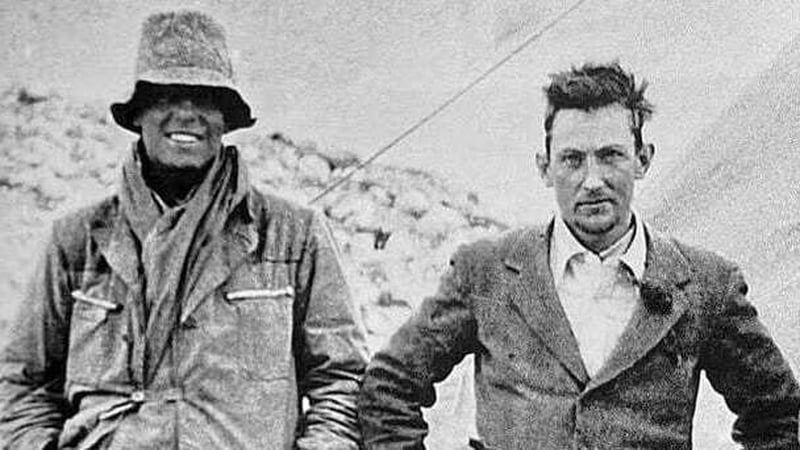
A documentary team discovered human remains on Mount Everest apparently belonging to a man who went missing while trying to summit the peak 100 years ago, National Geographic magazine has reported.
Climate change is thinning snow and ice around the Himalayas, increasingly exposing the bodies of mountaineers who died chasing their dream of scaling the world's highest mountain.
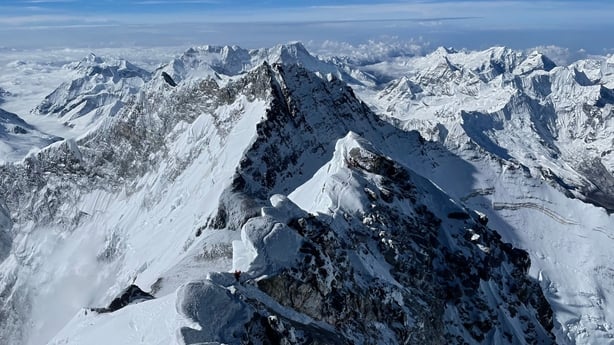
British mountaineer Andrew 'Sandy' Irvine went missing in 1924 alongside climbing partner George Mallory as the pair attempted to be the first to reach Everest's summit, 8,848 metres above sea level.
Mallory's body was found in 1999 but clues about Irvine's fate were elusive until a National Geographic team discovered a boot, still covering the remains of a foot, on the peak's Central Rongbuk Glacier.
On closer inspection, they found a sock with "a red label that has A.C. IRVINE stitched into it", the magazine reported.
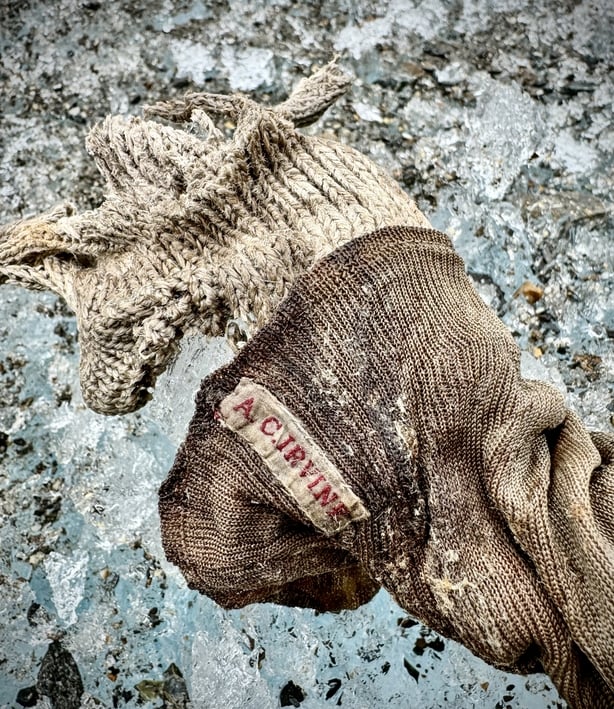
The discovery could give further clues as to the location of the team's personal effects and may help resolve one of mountaineering's most enduring mysteries: whether Mr Irvine and Mr Mallory ever managed to reach the summit.
That could confirm Mr Irvine and Mr Mallory as the first to successfully scale the peak, nearly three decades before the first currently recognised summit in 1953 by climbers Edmund Hillary and Tenzing Norgay.
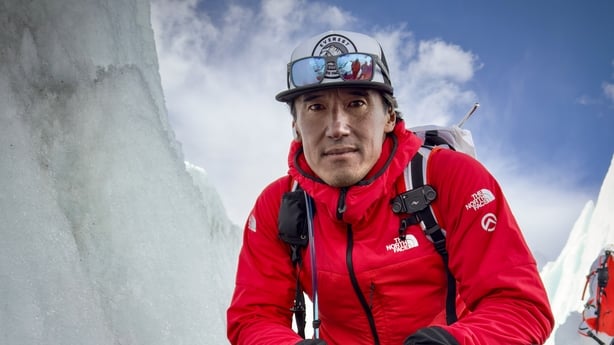
Climb team member and National Geographic Explorer Jimmy Chin said: "Sometimes in life, the greatest discoveries occur when you aren't even looking.
"This was a monumental and emotional moment for us and our entire team on the ground, and we just hope this can finally bring peace of mind to his relatives and the climbing world at large."
Irvine's great-niece and biographer, Julie Summers, said she had been "moved to tears" when she found out about the discovery.
"I have lived with this story since I was a seven-year-old when my father told us about the mystery of Uncle Sandy on Everest," she said.
"The story became more real when climbers found the body of George Mallory in 1999, and I wondered if Sandy's body would be discovered next.
"A quarter-of-a-century after that discovery, it seemed extremely unlikely that anything new would be found.
"When Jimmy told me that he saw the name AC Irvine on the label on the sock inside the boot, I found myself moved to tears. It was and will remain an extraordinary and poignant moment."
Listen: RTÉ Documentary on One: The Lost Mountaineers
Professor Joe Smith, director of the Royal Geographical Society, said of the discovery: "As joint organiser of the 1924 Everest expedition (with the Alpine Club), the society deeply appreciates the respect Jimmy Chin's team has shown Sandy Irvine's remains and their sensitivity toward Sandy's family members and others connected to that expedition.
"Sandy was an exceptional figure and made a significant contribution to our understanding of Everest and the Himalaya."
An Irvine family statement said: "We are grateful to the mountaineering and film team, led by Jimmy Chin, who made the discovery and who have treated it with respect and professionalism."
Members of the Irvine family reportedly offered to share DNA samples to confirm the identity of the remains.
Irvine was 22 when he went missing.
He, along with Mallory, was last spotted by one of the members of their expedition on the afternoon of 8 June, 1924, after beginning their final ascent to the summit that morning.
Irvine is believed to have been carrying a vest camera - the discovery of which could rewrite mountaineering history.
More than 300 people have perished on the mountain since expeditions started in the 1920s.
Some are hidden by snow or swallowed down deep crevasses.
Others, still in their colourful climbing gear, have become landmarks en route to the summit and bestowed with gallows humour nicknames, including "Green Boots" and "Sleeping Beauty".
Additional reporting PA
