


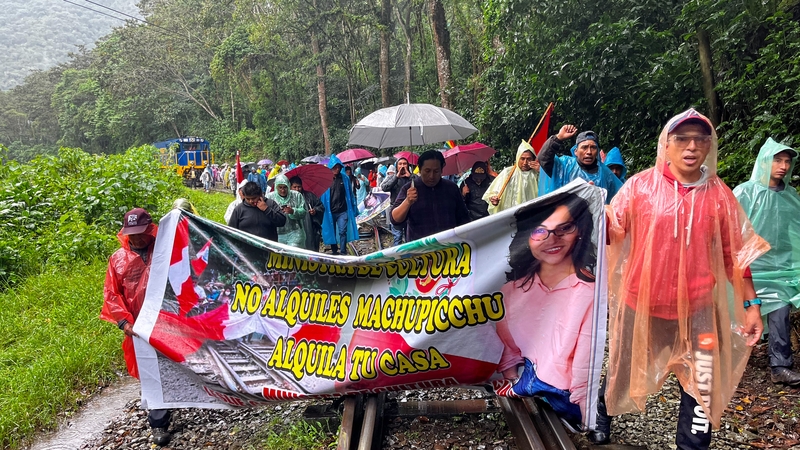
Visitors to Peru's iconic Machu Picchu site were met by protesters angry with the government for privatising ticket sales at the Inca citadel.
Tour operators and residents closed shops in protest and blocked the tracks of a tourist train, compelling those on board to walk the remaining 3km to the entrance.
"We are against the systematic privatisation of Machu Picchu. The people are not in agreement; this (ticketing) company was contracted illegally," community representative Darwin Baca told AFP.
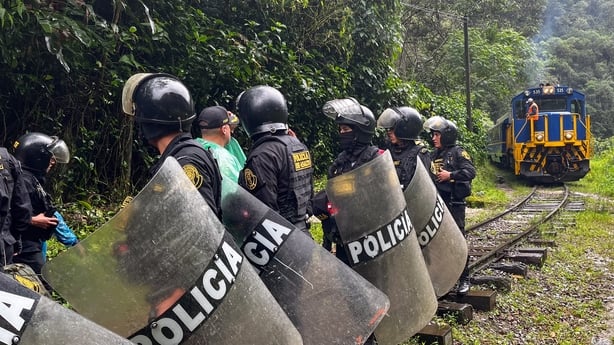
As evening fell, police used tear gas to disperse a group of protesters blocking the railway line, according to an AFP reporter at the scene. Authorities have not reported any arrests.
Tourists saw their itineraries disrupted by the protest, but the Ministry of Culture said on social media that visits to Machu Picchu took place "with complete normality."
A local collective claims the company granted the contract for ticket sales, Joinnus, will make as much as $3.2 million (€3m) per year in commissions.
"There is no privatisation. We have to ensure absolute control of all the people who enter our citadel" because of the effects of heavy tourist traffic on the site, said Ana Pena, an advisor to the Ministry of Culture, at a news conference.
"There is a risk that Machu Picchu will be removed from the UNESCO World Heritage list," she added.
Last September, Peru temporarily closed three sectors of Machu Picchu due to the impact of the heavy volume of visitors at the site.
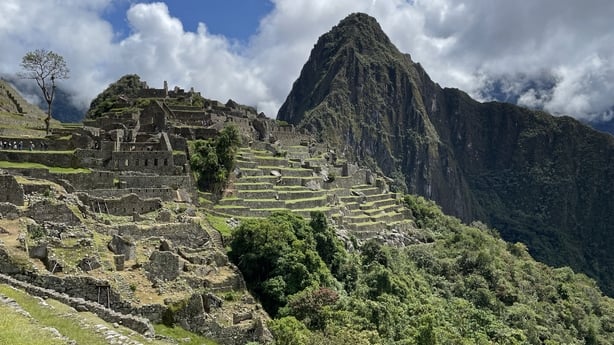
Machu Picchu, 130km from the city of Cusco, was built in the 15th century at an altitude of 2,500m on orders from the Inca ruler Pachacutec.
It is considered a marvel of architecture and engineering and was declared a UNESCO World Heritage site in 1983.
Tourism is key to Peru's economy, with the country attracting about 4.5m visitors prior to the Covid-19 pandemic in 2020.
The number of daily access tickets to the citadel was increased to 4,500 per day starting this month, from an earlier maximum of 3,800.
