

The heirs of the former Prussian monarchy have announced they are dropping claims seeking the return of and compensation for thousands of artworks and artefacts from the German state.
The head of the Hohenzollern family, descendants of the last German emperor and king of Prussia, Kaiser Wilhelm II, made the announcement at a conference, ending a long legal battle.
The family had been fighting for years to recover treasures confiscated by the Soviets in 1945.
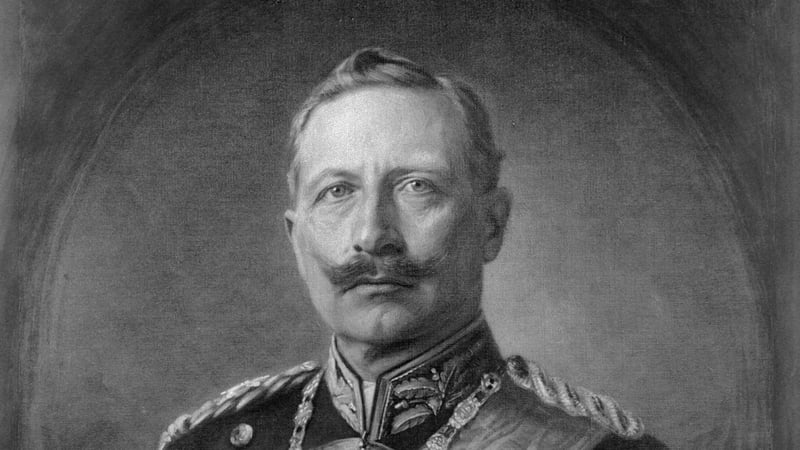
Kaiser Wilhelm II was instrumental in causing the outbreak of World War I, but the key question in the legal dispute was what role the family played when the Nazis came to power.
Under a 1994 law, people whose property was expropriated by the Soviet Union have a right to claim compensation - but only if they did not "lend considerable support" to the Nazi regime.
Georg Friedrich Ferdinand, the great-great grandson of Wilhelm II, acknowledged that his ancestor "sympathised with the Nazis at times".
"Let me make it clear - anyone who panders to right-wing extremism cannot be a tradition bearer for the House of Hohenzollern.
"I have therefore decided to forego the restitution of around 4,000 art works as well as the associated payment under the compensation act," he told a history conference in Berlin.
The artefacts and other riches lost behind the Iron Curtain came back into reach for the Hohenzollern family with the fall of the Berlin Wall.
Family representatives and cultural foundations have held secret negotiations on their compensation and restitution demands since 2013.
The Hohenzollerns family's history has been linked with Germany's for almost a millennium.
They were kings of Prussia from 1701 and then ruled the German Empire from 1871 until Wilhelm II was forced to abdicate in 1918, going into exile after Germany's defeat in World War I.
The Prussian royals were initially stripped of their properties without compensation, but a deal on the monarchy's assets was later worked out under a 1926 law.
The imperial family received millions of Deutschmarks and kept dozens of castles, villas and properties, mainly in and around Berlin but also as far away as modern day Namibia.
However, Soviet occupation following World War II and subsequent communist rule led to additional expropriations.
