

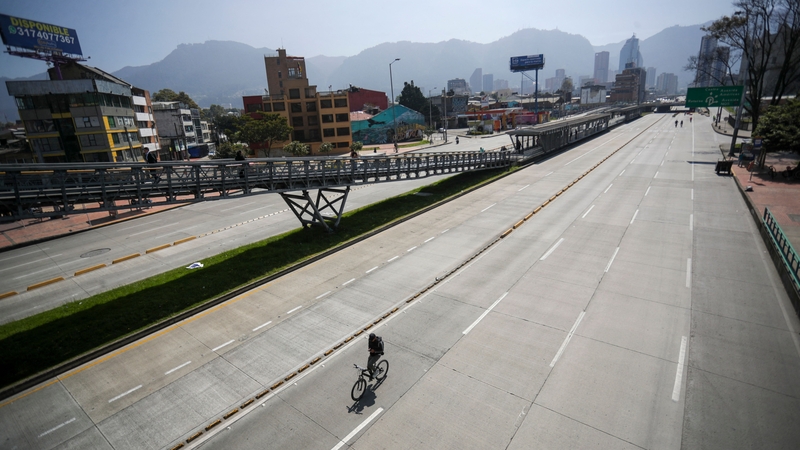
Drivers in Bogota left their cars at home on Thursday (2 February), finding alternative means of getting around as part of a campaign to encourage cleaner forms of transportation during the Sustainable Mobility Week.
The streets of the normally bustling Colombian capital were quiet as an estimated 1,850,000 privately-owned vehicles and 430,000 motorbikes that pack the streets daily were left in their parking spaces, contributing to the reduction of the carbon footprint produced by fossil fuels.
Some people opted for riding bikes in Bogota, which has an extensive network of paths first installed to ease traffic and pollution.
The Car-Free Day reduces the particulate matter of the city by 57% and avoids emitting 7600 tonnes of CO2, Carolina Urrutia, Bogota's Secretary of Environment told Reuters.
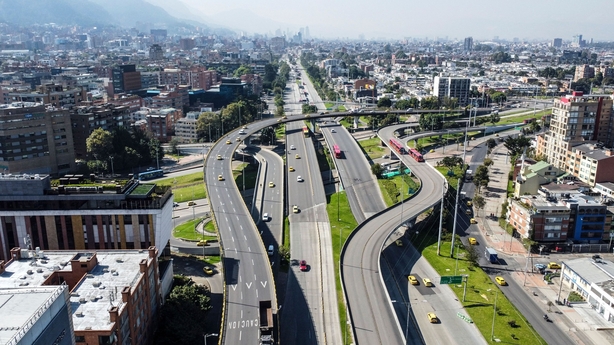
"In Bogota more or less 23% of the emissions of particulate matter, the pollutant that affects people's health, comes from the vehicles on the roads, all kinds of vehicles, and more or less 47%, almost 50% from our greenhouse gas emissions, the ones that cause climate change, also come from road transport. This day is an opportunity to learn to mobilise the way we want in the future in this city," she said.
Luis Fernando Martinez, a local, said not using a car has a positive effect, "I think it certainly contributes to the improvement of the environment, however it can be complicated for those who make their livelihoods from mobility in vehicles. I choose to ride my bike today and I had a very nice time."
Another local, Daniel Morales, shared in the enjoyment of the day, "It's a good day to decontaminate the city, I think it is necessary because of the emissions and the saturated traffic condition.
"The frequency of the car-free day should be increased, but on the other side of the scale, public transport should be improved so that people who use alternative means of transportation can do so with peace of mind."
