


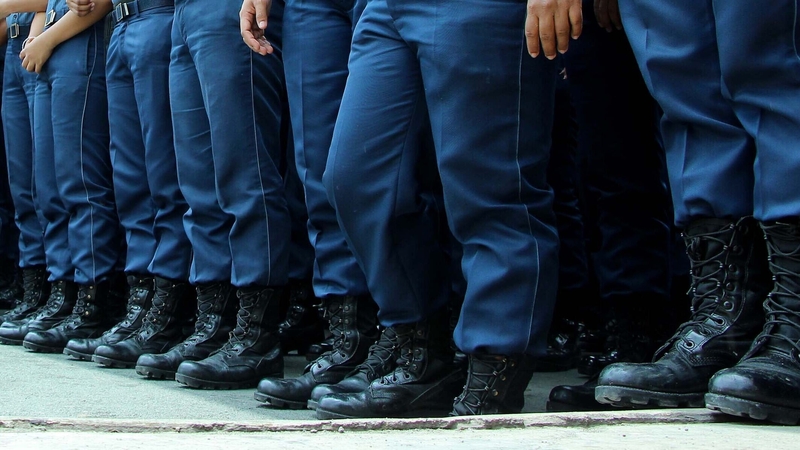
The Philippine police force has dropped a requirement for officers seeking promotion to meet body fat targets.
Expanding waistlines have been a hefty problem among police in the Southeast Asian country for years. A 2019 study showed almost 35% of personnel were overweight and nearly 10% obese.
Rules introduced at the start of the pandemic by former police chief Debold Sinas, who publicly acknowledged his own efforts to shed kilos through diet and exercise, made it compulsory for the 220,000 members of the force to exercise daily and submit monthly body mass index (BMI) readings.
Officers seeking to rise up the ranks were blocked if they failed to meet BMI targets, said personnel head Major General Rolando Hinanay.
In a memo to his recently appointed boss, police chief General Guillermo Eleazar, Maj Gen Hinanay called for the rule to be suspended.
He argued Covid-19 restrictions had made it difficult for officers to work out and lose weight.
"As a result, many personnel were disqualified for promotion," he said.
Gen Eleazar confirmed to reporters he had approved the request.
Officers are supposed to have a BMI of between 18.5 and 27, depending on their age, to qualify for service.
Generally a BMI of between 18.5 and 24.9 is considered a "healthy weight", though the system has been criticised for not taking factors such as relative muscle mass into account, which means people with an athletic physique can be categorised as overweight or obese despite having low levels of body fat.
A petition filed by disgruntled officers had argued the policy was "detrimental" and "a form of discrimination to personnel who are above normal BMI".
In the past officers have been sent to training camps or assigned to less desirable posts to shame them into losing weight.
