


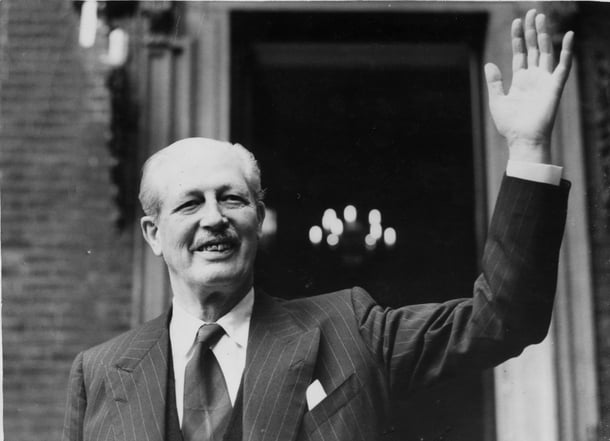
Britain makes its first formal application to join what was then the European Economic Community, under Conservative prime minister Harold Macmillan.
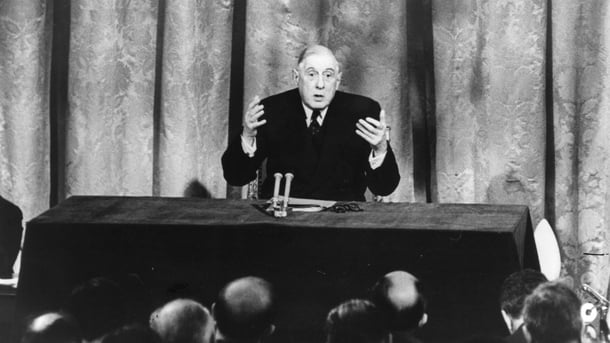
French president Charles de Gaulle vetoes the application, saying Britain is not ready.
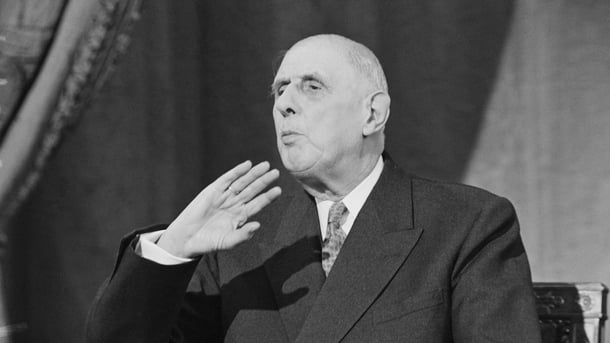
De Gaulle again vetoes Britain's attempt to join.
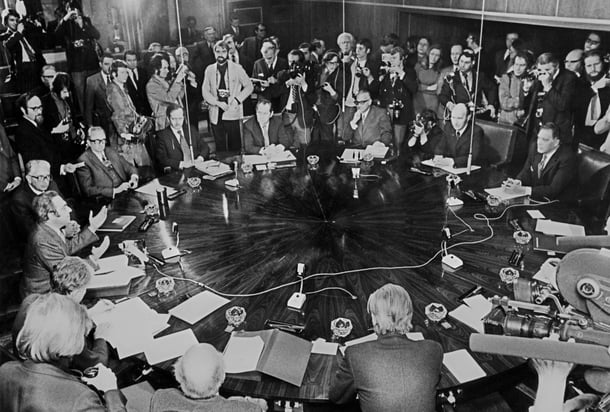
Britain finally gains membership to the EEC, at the same time as Ireland and Denmark, after De Gaulle has left office.
.
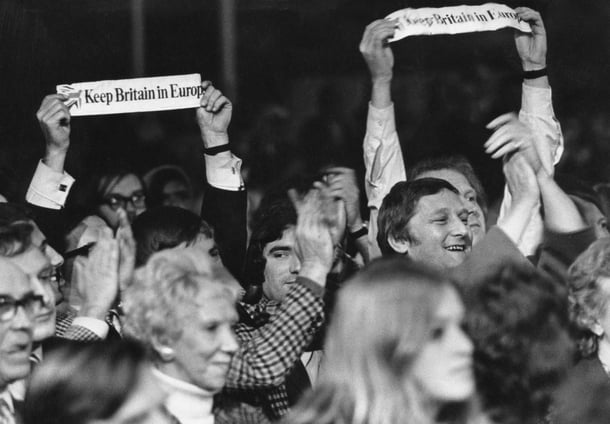
In a referendum on continued membership of the EEC, Britain votes 'Yes' by slightly more than 67%.
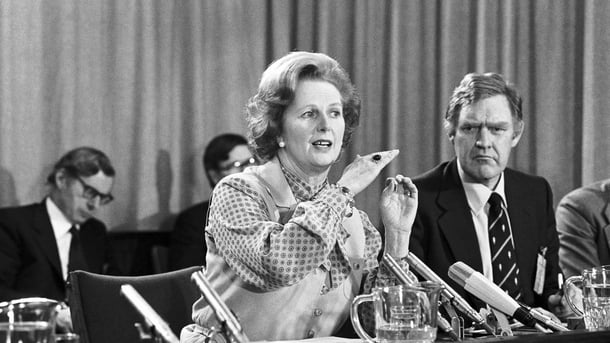
Conservative prime minister Margaret Thatcher demands a rebate on Britain's contribution to the European budget in a speech which became best known for a phrase attributed to her as: 'I want my money back!'
Thatcher is forced to resign. Her growing euroscepticism is seen as a contributing factor as many felt it was lowering Britain's influence in Europe.
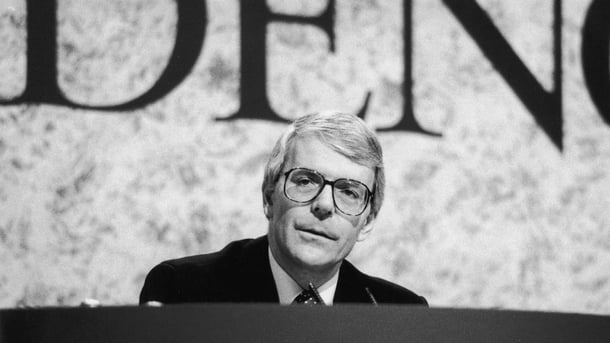
Tory prime minister John Major sees off party critics by holding a confidence motion in his government over the Maastricht Treaty, after serious Conservative Party infighting over Europe. He is caught on camera calling eurosceptic ministers plotting against him 'b***ards'.
Prime minister David Cameron promises a referendum on EU membership if his party wins the next general election.
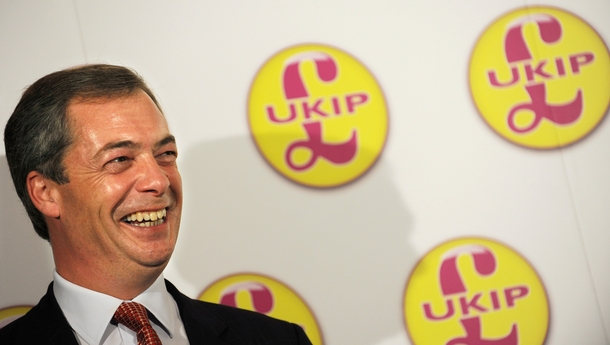
The anti-EU UK Independence Party tops the poll in European Parliament elections with more than 26% of the vote, securing 24 seats.
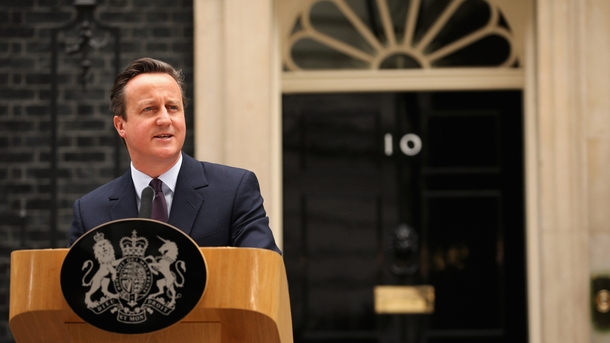
Cameron's Conservatives win a surprise outright majority in the general election, clearing the way for a referendum.
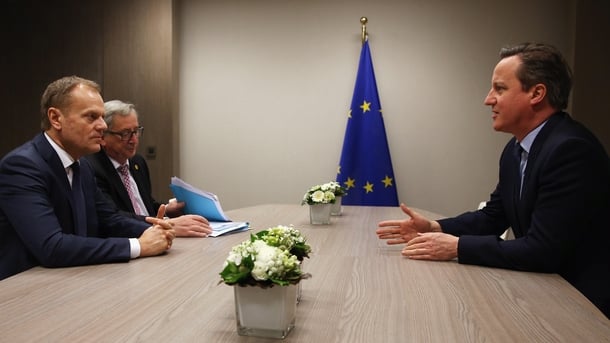
After negotiating reforms at a summit in Brussels, Cameron announces the referendum will be held on 23 June 2016.
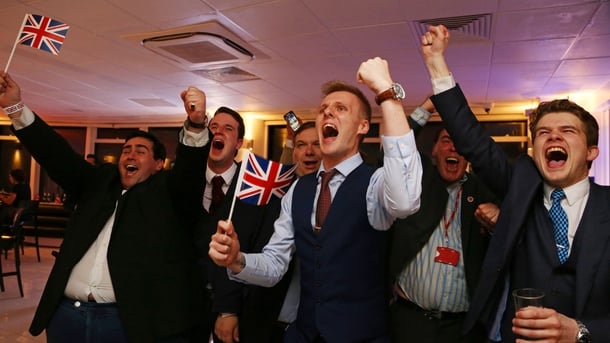
Britain votes to leave the European Union, by a margin of 51.9%-48.1%. However, divisions emerge from the outset, with Scotland and Northern Ireland voting heavily to remain, while England and Wales vote leave. Even within England there are significant regional differences, with London voting by 59.9% to remain, while the Lincolnshire town of Boston votes leave by 75.6%.
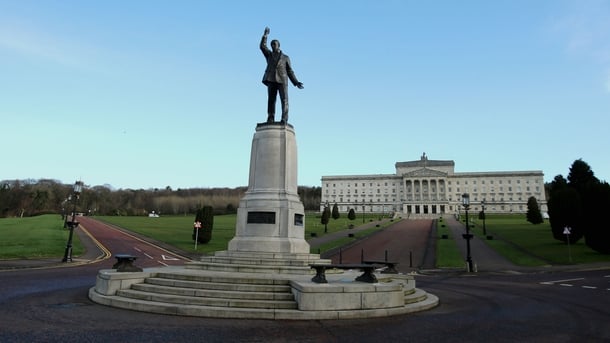
With 56% of people in Northern Ireland voting remain, Sinn Féin calls for a border poll. The DUP, the only party in Northern Ireland to back Brexit, says the result of the Brexit referendum will mean an even stronger union.
We need your consent to load this rte-player contentWe use rte-player to manage extra content that can set cookies on your device and collect data about your activity. Please review their details and accept them to load the content.Manage Preferences
David Cameron resigns as Tory leader, saying he will stay in place as prime minister until a successor is elected.
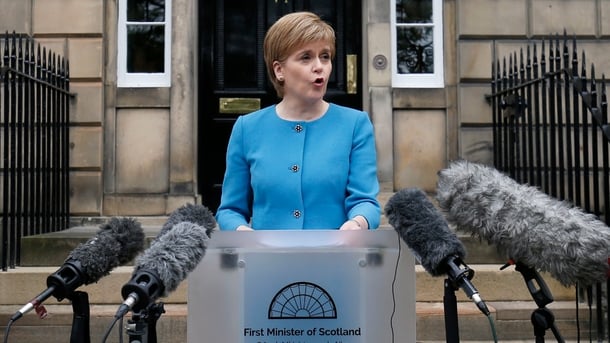
Scottish first minister Nicola Sturgeon underscores the divisions, saying Scotland could veto Brexit.
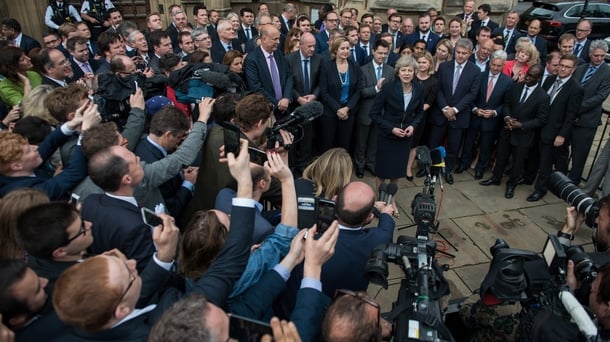
Theresa May becomes the Conservative leader, after her final opponent dropped out of the race.
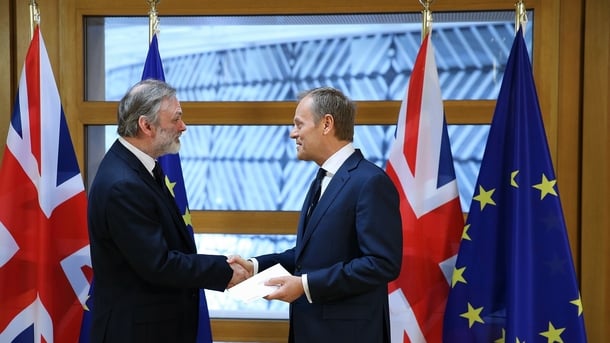
British Ambassador Tim Barrow hands over the Article 50 declaration to Donald Tusk, triggering the two-year countdown to Brexit.
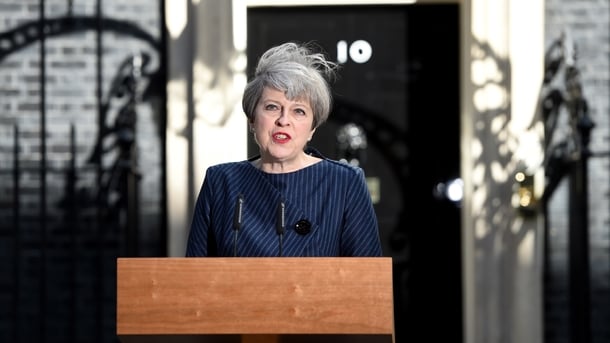
In a bid to gain backing for her Brexit plan, Theresa May calls a snap election, for 8 June.
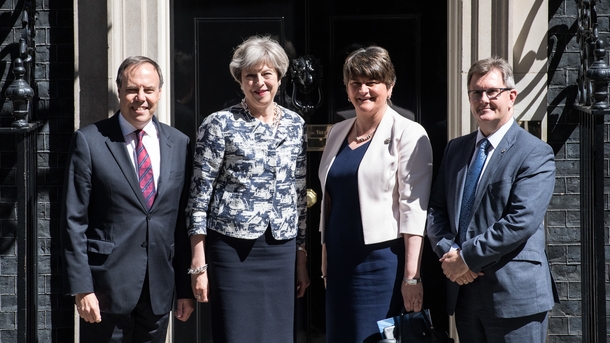
May's gamble backfires. She loses her majority, and has to reach out to the DUP to support a minority government.
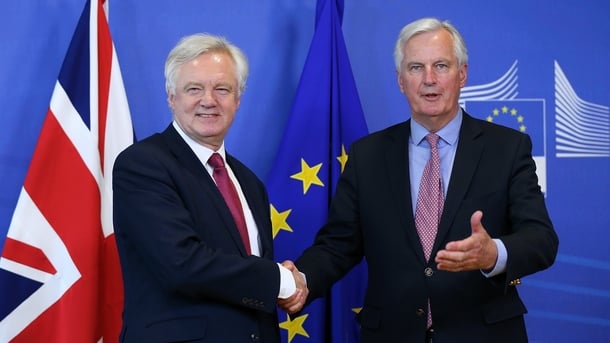
Formal talks get under way in Brussels, with David Davies representing Britain and Michel Barnier the EU.
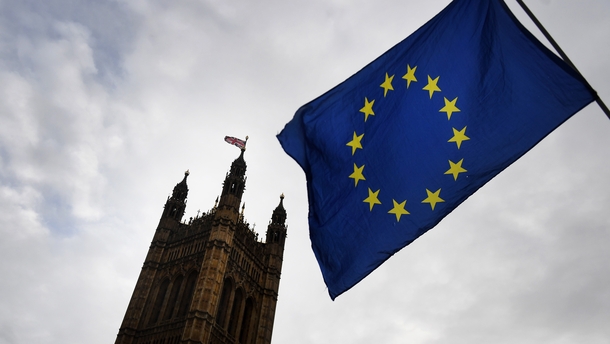
Another blow for May, as Tory rebels join the Opposition to pass a motion guaranteeing Parliament a 'meaningful vote' on the final Brexit deal agreed with the EU.
.
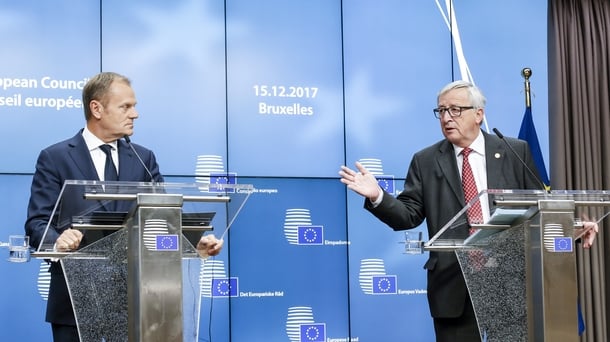
After agreement is reached on issues including the border and Britain's divorce bill, the EU agrees to move to the next phase of talks.
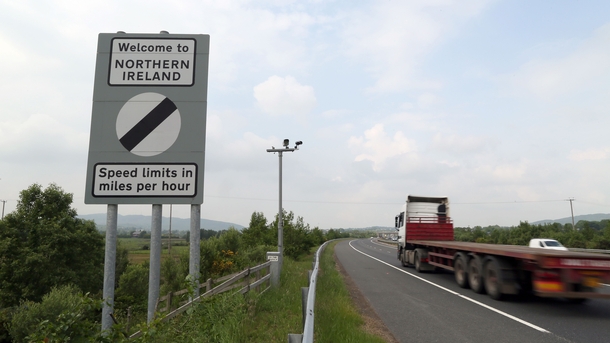
EU and UK officials agree a withdrawal deal, including the proposed backstop to avoid a hard border.
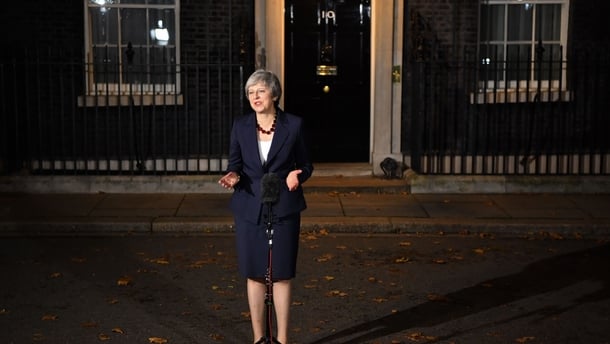
Theresa May secures cabinet support for her draft Brexit deal, after a five-hour meeting with ministers at 10 Downing Street.
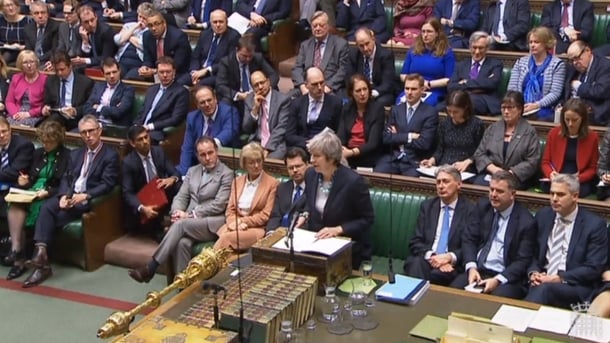
Theresa May pulls the planned 'meaningful vote' in the House of Commons on her Brexit deal, after it becomes clear it will not pass.
We need your consent to load this rte-player contentWe use rte-player to manage extra content that can set cookies on your device and collect data about your activity. Please review their details and accept them to load the content.Manage Preferences
May survives a confidence ballot of Conservative Party MPs by 200 votes to 117 votes.
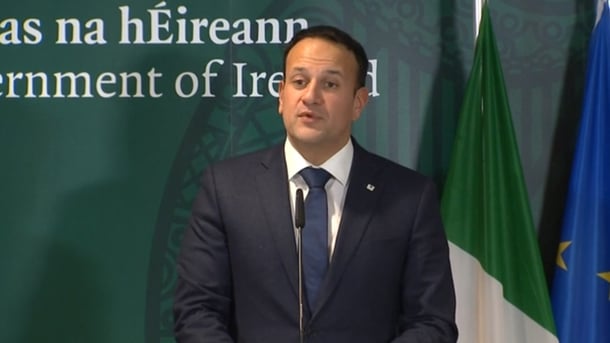
Taoiseach Leo Varadkar welcomes the decision by EU leaders to reject Theresa May's call for legally binding assurances on the border backstop and rule out any changes to the Withdrawal Agreement.
.
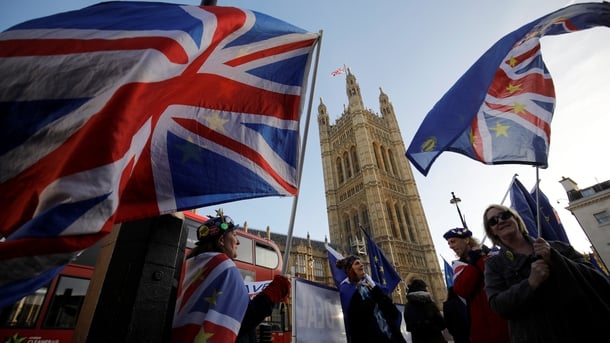
British Brexit minister Stephen Barclay says cabinet ministers have agreed that planning for a no-deal Brexit will be an "operational priority".
