


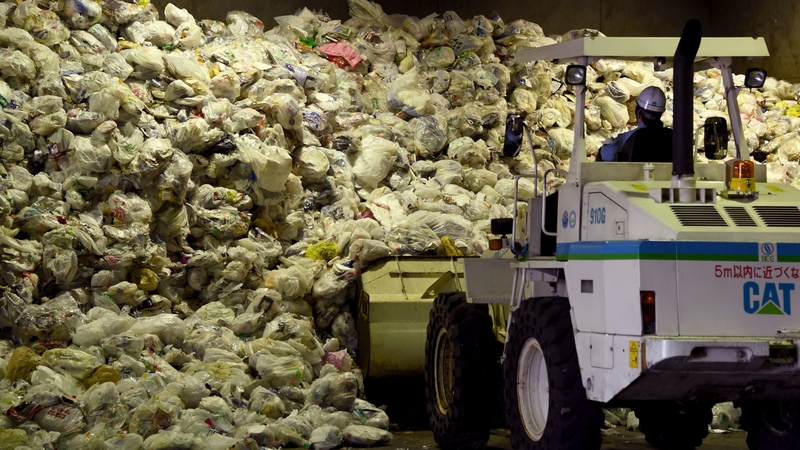
Japan is facing a growing sea of plastic waste with limited capacity to process it after China stopped accepting foreign waste imports.
We need your consent to load this Facebook contentWe use Facebook to manage extra content that can set cookies on your device and collect data about your activity. Please review their details and accept them to load the content.Manage Preferences
The environment ministry said about a quarter of major regional and municipal governments surveyed reported seeing accumulating plastic waste, sometimes going beyond sanitary standards.
The costs of processing waste plastic are rising, according to more than 100 local governments and 175 waste processing firms that responded to a ministry survey.
The world's developing nations are also scrambling for ways to process plastic refuse after China stopped accepting it.
Nearly three-quarters of all plastic waste produced globally since 1992 has ended up in China and Hong Kong, according to a study in the journal Science Advances.
But since January, China has closed its borders to most paper and plastic waste in line with a new environmental policy.
Before the ban, Japan exported about 1.5 million tonnes of plastic waste a year, most of it to China.
The Japanese ministry said it will expand domestic capacity to process plastic waste, while also preventing illegal dumping.
The government also intends to boost efforts to encourage recycling, the survey added.
