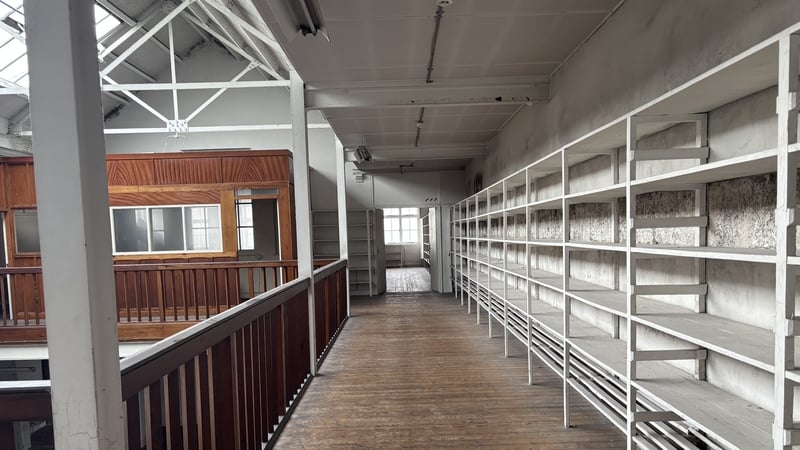

The last of Limerick's Magdalene laundry buildings looks set to be converted into a facility to help art school and other graduate creatives establish businesses and enterprises, after planning approval was granted for its renovation.
The abandoned two-storey structure is on the Limerick School of Art and Design campus which was formerly the Good Shepherd convent and Magdalene laundry.
It is the last part of the old laundry to be transformed for educational use.
It is one of three historic and protected sites in Limerick city centre that are to be developed as design and learning hubs in an initiative being undertaken jointly by TUS, UL and Limerick City Council.
The two other sites are in the city’s medieval quarter and include the four-storey ruin of an ancient castle.
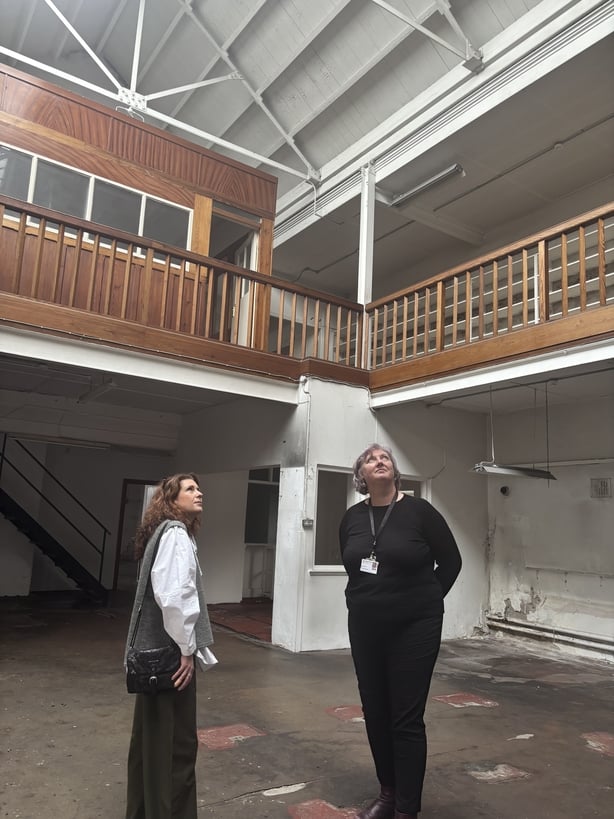
"Our plan is to take this building and create a space where we can support all our designers for the future; to link them with industry and form career paths for our graduates," LSAD Research Institute Director Eleanor Moloney said.
The idea is to provide affordable studio spaces to graduate artists and other creatives - both dedicated spaces and also temporary 'hotdesk’ style facilities that will be cheaper again to rent.
"Start ups are often poorly funded and we are trying to make that more accessible," Ms Moloney said.
"A lot of our graduates tend to have huge success, but only after they go abroad. Wouldn't it be fantastic for the region if we were able to retain that talent and leverage it for this area?"
That is the aim behind the plan, which ultimately seeks to provide up to 70 dedicated studio spaces for creatives across the three sites, with dozens of additional spaces available to creatives on a short-term basis.
The planned conversion of the last old laundry building has been strongly welcomed by people who have documented its history.

John Kennedy took over the laundry from the Good Shepherd nuns when it ceased to be a Magdalene laundry in the early 1980s. But he was familiar with the convent and with the women who lived and worked there throughout his childhood too - his aunt was a reverend mother there.
Mr Kennedy, who as a local historian gives tours of the building, said he is "thrilled to bits" that the building is to be transformed for such a positive purpose.
"The women [who worked here] were all teenagers or adults when they were sent here by their families, and they spent their whole lives working here, unpaid," he said.
The Good Shepherd laundry was a huge enterprise, doing laundry for institutions such as schools, hotels and factories across the city and region, as well as for private homes.
Mr Kennedy said: "When they were sent here they were given an assumed name and a number and they were referred to by that name and number for the rest of their lives.
"They were totally secluded from public view. Nobody could see in, and they could not see out."
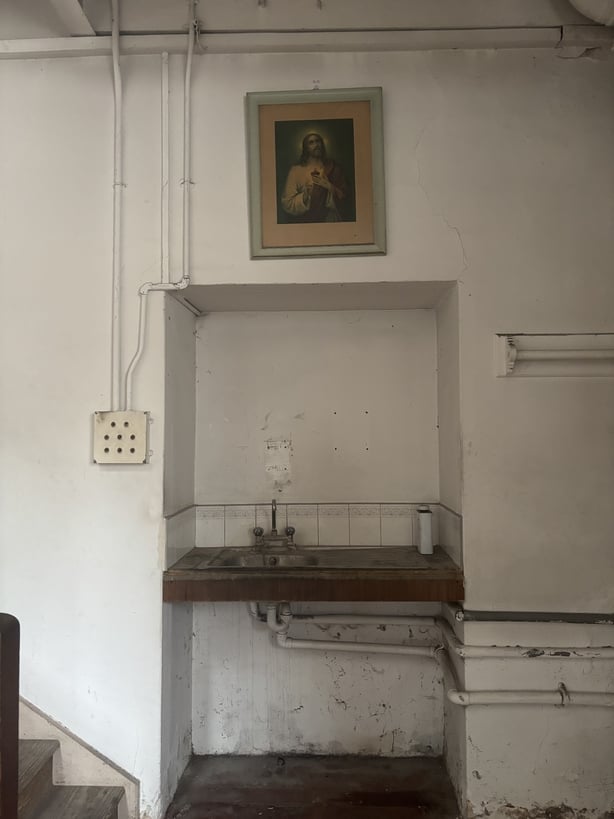
A tour of the old buildings bears this out. In the wings formerly inhabited by the Magdalene women any windows are either set too high to see out of or have frosted glass.
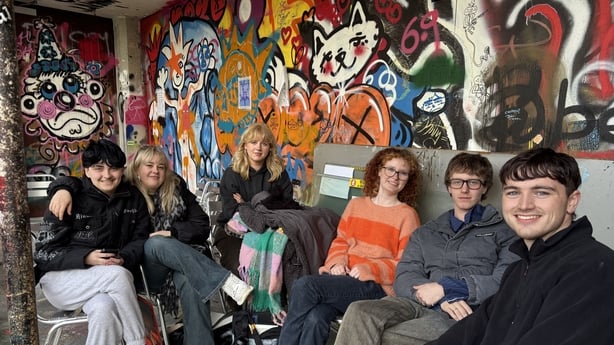
But all of these spaces have been home for years now to a vibrant art college. In a central courtyard the walls are covered in bright and chaotic graffiti. Young students with paint-spattered clothes, piercings, and dyed hair mill about at lunchtime.
"We have made this a place that people want to come to instead of what it used to be - such an awful place. I myself I get excited about coming in here everyday, because I know that I am going to have fun no matter what and see people that I like and get to do what I love," said student AJ West.
"We are very aware of [the campuses] history and you do get that vibe, but there is such a good feeling in this college. I think it is really interesting that we have completely changed the atmosphere and the vibe," student Páraic Morrissey added.

In the main reception area of the college, a work by Masters student Andrea Webber hangs. Part of her final year degree project it features the image of a Good Shepherd Magdalene laceworker, taken from a photograph of one of the women, her identity unknown. This is layered above an image of the 1911 Census which listed residents' names and ages with their occupation "laundress".
Talking about her artwork, Ms Webber said she felt it was important to honour and acknowledge "the ladies who lived and worked here".
She spoke to me in the vacant and soon to be renovated last laundry building.
"Standing here I think about the weight of that history and the contrast of my experience as a student here compared to their lived experience and I just feel privileged," she said.
TUS hopes that renovation work will be completed on the building by the end of 2027. It hopes the two further sites, in Limerick’s medieval core will be ready by August of 2028.
"A lot of it depends on funding," Ms Moloney added.
Mr Kennedy would like to see other cities and towns follow the lead of Limerick. "Old convent buildings like this are two-a-penny in towns across the country. Nobody wants them and they are falling down," he said.
As part of the planning condition LSAD, which is a faculty of TUS, must consult and explore how to memorialise or reflect the building's past.
Of this challenge, Ms Moloney said: "I think it is a really tricky thing to try and take a complicated history and then try and reinvent it while still respecting the previous history.
"But if there is a place that can do it, it is probably this school of art and design because I think both our students and the teachers here can tackle thorny issues with honesty."