

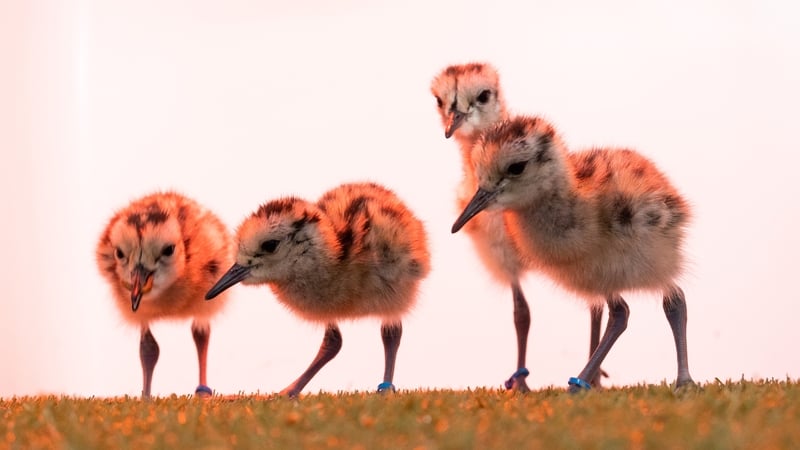
Twelve curlew chicks have hatched at Fota Wildlife Park in Co Cork, with more expected to hatch in the coming weeks.
The chicks were hatched after 31 viable eggs were collected from the wild across various counties in Ireland as part of the Breeding Waders European Innovation Partnership Programme.
Once located, the eggs are collected from the wild and sent to Fota Wildlife Park for incubation and rearing of the chicks to fledglings. When capable of flying, the birds will be released back into their native habitats, providing them with protection against predators and other threats during the vulnerable early stages of life.
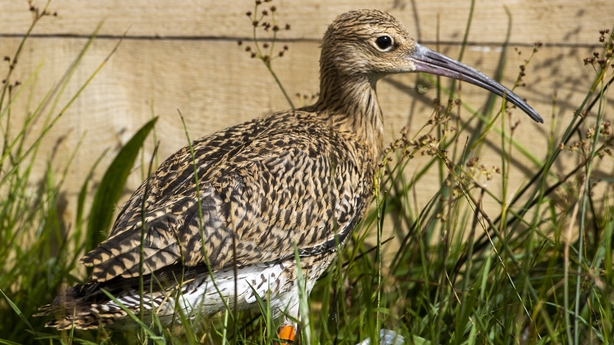
Curlews can live up to a maximum of 32 years.
Declan O'Donovan, Animal Care Manager at Fota Wildlife Park said the curlew was once a common sight in Ireland's bogs and wetlands but is now "critically endangered" and has experienced a "staggering" 98% decline since the 1970s.
"This alarming trend places the breeding curlew on the brink of extinction," he said.
"At Fota Wildlife Park, we are deeply committed to this conservation project, as protecting native species is a priority."
The €25 million Breeding Waders EIP is funded jointly by the National Parks and Wildlife Service at the Department of Housing, Local Government and Heritage, and the Department of Agriculture, Food, and the Marine, under the European Innovation Partnership (EIP) Agri Programme.
EIP projects, focusing on species such as the Lapwing, Redshank, Curlew, Dunlin, Golden Plover, Snipe, Oystercatcher, Ringed Plover, Common Sandpiper, Red-Necked Phalarope, are locally led schemes which are designed and implemented by collaborative groups involving farmers, scientists, ecologists, and other experts.
Project Manager for the Breeding Waders EIP Owen Murphy said they were "delighted" to be working with Fota.
"Their dedication and skill in the areas of aviculture and chick rearing is world-class and we feel like these eggs and chicks are getting the best possible start in life," he said.
"It is worth noting that the project will only take first clutch eggs from the wild for headstarting and our Nest Protection Officers and Wader Project Officers maintain their vigilance in the field in order to offer the best protection possible to the second clutches, which are incubated and reared in the wild by the parent birds.
"This project is an exciting venture, we look forward to working closely with all our project partners, landowners, farmers and others to try and pull our native Breeding Wader species back from the brink of national extinction."
Read more:
Ireland's curlew population in 'stark decline'
Curlew's return to Lough Neagh delights project team
How the curlew bird became Ireland's poster child for extinction
Separately, Fota Wildlife Park has also revealed the names of some recently born primates.
The five ring-tailed lemur babies have been named Bosoa, Kirby and Winston, with the twins being named Malbec and Shiraz.
A gibbon born in January has been named Murphy, while a colobus monkey also born that month has been called Cillian.
