A new "closed loop" system for monitoring sugar levels and delivering insulin in diabetes patients looks likely to come into wide use in the coming months.
The new pump was introduced to the Irish market at the beginning of this year and is now being used by paediatric patients to help them regulate their blood levels on a constant basis.
Other insulin pumps in use in recent years reduced the need for patients to inject themselves frequently but they still needed to monitor their sugar levels and then pump insulin into their bloodstream when needed.
New pumps use advanced algorithms to sense the patient's levels and keep their insulin "topped up" if necessary, taking away a lot of the monitoring and work.
According to paediatric endocrinologist, and general paediatrician, at University Hospital Waterford, Dr Aoife Carroll, a new device developed by MedTronic reads the glucose levels of the patient every minute and sends the information to the pump which then acts to keep the levels within a target range.
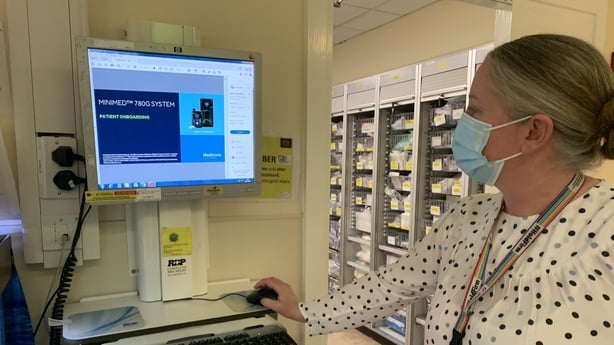
"We've had pumps for a number of years for diabetes but this is the next generation that has become available to Irish users this year," Dr Carroll told RTÉ News.
"It has the added advantage that, apart from just delivering insulin, it also communicates with a sensor."
The sensor is attached to the patient's body and is constantly detecting blood glucose levels and relaying that information to the pump, she explained.
"Then the pump is able to titrate the insulin, based on whether the blood glucose levels are rising or falling."
It means "greater peace of mind" for patients and their families, she said, as they know the blood levels are constantly being monitored.
"The pump has a target that we set and it's constantly trying to get the blood glucose back up or back down to that level."
One of the 110 paediatric patients with type 1 diabetes at University Hospital Waterford, 13-year-old Adam Finnerty last month became one of the first under-16s in the country to start using the new MedTronic MiniMed.
So far, he and his family say, it has been a success.
"This one, when it reads your blood sugar, it kind of tries to level out your blood levels so if your bloods go high, bring more insulin in and if your bloods go low it just stops the insulin altogether," Adam said. "It's just made a big difference."
A hurler with Erin's Own in the Sacred Heart parish of Waterford city, Adam thinks that the new treatment will help him perform at a more constant level when GAA activities resume.
"When I had the old pump my bloods were 25% in range which would affect your activity a bit and your performance on the field but my Mam and myself looked it up to see what my bloods were and they were 81% in range, so I'd say when we do go back training there'll be a massive improvement."
He was diagnosed with type 1 diabetes in 2016 and initially had to take regular injections, before "life-changing" insulin pumps came on board and reduced the need to inject. Now, the "closed loop" technology makes things easier again.
Adam's mother, Shelly Finnerty, said having his bloods in the 81% range is "fantastic" and helps the teenager feel better and more energetic.
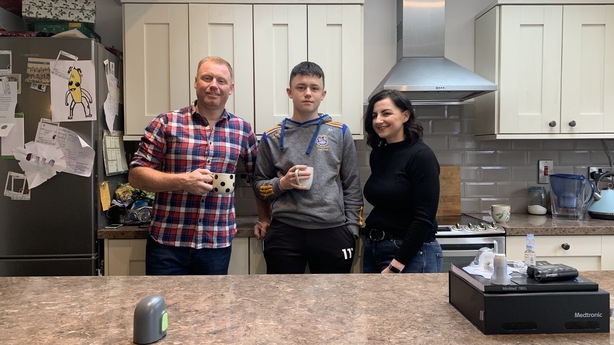
"He's sport mad so it will definitely help playing matches and sports like that. It takes a lot of the work out of it for him."
It also reduces the amount of night-checks, which until recently were a regular feature of life for the family, as Adam's bloods could go low overnight.
"You could be two or three hours trying to get his bloods back up sometimes. This has stopped him from going low a lot of the time because it automatically cuts off before he actually goes low which is amazing. So we're getting a great night's sleep altogether."
Dr Carroll said it is expected the technology will "be rolled out very quickly" to other patients across the country.