


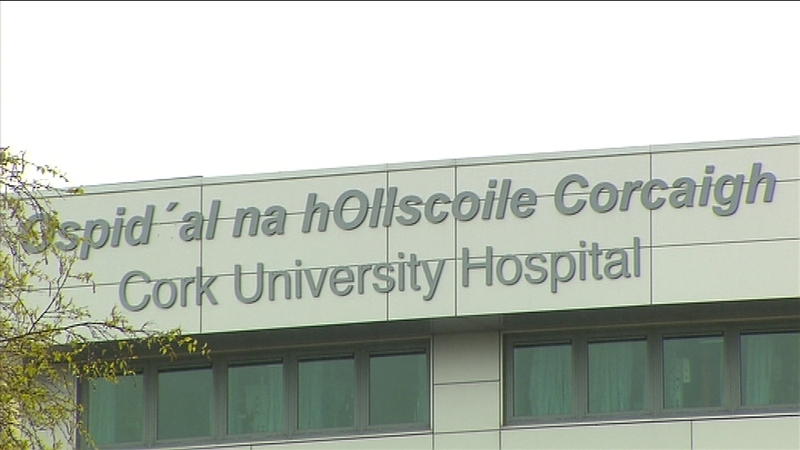
A woman who took a fatal overdose presented herself at the Mental Health Unit at Cork University Hospital only to have to wait an hour for an ambulance to arrive from Fermoy to take her on a two-minute journey to the emergency department, an inquest has heard.
Marian O'Reilly, 61, of Ophelia Place, The Lough, Cork was on a day pass from the unit on 5 March, 2016 and had gone to her home with her husband Henry.
She had suffered from depression for 30 years and had made a previous suicide attempt earlier that year. The plan was that they would return to the unit at 6pm.
However, while out of sight of her husband Mrs O'Reilly took out his medication for various complaints and swallowed down hundreds of tablets.
He thought she was upstairs checking clothes for her return to the hospital. At around 3.30pm he went upstairs to find her in bed.
He then noticed the tablet bottles. He made the decision to take her back to the Acute Adult Mental Health Unit.
Once he arrived he was told that the protocol was that an ambulance be called to bring his wife the short journey from the unit to the emergency department. An ambulance was called at 4pm.
Ambulance control despatched the nearest ambulance, which was in Fermoy, and it took a full hour for it to arrive.
Mrs O'Reilly's condition deteriorated and she died in CUH on the morning of 6 March, 2016.
It emerged at today's inquest that such was the volume and toxicity of tablets taken by Mrs O'Reilly that death was a certainty regardless of the delay.
However, Mr O'Reilly told the inquest that he had spent the last year haunted by his decision not to bring his wife directly to accident and emergency.
He said he was horrified that his wife had to wait an hour for an ambulance to arrive from Fermoy.
"On arrival, Marian was barely able to say one or two words, having deteriorated while sitting in the unit for over an hour without any treatment whatsoever," he said.
Siobhan Tobin, a security officer at CUH, told Coroner Philp Comyn she had asked medical staff the reasoning for not bringing Mrs O'Reilly to accident and emergency in a hospital vehicle only to be told that it was not hospital protocol.
HSE Paramedic, Andrew McCreagh, said they received a call at 4.08pm in Fermoy that a woman had taken an overdose. They arrived on site at 4.48pm.
He stated they were the closest available ambulance at the time of the incident. He reported that Mrs O'Reilly was lucid and alert and walked in to the ambulance.
Nurse David Fitzpatrick said an ambulance was phoned for at 4.05pm. He informed control that it was an emergency and that the woman had taken an estimated 200 tablets.
He sought to reassure and support Mr O'Reilly as they waited for the ambulance. He called a doctors' line a number of times to get an update on the ambulance.
He also called the emergency number looking for updates. However, all of his calls to the doctors' line went unanswered.
He told the inquest that he became "concerned" about the situation.
Meanwhile, Dr Vilma Maria Vera Pezo said she too became anxious about the delay in the arrival of the ambulance and made unanswered calls to the doctors' line.
Oxygen was administered to Mrs O'Reilly by mask and her condition appeared to improve. Dr Pezo stressed an ambulance was the safest way to transport a patient.
However, since the death of the 61-year old, Cork University Hospital has changed protocol to allow staff at the unit to transport emergency cases from the unit to accident and emergency by gurney if the need arises.
Dr Eamon Maloney, Clinical Director of the Acute Mental Health Unit at CUH, said they were looking to up-date their patient transport vehicle.
He stressed that ultimately an ambulance is the safest mode of transfer as it contains resuscitation equipment and skilled paramedics.
A systems analysis report is being carried out in connection with the death.
Michael O'Sullivan, Area Director of Medical Health Nursing, said the delivery of the report was being hampered by delays in receiving audio recordings in relation to the incident from the ambulance service.
Assistant State Pathologist, Dr Margaret Bolster, carried out a post mortem on the deceased. She said that Mrs O'Reilly died of aspiration pneumonia complication with ingestion of an overdose.
She emphasised that Mrs O'Reilly had taken a particularly lethal dosage of prescription drugs and that she had no chance of survival even if she had been seen immediately.
An open verdict was recorded in the case after the court heard that Mrs O'Reilly told her husband that she regretted taking the pills.
The coroner sought to reassure Mr O'Reilly that there was nothing he could have done to save his wife after she consumed such a lethal dose of medication.
