


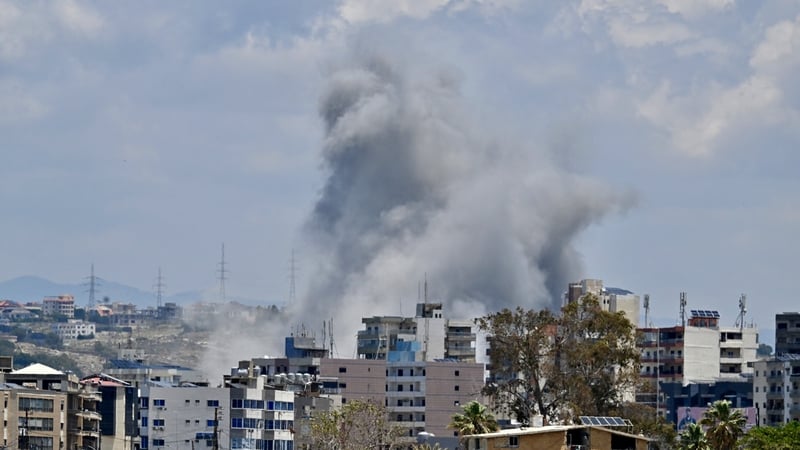
Israeli Prime Minister Benjamin Netanyahu has said that Israeli forces had crossed Lebanon's Litani River and advanced.
Speaking during a visit to Division 36 on Israel's northern border, Mr Netanyahu said Israeli forces were also operating in Beirut and the Bekaa Valley as part of actions against Hezbollah across Lebanon.
On 31 March, Mr Netanyahu said his country's area of occupation in Lebanon would stretch to the Litani River, about 30km north of the border with Israel.
He described it as "a vast buffer zone" to thwart anti-tank fire and the threat of invasion.
By the 16 April ceasefire, Israeli forces had only occupied about half of that area.
However, the subsequent barrage of air strikes and evacuation orders has driven people from areas even well beyond the river.
Only about half the towns and villages subject to evacuation orders since the ceasefire are south of the Litani, with the rest to the north of the river, some more than 20 km from the waterway.
77 children killed in Israeli attacks in past week in Lebanon - UNICEF
Eleven children have been killed or injured on average every 24 hours in Lebanon over the last week, the UN's children's agency said, as Israel has expanded strikes across the country despite the ceasefire.
Heavy Israeli strikes hit towns and villages in southern Lebanon overnight on Wednesday and into yesterday, after Israel declared a new swathe of the area a combat zone.
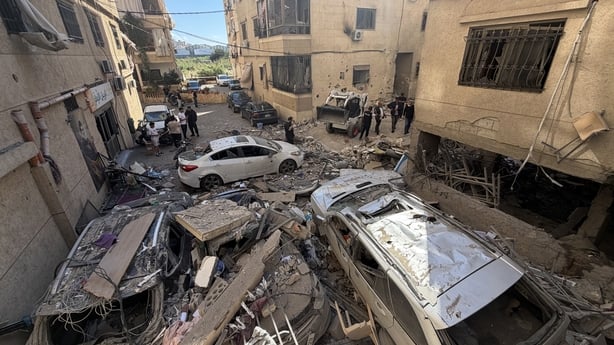
It also struck a building in the southern suburbs of Beirut yesterday.
A total of 77 children have been killed or injured in the last seven days, UNICEF said, citing figures provided by Lebanon's Ministry of Public Health.
Since the ceasefire began on 16 April, 55 children have been killed and 212 injured, according to the agency.
UNICEF spokesperson Ricardo Pires called for all parties to fully respect the ceasefire.
"Under international humanitarian law, children and civilian infrastructure must be protected," he said.
The ceasefire announced by the US was meant to halt the fighting that has raged between Israeli troops and Hezbollah since 2 March.
The UN's World Health Organization also said that the threat from the expansion of military activities raised grave health concerns for the Lebanese population.
Since the ceasefire took effect, a total of 27 attacks on healthcare facilities in Lebanon have been reported, resulting in 25 deaths and 42 injuries, according to the WHO.
A total of 16 hospitals and 13 primary healthcare centres have been damaged in attacks, it added.
