


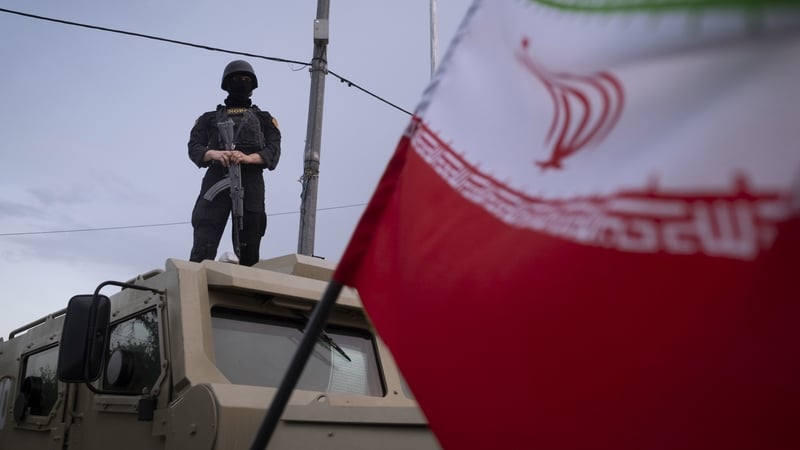
Iran has said that it was up to the United States whether to pursue a negotiated settlement or to return to open war, but that Tehran was ready for either outcome.
"Now the ball is in the United States' court to choose the path of diplomacy or the continuation of a confrontational approach," deputy foreign minister Kazem Gharibabadi told diplomats in Tehran, according to state broadcaster IRIB.
"Iran, with the aim of securing its national interests and security, is prepared for both paths," he said.
Earlier today, a senior Iranian military officer said that renewed fighting between the US and Iran was "likely", hours after US President Donald Trump said he was "not satisfied" with a new Iranian negotiating proposal.
Iran delivered the draft to mediator Pakistan on Thursday evening, state media reported without detailing its contents.
The war, launched by the US and Israel in late February, has been on hold since 8 April, with one failed round of peace talks having taken place in Pakistan since then.
We need your consent to load this rte-player contentWe use rte-player to manage extra content that can set cookies on your device and collect data about your activity. Please review their details and accept them to load the content.Manage Preferences
"At this moment I'm not satisfied with what they're offering," Mr Trump told reporters yesterday, blaming stalled talks on "tremendous discord" within Iran's leadership.
"Do we want to go and just blast the hell out of them and finish them forever - or do we want to try and make a deal?" he added, saying he would "prefer not" to take the first option "on a human basis".
This morning, Mohammad Jafar Asadi, a senior figure in the Iranian military's central command, said "a renewed conflict between Iran and the United States is likely", in quotes published by Iran's Fars news agency.
"Evidence has shown that the United States is not committed to any promises or agreements," he added.
Iran's judiciary chief Gholamhossein Mohseni Ejei said yesterday that his country had "never shied away from negotiations," but added it would not accept an "imposition" of peace terms.
The White House has declined to provide details on the latest Iranian proposal, but news site Axios reported that US envoy Steve Witkoff had submitted amendments putting Iran's nuclear programme back on the negotiating table.
The changes reportedly include demands that Iran not move enriched uranium from bombed sites or resume activity there during talks.
News of the Iranian proposal briefly pushed oil prices down nearly 5%, though they remain about 50% above pre-war levels amid the ongoing closure of the Strait of Hormuz.
Iran has maintained a stranglehold on the strait since the war began, choking off major flows of oil, gas and fertiliser to the world economy, while the US has imposed a counter-blockade on Iranian ports.
Trump says US Navy acting like 'pirates' during Iran blockade
Mr Trump said yesterday the US Navy was acting "like pirates" as he described an operation seizing a ship amid the tit-for-tat American blockade of Iranian ports.
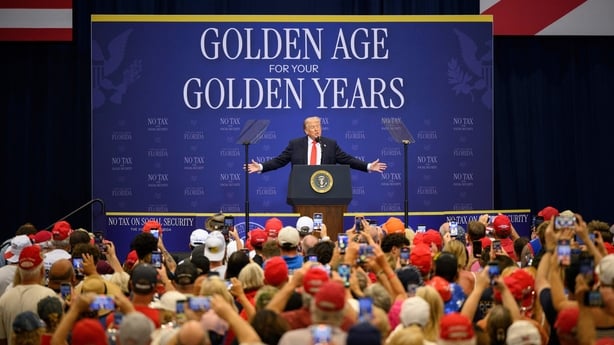
"We... land on top of it and we took over the ship. We took over the cargo, took over the oil. It's a very profitable business," Mr Trump said at a rally in Florida.
"We're like pirates," he added to cheers from the crowd. "We're sort of like pirates. But we're not playing games."
Mr Trump's comparison of US naval activity to piracy comes as legal experts raise alarms about Iran's blockade of the vital Strait of Hormuz and its plans to charge a fee for ships passing through it.
Tehran effectively closed the waterway - a key route for oil and gas shipments - after the start of the US-Israeli air campaign against Iran on 28 February.
Trump likens US Navy seizure of oil cargo to 'pirates', says US profited from Iran conflict
The US announced a blockade of Iranian ports last month after peace talks in Pakistan failed to achieve a breakthrough.
The US Central Command, responsible for US forces in the Middle East, said it has redirected 45 vessels to "ensure compliance" with its blockade as of yesterday.
Meanwhile, the US announced last night that it had approved major arms sales to its allies in the Middle East, including a $4bn Patriot missile deal with Qatar and nearly $1bn in precision weapons systems to Israel.
In Washington, politicians were wrestling with a legal dispute over whether Mr Trump had breached a deadline to seek congressional approval for the war.
Administration officials argue that the ceasefire pauses a 60-day limit, after which congressional authorisation would be required - a claim disputed by opposition Democrats.
Mr Trump faces growing domestic pressure, with inflation rising, no clear victory in sight and midterm elections approaching.
"There has been no exchange of fire between United States Forces and Iran since April 7, 2026," Mr Trump said in letters to congressional leaders, adding that the hostilities "have terminated".
In Iran, the war's economic toll is deepening.
The US has imposed new sanctions on three Iranian currency firms and warned others against paying a "toll" for safe passage through Hormuz, as demanded by Iran.
The US military says its blockade of Iranian ports has stopped $6 billion in Iranian oil exports, while inflation in Iran, already high before the war, has surged past 50%.
"For many people, paying rent and even buying food has become difficult, and some have nothing left at all," 28-year-old Iranian Mahyar told an AFP reporter based outside the country.
Supreme leader Ayatollah Mojtaba Khamenei said that "the owners of damaged businesses should avoid, as much as possible, layoffs and separation of their workforce".
He also threatened Iran's enemies with "economic and cultural jihad".
