


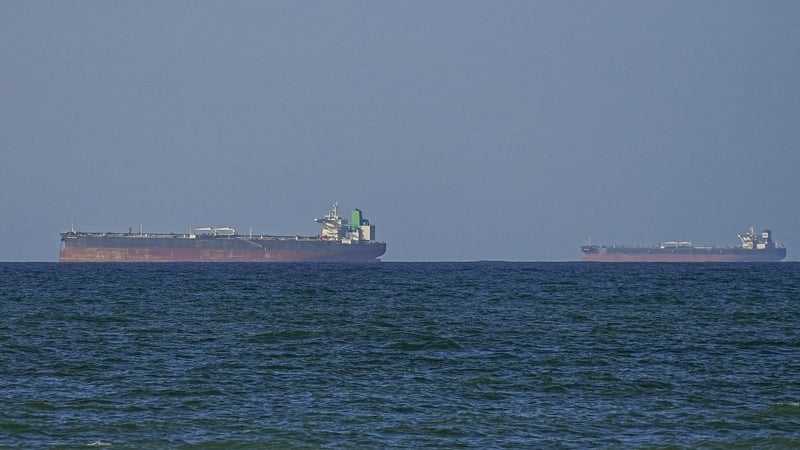
US President Donald Trump discussed how to mitigate the impact of a possible months-long US blockade of Iran's ports with US oil companies, a White House official said, as the US president urged Tehran to "get smart soon" and sign a deal.
The talks with oil executives yesterday followed days of deadlock in efforts to resolve the conflict, which has led the US to try to squeeze Iran's oil exports with a naval blockade to try to force it to reopen the Strait of Hormuz to shipping.
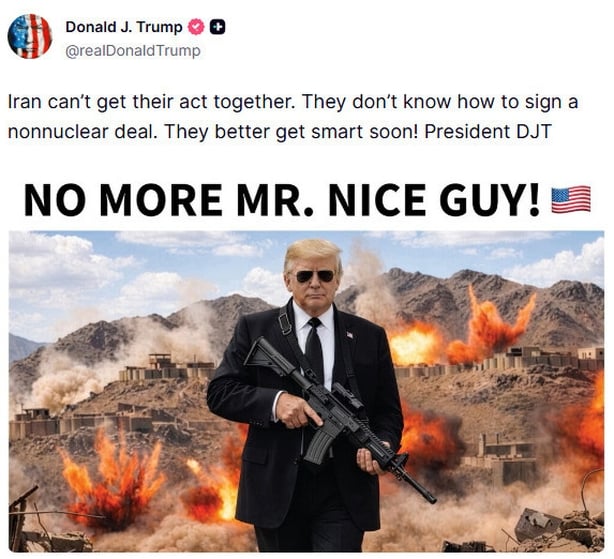
In a post on Truth Social before details of the meeting emerged, Mr Trump, who has said Iran can call if it wants to talk, said the country "couldn't get its act together".
Mr Trump's talks with energy executives addressed potential steps to calm oil markets if it is necessary to continue the blockade of Iranian ports for months, a White House official said, adding they discussed US oil production, oil futures, shipping and natural gas.
The UN Development Programme, meanwhile, warned that the war, which has sent the price of energy and fertiliser soaring, could plunge more than 30 million people into poverty in 160 countries. "It's development in reverse," UNDP chief Alexander De Croo said.
Mr Trump has stressed repeatedly that Iran cannot have a nuclear weapon, while Tehran denies pursuing such a goal and insist on its right to a civilian nuclear programme.
"They don't know how to sign a nonnuclear deal. They'd better get smart soon!" Mr Trump said in the post, without explaining what such a deal would entail.
It featured a mock-up image of him in dark glasses and wielding a machine gun with the caption "No more Mr. Nice Guy".
Oil prices rose over 5% today, with the Brent contract hitting a one-month high, after an initial report in the Wall Street Journal said the US may extend its blockade.
Iran has pledged to continue disrupting traffic through the strait as long as it is threatened, which may mean more Middle East oil supply disruptions from the conflict, which has killed thousands and caused global economic upheaval.
Iran warned of "unprecedented military action" against continued US blockading of Iran-linked vessels.
Trump speaks with Putin about wars in Middle East and Ukraine
Mr Trump said he had a "very good conversation" with Russian President Vladimir Putin today, adding that it focused more on the Ukraine war than on Iran.
"We talked about more about the war in Ukraine," Mr Trump told reporters in the Oval Office, after the two leaders spoke by phone.
Mr Trump said that Mr Putin wanted to "help" end the US-Israeli war on Iran but that he told the Russian leader to end the Ukraine invasion first.
A Kremlin aide said Mr Putin warned his US counterpart against "damaging consequences" of a new military action in Iran,
Putin "highlighted the inevitable and extremely damaging consequences not only for Iran and its neighbours, but also for the entire international community, should the US and Israel resort to military action once again," said Kremlin aide Yuri Ushakov.
Iran parliament speaker says US blockade aims at 'internal division'
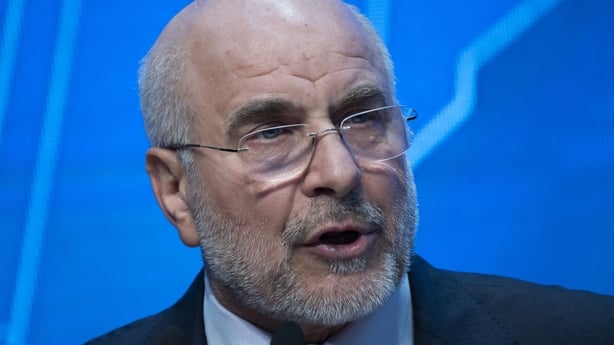
Iran's speaker of parliament Mohammad Bagher Ghalibaf, who has emerged as a figurehead since the start of the Middle East war, said the United States' naval blockade of the country aimed to create division and "make us collapse from within".
He said US President Donald Trump "divides the country into two groups: hardliners and moderates, and then immediately talks about a naval blockade to force Iran into submission through economic pressure and internal discord," Iranian state TV reported.
With the killing of numerous Iranian leaders by US-Israeli strikes, including supreme leader Ali Khamenei, there has been widespread speculation over the balance of power within the Islamic republic.
Mr Trump said earlier this month that the government of Iran was "seriously fractured, not unexpectedly so".
Mr Ghalibaf, a powerful figure, has grown in prominence since the start of the war and was the lead negotiator in the so far only round of direct US-Iranian talks.
"The enemy has entered a new phase and wants to activate economic pressure and internal division through naval blockade and media hype to weaken or even make us collapse from within," he said.
He called for "maintaining unity" as the only solution.
Iranian currency plummets
Iran wants US acknowledgment of its right to enrich uranium for what it says are peaceful, civilian purposes.
It has a stockpile of roughly 440 kilograms of uranium enriched to 60%, material that could be used for several nuclear weapons if further enriched.
Iranian officials said the country could withstand the blockade as it was using alternative trade routes, and the Islamic Republic did not consider the war over.
In a sign of the economic toll the war is taking on Iran's economy, its currency fell to a record low of 1,810,000 rials to the US dollar today, the Iranian Students' News Agency said, as demand for foreign currency that built up during six weeks of fighting is now flowing into the open market.
The rial has seen its value fall by nearly 15% in the last two days alone, ISNA reported.
Inflation for the Iranian month running from 20 March to 20 April was 65.8%, the central bank said, a trend which is likely to be exacerbated by the currency's plunge.
Iran wants formal end to conflict first
Iran's latest offer for resolving the war, suspended since 8 April under a ceasefire agreement, would set aside discussion of its nuclear programme until the conflict is formally ended and shipping issues resolved.
However, this did not meet Mr Trump's demand to address the nuclear issue at the outset.
US intelligence agencies, at the request of senior administration officials, are studying how Iran would respond if Mr Trump were to declare a unilateral victory, two US officials and a person familiar with the matter told the Reuters news agency.
The Iranian proposal, passed along by Pakistan and studied by Trump administration officials in a meeting on Monday, laid out red lines including on nuclear issues and Hormuz, according to Iran's Fars news agency.
The plan would reportedly see Iran ease its chokehold on the strait and the US lift its retaliatory blockade while broader negotiations continue, including over the nuclear programme.
Tehran has largely blocked all shipping apart from its own from the Gulf through the Strait of Hormuz, a chokepoint for global energy supplies, since the war began on 28 February.
This month, the US began blockading Iranian ships.
We need your consent to load this rte-player contentWe use rte-player to manage extra content that can set cookies on your device and collect data about your activity. Please review their details and accept them to load the content.Manage Preferences
Pressure on Trump to end costly war
Iran no longer has a single, undisputed clerical arbiter at the pinnacle of power since several senior Iranian political and military figures, including Supreme Leader Ayatollah Ali Khamenei, were killed in US-Israeli strikes.
The elevation of Khamenei's wounded son, Mojtaba, to replace him has handed more power to hardline commanders of the Islamic Revolutionary Guard Corps, Iranian officials and analysts say.
Meanwhile, Mr Trump is under domestic pressure to end a war for which he has given shifting rationales to a US public struggling with surging gasoline prices.
His approval rating fell to the lowest level of his current term, according to a Reuters/Ipsos poll, which showed 34% of Americans approve of his performance, down from 36% in the prior survey.
Governments, particularly in Asia, are looking to conserve fuel and spending billions of dollars in subsidies. The European Union loosened state aid rules to let member states compensate agriculture, fisheries and transport firms for extra fuel and fertiliser costs till the end of 2026 but has yet to curb use.
Lebanese soldier and brother killed in Israeli attack
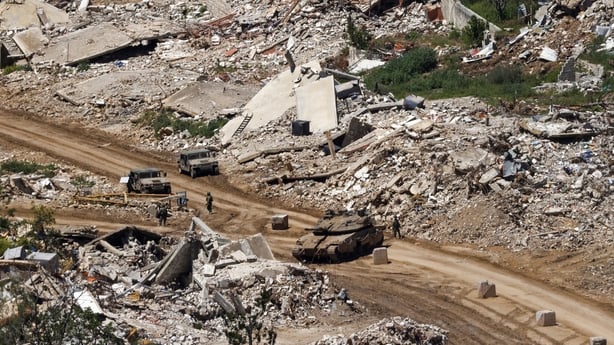
The standoff between Iran and the US comes as Israel continues its attacks across Lebanon.
A Lebanese soldier and his brother were killed in an Israeli strike in Bint Jbeil in southern Lebanon, the Lebanese army said.
It said the pair were on a motorcycle, travelling from the soldier's post to his home when the strike occurred.
The Israeli military said it was looking into the report.
Separately, the Israeli military said a contractor working for an engineering company on behalf of Israel's defence ministry was killed yesterday in southern Lebanon in a drone attack claimed by Hezbollah.
The group fired two rockets into Israel on Wednesday, one of which was intercepted, the military said. There were no reports of casualties.
