


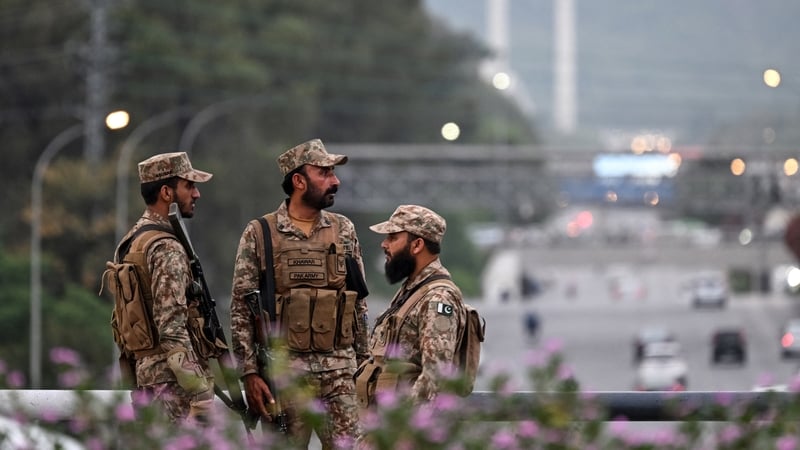
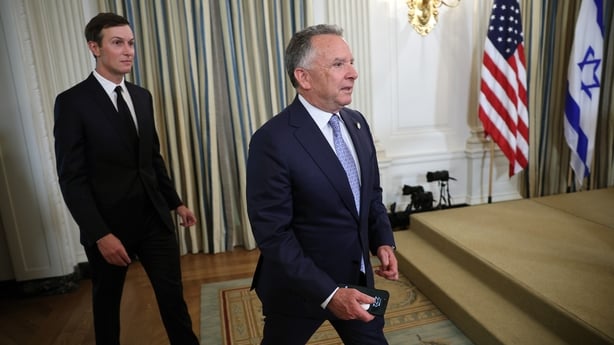
US President Donald Trump's special envoy Steve Witkoff and son-in-law Jared Kushner will travel to Pakistan tomorrow morning for talks with Iran, White House press secretary Karoline Leavitt said in an interview with Fox News this evening.
"I can confirm Special Envoy Witkoff and Jared Kushner will be off to Pakistan again tomorrow morning to engage in talks ... with representatives from the Iranian delegation," Ms Leavitt said.
Vice President JD Vance is not currently planning to attend but he will be on standby to travel to Islamabad if negotiations progress, according to CNN, which first recorded the travel plans.
Two Pakistani government sources said that an Iranian delegation had arrived in Pakistan this evening.
Earlier, Pakistani sources said that peace talks between Iran and the US could resume soon, after the last round of talks expected earlier this week fell through.
US President Donald Trump told the Reuters news agency that Iran plans to make an offer aimed at resolving US demands.
"They're making an offer and we'll have to see," Mr Trump said during a phone interview.
Mr Trump unilaterally extended a two-week ceasefire on Tuesday at the 11th hour to allow more time to reconvene the negotiators.
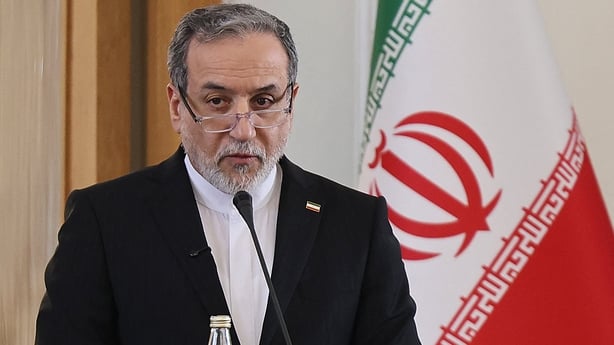
Iranian Foreign Minister Abbas Araghchi was expected to arrive in the Pakistani capital Islamabad today.
Mr Araghchi said in a statement on X he was embarking on visits to Pakistan, Oman and Russia to coordinate with partners on bilateral matters and consult on regional developments, adding that Iran's neighbours remained Tehran's priority.
Two Pakistani government sources aware of the discussions said Mr Araghchi's visit would be a brief one to discuss Iran's proposals for talks with the US, which mediator Pakistan would then convey to Washington.
Reports on Mr Araghchi's trip in Iranian state media and the Pakistani sources made no mention of Mohammad Baqer Qalibaf, the speaker of Iran's parliament, who was the head of its delegation at the only talks held so far, earlier this month.
Pakistani sources had said earlier that a US logistics and security team was already in place in Islamabad for potential talks.
The last round of peace talks had been expected on Tuesday but never took place, with Iran saying it was not yet ready to commit to attending and a US delegation led by Mr Vance never leaving Washington.
US blockade on Iran 'going global', says Hegseth
Meanwhile, US Defence Secretary Pete Hegseth said that a US blockade on Iran is going global, adding Tehran had a chance to make a "good deal" with Washington.
"Our blockade is growing and going global," Mr Hegseth told reporters.
"No one sails from the Strait of Hormuz to anywhere in the world without the permission of the United States Navy," he said.
Standing next to top US General Dan Caine, Mr Hegseth said the US was "not anxious" for a deal with Iran, and repeated Mr Trump's previous comments of having "all the time in the world".
"Iran knows that they still have an open window to choose wisely ... at the negotiating table. All they have to do is abandon a nuclear weapon in meaningful and verifiable ways," he said.
Watch: Hegseth criticises 'silly' European conference on Strait of Hormuz blockade
Mr Caine said the US Central Command continues to maintain a strict blockade on all ports in Iran.
Thirty-four ships had been turned around as of this morning, he said. The US military would continue to interdict Iranian vessels in the Pacific and Indian oceans, Mr Caine added.
"We're enforcing the blockade across the board against any ship of any nationality that is transiting to or from an Iranian port or territory," Mr Caine said.
German Chancellor Friedrich Merz said that the European Union is willing to gradually ease sanctions on Iran in the event that a comprehensive agreement is reached.
"The easing of sanctions can be part of a process," said Mr Merz at an EU summit in Nicosia.
"And no one has objected to that," he added.
"It is, so to speak, part of the contribution we can make to advance this process and, hopefully, lead to a lasting ceasefire."
Hezbollah says ceasefire 'meaningless' as fighting continues in south
Meanwhile, Lebanon's Hezbollah said a US-mediated ceasefire in the war with Israel was meaningless, a day after it was extended for three weeks, as Lebanese authorities reported two people killed by an Israeli strike and Hezbollah downed an Israeli drone.
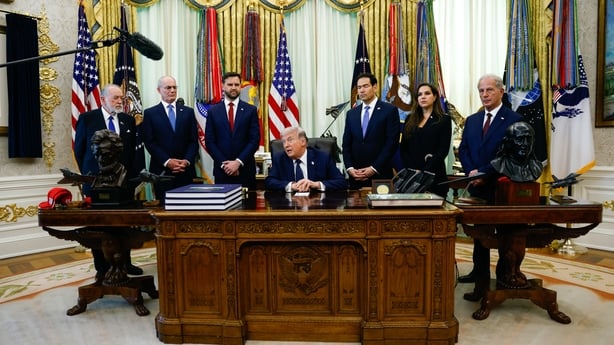
Mr Trump announced the three-week extension yesterday after hosting Israeli and Lebanese ambassadors at the White House. The ceasefire agreement between the governments of Lebanon and Israel had been due to expire on Sunday.
While the ceasefire has led to a significant reduction in hostilities, Israel and Hezbollah have continued to trade blows in southern Lebanon, where Israel has kept soldiers in a self-declared "buffer zone".
Responding to the extension, Hezbollah politician Ali Fayyad said, "it is essential to point out that the ceasefire is meaningless in light of Israel's insistence on hostile acts, including assassinations, shelling, and gunfire" and its demolition of villages and towns in the south.
"Every Israeli attack ... gives the resistance the right to a proportionate response," he added.
Hezbollah is not a party to the ceasefire agreement, and has strongly objected to Lebanon's face-to-face contacts with Israel.
The 16 April agreement does not require Israeli troops to withdraw from the belt of southern Lebanon seized during the war. The zone extends 5-10km into Lebanon.
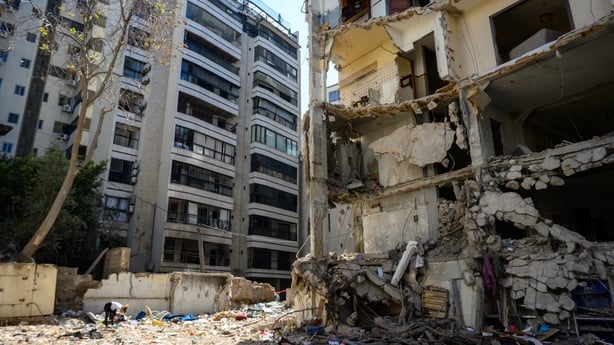
Israel says the buffer zone aims to protect northern Israel from attacks by Hezbollah, which fired hundreds of rockets at Israel during the war.
Hostilities between Hezbollah and Israel reignited on 2 March, when the group opened fire in support of Iran in the regional war.
The ceasefire in Lebanon emerged separately from Washington's efforts to resolve its conflict with Tehran, though Iran had called for Lebanon to be included in any broader truce.
Nearly 2,500 people have been killed in Israeli attacks in Lebanon since 2 March, the Lebanese health ministry has said.
