


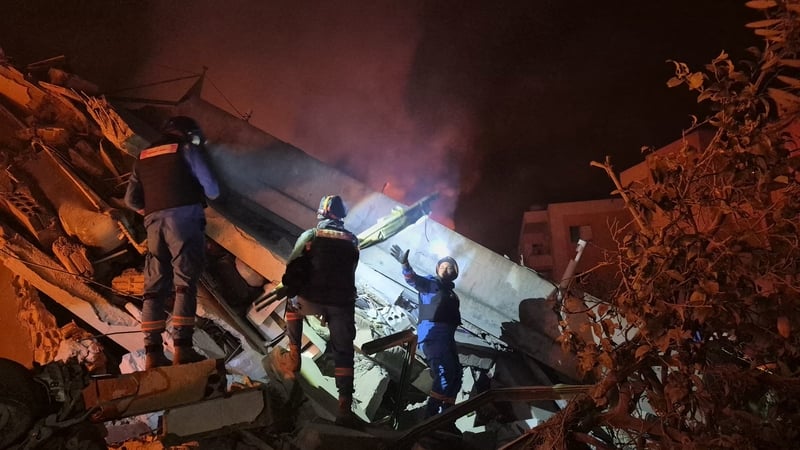
A fragile two-week ceasefire between the US and Iran showed further strain, as Washington accused Tehran of breaching promises on the Strait of Hormuz and Israel struck Lebanon with attacks that Iran has claimed violate the truce.
There was no sign Iran was lifting its near-total blockade of the strait, which has caused the worst-ever disruption to global-energy supplies.
Iran cited Israel's ongoing attacks on Lebanon, which included the heaviest strikes of the war, as a key sticking point.
US President Donald Trump said in a social media post that Iran was doing a "very poor job" of allowing oil to go through the Strait.
"That is not the agreement we have!"
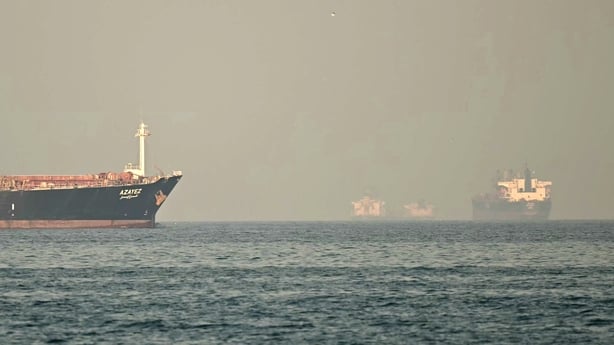
In a separate post, he said oil would start flowing again, without saying what actions the US might take.
In the first 24 hours of the ceasefire, which Mr Trump announced on Tuesday, just a single oil products tanker and five dry bulk carriers sailed through the Strait, which typically carries a fifth of the world's oil and liquefied natural gas flows and 140 ships a day before the war.
Fresh attacks
Israel's military said early it had struck ten launchers in Lebanon that fired rockets toward northern Israel and that Iran-allied armed group Hezbollah launched a missile at Israel, triggering air sirens.
The missile was intercepted, according to the Times of Israel.
Hezbollah said it had targeted Israeli military infrastructure in the northern city of Haifa.
The US and Israel have said the latest ceasefire does not include Lebanon, which Israel invaded last month - in parallel with the war on Iran - to root out Hezbollah.
However, Iran and Pakistan, which acted as mediators, say Lebanon was explicitly part of the deal.
Iran's Parliament Speaker Mohammad Baqer Qalibaf, expected to head the Iranian delegation opposite US Vice President JD Vance, said on social media that Lebanon and the rest of Iran's "axis" of regional allies were inseparable parts of any ceasefire.
In a defiant statement, Iran's Supreme Leader Ayatollah Mojtaba Khamenei said that Iran would exact retribution for the war.
"We will certainly not leave unpunished the criminal aggressors who attacked our country. We will undoubtedly demand compensation for every single damage inflicted," he said in the statement.
The agreement for a two-week truce, mediated by Pakistan, came just hours before a deadline Mr Trump said would trigger US attacks on Iran's power plants and bridges and the destruction of "a whole civilisation."
US-Iran talks scheduled for tomorrow
In Pakistan, authorities were preparing for the first round of US-Iran talks tomorrow aimed at settling the conflict that began with US and Israeli attacks on Iran on 28 February.
Iran released on Wednesday a ten-point proposal for a settlement to the war that included maintaining control of the Strait of Hormuz, acceptance of Iran's right to nuclear enrichment, lifting of sanctions and ending the war, including against Hezbollah in Lebanon.
While he said Israel would continue attacks on Hezbollah, Israeli Prime Minister Benjamin Netanyahu, whose government rebuffed an offer for direct talks with Lebanon last month, said he had given instructions to start peace talks as soon as possible, which would include disarming Hezbollah.
"The negotiations will focus on disarming Hezbollah and establishing peaceful relations between Israel and Lebanon," he said.
A senior Lebanese official told Reuters Lebanon had spent the last day pushing for a temporary ceasefire to allow for broader talks with Israel, describing the effort as a "separate track but the same model" as the US-Iran truce.
Israel was preparing to scale down its attacks in Lebanon, a senior Israeli official said.
US media outlets reported that Mr Trump said he asked Mr Netanyahu to be more "low-key" in Lebanon.
Another Israeli official said talks with Lebanon were expected to begin in Washington next week.
A US State Department official confirmed the US would host next week's meeting to "discuss ongoing ceasefire negotiations."
Hezbollah politician Ali Fayyad said in a statement that the group rejected direct negotiations with Israel and the Lebanese government should demand a ceasefire as a precondition to further steps.
Read more:
Israel-Lebanon ceasefire talks risk stalling out of sight
What does the ceasefire mean for Irish consumers?
Why regime change in Iran has no clear path forward
