


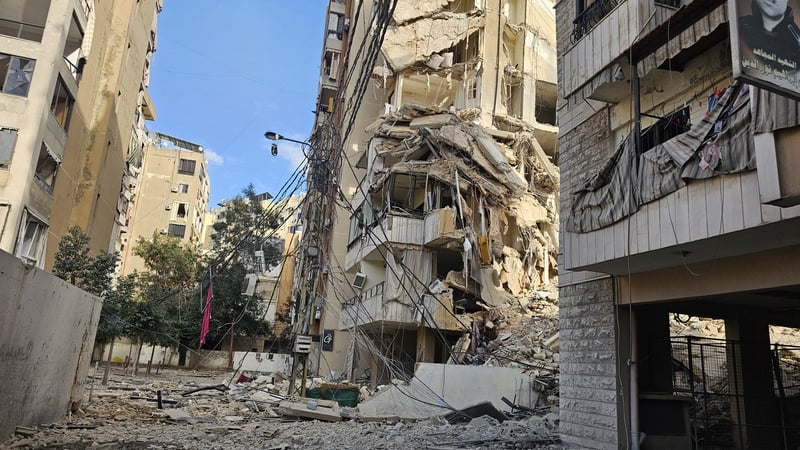
Israel will destroy all homes in Lebanese villages near the border and 600,000 people who fled the south will not be allowed home until northern Israel is secure, the country's defence minister has said.
Israel Katz reiterated Israeli plans to establish a buffer zone in southern Lebanon, saying that it would maintain control over a swathe of territory up to the Litani River once the war with the Iran-backed Hezbollah group ended.
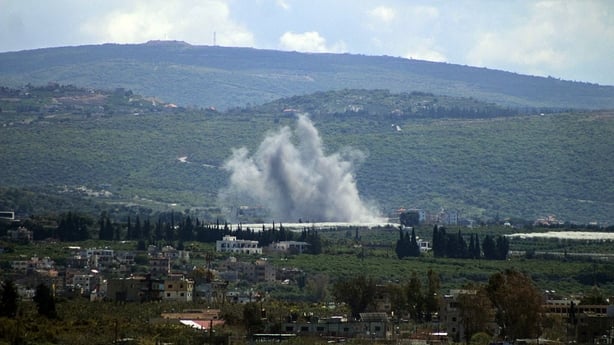
Israeli strikes in south Lebanon killed at least eight people today, one of them a paramedic, according to the ministry of health.
In separate statements, the ministry said a strike in Tyre district killed three people and wounded 19 more, while another attack in Sidon district killed four.
A third strike in Bint Jbeil district hit a gathering point for the Risala Scouts - a rescue organisation run by Hezbollah ally the Amal movement - killing a paramedic and wounding 13 other people.
More than 1.2 million people have been displaced and another 1,200 have been killed in Lebanon since Israel launched an offensive against Hezbollah on 2 March, ignited by the group's decision to open fire in support of Tehran in the regional war.
The Litani River meets the Mediterranean about 30km north of Israel's border, and the area between it and the Israeli border amounts to nearly a tenth of Lebanon's territory.
The Israeli military earlier this month ordered residents to leave swathes of the south, the Hezbollah-controlled southern suburbs of Beirut, and the group's political heartlands in eastern Lebanon.
Lebanon's minister of social affairs Haneen Sayed told Reuters that Israel's ground operation, which she described as a "land grab," was deepening the risk that Lebanese would be stuck in long-term displacement.
Mr Katz said Israeli forces would eliminate Hezbollah's elite Radwan fighters who infiltrated the south and destroy all weapons.
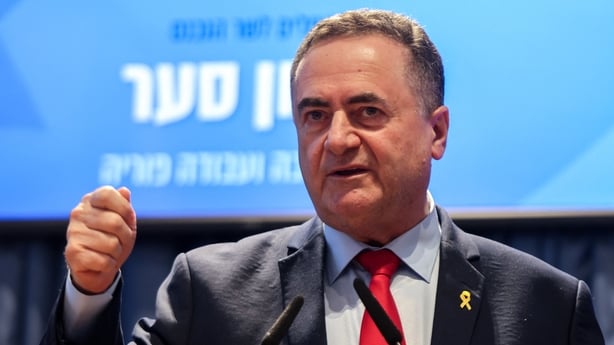
"At the end of the operation, the IDF (Israeli military) will establish a security zone inside Lebanon - a line of defence against anti-tank missiles - and will maintain security control over the entire area up to the Litani River, including the remaining Litani bridges," he said in a statement.
Displaced residents would not be allowed to return south of the Litani "until the safety and security of residents of northern Israel is guaranteed," he added.
"All houses in villages near the Lebanese border will be destroyed, in accordance with the model used in Rafah and Beit Hanoun in Gaza, in order to permanently remove the threats near the border to northern residents," he said.
European countries called on Israel to avoid further escalation.
Canadian Prime Minister Mark Carney said Israel's occupation of Lebanese territory was a "violation of their territorial sovereignty...so we condemn it".
UN worried by Israeli threats to occupy south Lebanon
The UN aid chief has warned that southern Lebanon could become another occupied territory in the Middle East after renewed Israeli threats to seize the area following its war with Hezbollah.
Tom Fletcher drew parallels to Gaza, as he told the Security Council that fighting in Lebanon has already displaced 1.1 million people.
"Given the trajectory that some Israeli ministers have described and given what we have seen in plain sight in Gaza, how will you protect civilians?" he said.
"Given the intensity of the coercive displacement that we are seeing, how should we prepare, collectively as the international community, for a new addition to the list of occupied territories?"
Mr Fletcher, who addressed the Security Council from Beirut, said he had witnessed "anxiety and tensions at levels I have not witnessed in many years, working in and on Lebanon."
"In Lebanon, more than 1.1 million people have been displaced over the past four weeks, including more than 370,000 children," he said.
"Over 200,000 people have crossed over into Syria in the past month. A cycle of coercive displacement is unfolding.
"Displacement on this scale, of course, heightens exposure to additional dangers, particularly for women and girls living in overcrowded and unfamiliar settings," Mr Fletcher added.
Hezbollah, the Iran-backed militant group, drew Lebanon into the war by launching attacks on Israel to avenge Israel's killing of Iranian supreme leader Ali Khamenei.
Israel has responded with broad strikes across Lebanon and a ground offensive.
Attacks on UN peacekeepers a 'grave violation', says EU
The EU has demanded an investigation into attacks on United Nations peacekeepers in Lebanon, after three Indonesian troops were killed amid fighting between Israel and Hezbollah.
Three United Nations peacekeepers from Indonesia were killed in two separate incidents in southern Lebanon after a bloody weekend in which Lebanese journalists and medics were also killed in Israeli strikes.
"We call for a thorough investigation to shed light on these grave attacks. These attacks are a grave violation of international law, are totally unacceptable and must stop immediately," EU spokesman Anouar El Anouni said.
We need your consent to load this flourish contentWe use flourish to manage extra content that can set cookies on your device and collect data about your activity. Please review their details and accept them to load the content.Manage Preferences
Initial findings of a probe into the deaths of two Indonesian peacekeepers in southern Lebanon yesterday point to a roadside explosion striking their convoy, according to the UN's peacekeeping chief.
The two peacekeepers with the UNIFIL force were killed near Bani Hayyan in south Lebanon and two other soldiers were wounded in the blast.
"UNIFIL is conducting investigations to determine the circumstances of these reprehensible developments," Jean-Pierre Lacroix told a UN hearing into the situation in Lebanon.
Speaking to reporters earlier at the United Nations, Israel's UN ambassador, Danny Danon, blamed the deaths of the two peacekeepers near Bani Hayyan on Hezbollah.
Asked about Mr Danon's statement, UNIFIL spokesperson Kandice Ardiel said: "We invite them to share their evidence with our investigative team."
Another Indonesian soldier was killed overnight Sunday into Monday when a projectile exploded near one of UNIFIL's positions.
A UN security source has told AFP that Israeli fire had killed the peacekeeper at the weekend, after the UN force said it was investigating the incident.
The United Nations Interim Force in Lebanon had said that the peacekeeper was killed on Sunday evening when a projectile of unknown origin "exploded in a UNIFIL position near Adchit al Qusayr".
The source told AFP on condition of anonymity that investigations had shown the fire came from an Israeli tank, adding that "debris from a tank round has been recovered" at the site.
UNIFIL numbers some 8,200 peacekeepers and patrols Lebanon's de facto southern border area, where Israel and Hezbollah have been fighting since war erupted this month as Israeli troops pursue a ground offensive.
Commandant Alex Quigley from the Defence Forces said there has been an increase in Israeli Defence Force activity and limited incursions into the Irish area of operation in southern Lebanon.
Speaking on RTÉ's Morning Ireland, he said: "Across the whole UNIFIL AO (Area of Operations) you would see like limited patrols for example, Israeli Defence Force patrols inside the area of operations."
On the death of the three Indonesian peacekeepers, he extended his sympathies on behalf of the Defence Forces, adding that since the attack was under investigation he could not divulge details.
He said: "Our army personnel are deployed to a conflict zone, so the threat isn't unfamiliar to them, but our personnel are highly trained and highly prepared for these missions.
"Before they go they undergo a three-month mission readiness exercise."
When deployed to southern Lebanon, he said UNIFIL troops are the "eyes and ears of the international community".
"What is happening right now is part of their job and we have the force protection measures in place to mitigate against that risk," he added.
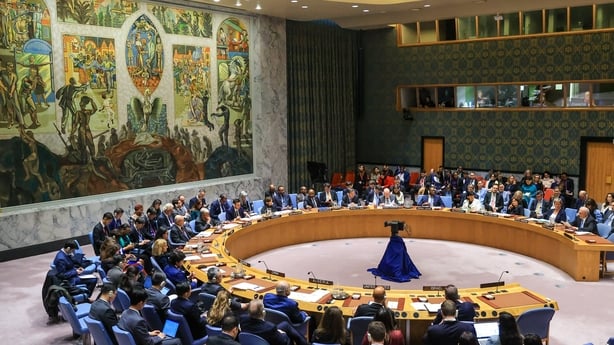
The UN Security Council held an urgent meeting today at the request of France after the peacekeepers' deaths.
The request for this meeting came from France - a permanent member of the Security Council.
Making the announcement on social media, French Foreign Minister Jean Noel Barrot said that his country condemned the attacks on UNIFIL peacekeepers in the strongest possible terms.
A UN source told RTÉ News that UNIFIL peacekeepers remained in position but that contingency plans - ranging from risk mitigation measures to relocation of troops - were on the table, should the situation continue to deteriorate.
In response to the first death, Indonesia's foreign ministry said the deceased peacekeeper was one of its citizens and that three others were injured by "indirect artillery fire".
Indonesia condemned the incident and said any harm to peacekeepers is unacceptable, while reiterating its condemnation" of Israel's attacks in southern Lebanon."
UN Secretary-General Antonio Guterres said attacks on peacekeepers are grave violations of international humanitarian law and may amount to war crimes.
Additional reporting Yvonne Murray
