


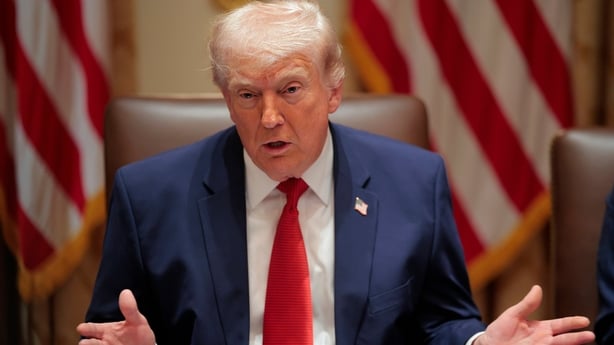
US President Donald Trump has warned that Washington will destroy Iran's energy plants and oil wells if Iran does not open the Strait of Hormuz.
It comes after Iran described US peace proposals as "unrealistic" and fired waves of missiles at Israel.
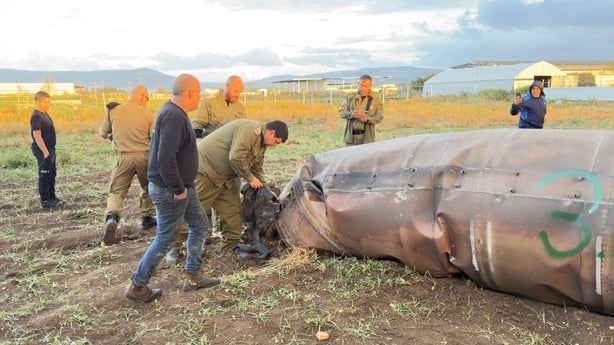
The Israeli military said that two drones from Yemen were intercepted today and that Lebanon's Hezbollah had fired rockets at Israel.
Israeli forces carried out missile strikes on what they described as military infrastructure in Tehran and infrastructure used by Hezbollah in Beirut, leaving black smoke hanging over the Lebanese capital.
Turkey's defence ministry said that a ballistic missile launched from Iran entered Turkish airspace before being shot down by NATO defences deployed in the eastern Mediterranean, the fourth such incident since the start of the war.
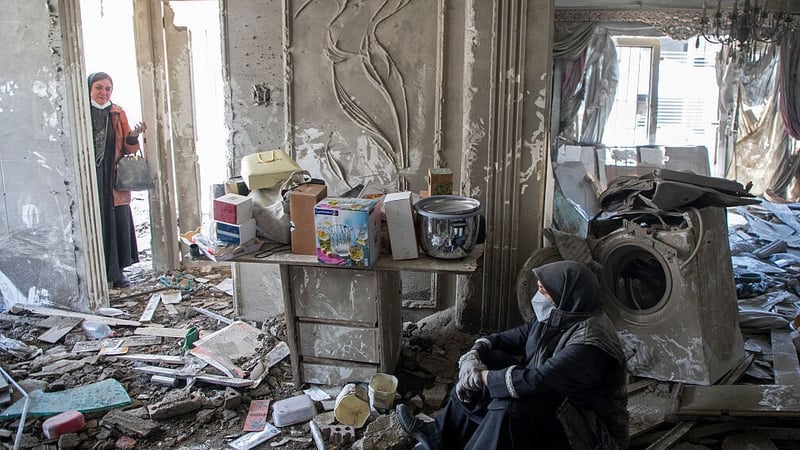
Iran remains defiant in the month-old conflict that began with US-Israeli attacks on Iran on 28 February and has spread across the region, killing thousands, disrupting energy supplies and hitting the global economy.
The majority of those reported killed were in Iran and Lebanon, many of them civilians.
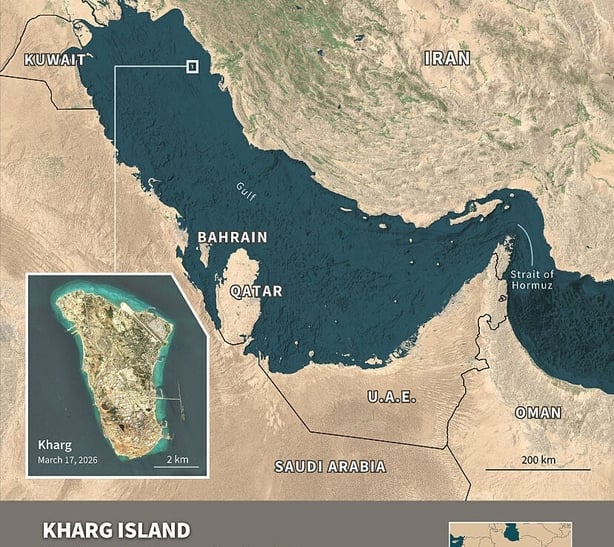
Iran has effectively blocked the Strait of Hormuz, a narrow waterway that normally carries about one fifth of the world's oil and liquefied natural gas supplies.
Meanwhile, Israeli Prime Minister Benjamin Netanyahu said that the war on Iran had achieved more than half its aims, without putting a timeline on when it would end.
"It's definitely beyond the halfway point. But I don't want to put a schedule on it," Mr Netanyahu told the conservative US broadcaster Newsmax.
He added that he meant the war was more than halfway "in terms of missions, not necessarily in terms of time".
Donald Trump initially said the operation would last for four to six weeks.
US Secretary of State Marco Rubio said that the war would last "weeks" further instead of months, amid wide US public opposition to a conflict that has sent oil prices soaring.
Mr Netanyahu said the war had achieved goals including killing "thousands" of members of Iran's Revolutionary Guards.
US sends reinforcements while pursuing talks
Thousands of soldiers from the US Army's elite 82nd Airborne Division have started to arrive in the Middle East, two US officials said, part of a reinforcement that would expand Mr Trump's options to include the deployment of forces inside Iranian territory, even as he pursues talks with Iran.
White House press secretary Karoline Leavitt later said the president wanted to reach a deal with Tehran before an 6 April deadline he set last week after extending an earlier deadline that he had set for Iran to open the Strait of Hormuz.
Ms Leavitt said that talks with Iran were progressing, adding that what Tehran said publicly differed from what it told US officials in private.
Iran said that it had received US peace proposals via intermediaries, following talks involving the foreign ministers of Pakistan, Egypt, Saudi Arabia and Turkey.
Iranian foreign ministry spokesperson Esmaeil Baghaei said the proposals were "unrealistic, illogical and excessive".
"Our position is clear. We are under military aggression. Therefore, all our efforts and strength are focused on defending ourselves," he told a news conference.
Soon after Mr Baghaei's remarks, President Trump said in a social media post that the US was in talks with a "more reasonable regime" to end the war, but he also issued a new warning over the Strait of Hormuz.
"Great progress has been made but, if for any reason a deal is not shortly reached, which it probably will be, and if the Hormuz Strait is not immediately 'Open for Business,' we will conclude our lovely 'stay' in Iran by blowing up and completely obliterating all of their Electric Generating Plants, Oil Wells and Kharg Island," he wrote.
Mr Trump also threatened to attack the desalination plants that supply clean water in Iran.
A Pakistani security official, whose country is trying to mediate in the war, said it appeared unlikely there would be direct US-Iran talks this week.
Mr Baghaei also said that Iran's parliament was reviewing a possible exit from the Nuclear Non-Proliferation Treaty.
It recognises the right to develop, research, produce and use nuclear energy as long as nuclear weapons are not pursued.
Mr Trump has cited the prevention of Iran from obtaining nuclear weapons as a reason for attacking the country. Tehran denies it is seeking a nuclear arsenal.
The White House said the president was considering asking Arab nations to pay for the cost of the war.
"It's an idea that I know that he has and something that I think you'll hear more from him on," Ms Leavitt said in response to a reporter's question.
The administration in Washington requested an additional $200 billion (€174bn) in funding for the war, which faces stiff opposition in the US Congress, where new spending must be approved.
Iran has fired on Arab Gulf states during the conflict and war has been reignited between Israel and Hezbollah in Lebanon.
Three members of the U.N. peacekeeping mission in Lebanon (UNIFIL) were killed in two separate incidents in southern Lebanon after a bloody weekend in which Lebanese journalists and medics died in Israeli strikes.
Meanwhile, benchmark oil prices extended gains.
The attacks by Yemen's Houthi rebels on Israel raised the prospect that they could target and block a second important shipping route, the Bab el-Mandeb Strait.
The International Monetary Fund warned that the war ihas caused serious disruption to the economies of frontline countries, and is dimming the outlook for many economies that had just started to recover from previous crises.
G7 finance leaders also said they were ready to take "all necessary measures" to safeguard energy market stability and limit broader economic spillovers from recent volatility.
