Israel's Knesset National Security Committee has approved a proposed death penalty bill against Palestinian detainees. It will now advance to a final vote expected next week.
The bill aims to allow for the execution of Palestinian prisoners convicted of terror offences. Pushed by the current far-right Israeli government, it would introduce a mandatory death penalty that does not require judicial unanimity, with executions to be carried out by hanging within 90 days of confirmation by the Israeli Prison Service.
There have been amendments, as well as pushbacks since its publication in January. But the motivations against the bill mostly lie within legal concerns and possible international and diplomatic backlash. Not because it constitutes the legalised, targeted killing of individuals from a specific group.
Israeli human rights organisation B'Tselem said "Israel is already killing Palestinians on a regular basis, …with close to zero accountability" and has described the bill as "… another tool in this toolbox".
Attacks on Palestinians accompanied by impunity - UNRWA Chief
According to the UN, at least 1,100 Palestinian civilians in the occupied West Bank have been killed by Israeli soldiers and settlers since 2020, with not one charge being brought over any of these deaths.
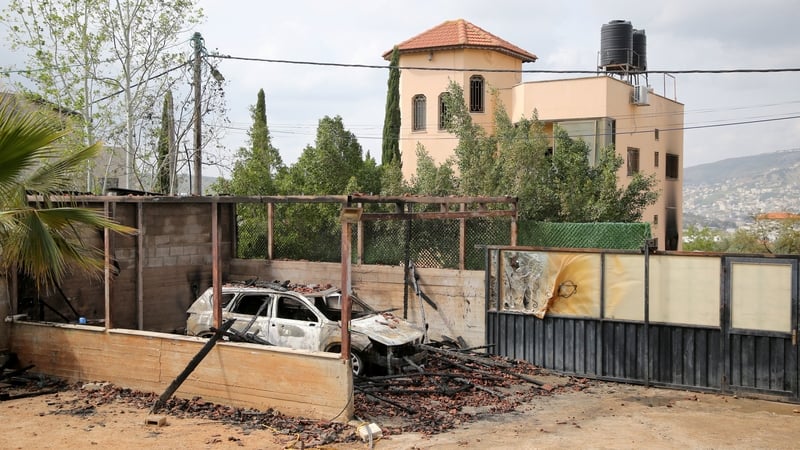
The situation has prompted UNRWA Chief Philippe Lazzarini to post on X: "The fact that large groups of settlers storm Palestinian communities, brutalise residents and torch buildings is an outrage in itself. But what is worse is that these egregious acts are accompanied by total impunity."
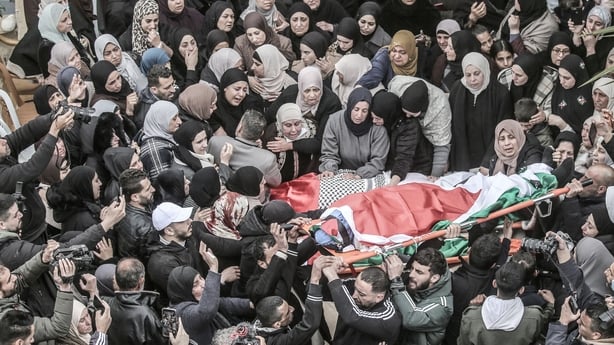
Among those killed, two young Palestinian brothers and their parents south of Jenin earlier this month, when Israeli forces shot Mohammed, aged 5, Othman, aged 7, who was blind and had special needs, their mother, Waad Bani Odeh, aged 35, and father, Ali Bani Odeh, aged 37.
They were driving home after a Ramadan shopping trip. All four were shot in the head and face, according to Palestinian health authorities.
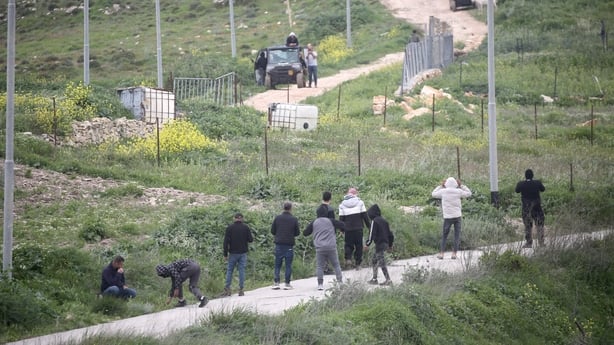
Israeli security forces have been killing Palestinians in the occupied territories for decades, and are responsible for most killings there, but since 7 October it is violence by Israeli settlers that has spiked.
These Israeli civilians have intensified their rampages through Palestinian villages and towns, setting homes, farms and businesses alight.
Israeli rights group Yesh Din, which has documented offences committed by Israeli civilians, settlers and others, against Palestinians or their property in the occupied West Bank, has found 93.6% of all investigations opened by the Israeli police since 2005 ended without an indictment.
This as the West Bank Protection Consortium, a partnership among several leading international NGOs and 14 western donor countries, has noted that a pattern has emerged which shows Palestinians arrested whilst defending their families and properties, with no such arrests of settlers.
Yesh Din concluded that "Israel intentionally enables the violence perpetrated against defenceless civilians" because the settler violence "serves Israel’s objectives to expand its control over the occupied territory by terrorising and exercising violence against Palestinians while maintaining a semblance of the rule of law".
UN report raises concerns over 'ethnic cleansing'
The rampages by Israeli settlers through Palestinian homes and villages may look like the frenzied behaviour of a mob, but suspicions are growing that there is method behind it.
The UN Human Rights Office released a report last month which raised concerns over "ethnic cleansing by Israeli authorities" in the occupied West Bank. It found that growing violence is being used to initiate the forcible transfer of people, resulting in "a permanent displacement of Palestinians".
The focus for settler attacks is on the zones of land demarcated by the 1995 Oslo II Accords. The UN humanitarian office, OCHA, said displacement linked to settler attacks in 2026 has already reached about 95% of the total numbers recorded in the whole of 2025. Most displacements have been of Bedouin and herding communities in Area C, which under the Accords is under full Israeli control.
The pattern now reflects a shifting focus, with settler violence moving to built-up Palestinian villages in Area B, where under the Accords Israel has kept security control, but the Palestinian Authority has civil powers. With OCHA remarking that since the beginning of March, "a pre-existing coercive environment that pushes people out of their homes and communities, has been further exacerbated".
And as B'Tselem points out, settlers have seen the last three years as an opportunity, to make real changes on the ground, a continuation of the decades long "ethnic cleansing campaign by Israel".
Palestinians subject to military court hearings, administrative detention
Palestinian lives are primarily governed by Israeli military law. Israeli civil law is applied to Israeli settlers living in the same territory. It is a complex dual system in place since 1967, following the Six-Day War, which ultimately resulted in the now occupied Palestinian territories of East Jerusalem, Gaza and the West Bank being taken over by Israel.
The main features of the legal system Palestinians are subjected to are hearings in military court and the implementation of administrative detention.
In administrative detention, a person is held without trial, without having committed an offence, on the grounds that he or she plans to break the law in the future.
B'Tselem said Israel routinely uses administrative detention. Placing thousands of Palestinians behind bars for periods ranging from several months to several years, without charging them, without telling them what they are accused of, and without disclosing the alleged evidence to them or to their lawyers.
To date, hundreds of thousands of Palestinians have been brought before military courts related to two types of offences; security and public order, which can include criminal offences. Military judges preside over hearings on extending the detention of interrogates.
A Military Juvenile Court in the occupied West Bank has been in operation since 2009, where it is common practice to hold a juvenile in detention until they become legal adult age. A report by Defence for Children International said Palestinian children in the Israeli military court system are exposed to the "severe risks of arbitrary deprivation of liberty".
The report also collected affidavits from 766 West Bank Palestinian children detained by Israeli forces between 2016 and 2022 that show three-quarters of them "endured some form of physical violence following arrest and 97% had no parent present during interrogation, and two thirds were not properly informed of their rights".
Israeli miltary drops charges over Sde Teiman incident
Earlier this month, the Israeli military announced it was dropping charges against five soldiers accused of sexually abusing a Palestinian detainee at a military detention facility in 2024.
A leaked video of the assault from the Sde Teiman prison triggered international outrage. The victim was stabbed near his rectum and suffered cracked ribs, a punctured lung and an internal tear.
Israeli Prime Minister Benjamin Netanyahu described the leak of the video, as perhaps the worst "public relations attack" Israel had ever faced.
Violence in prisons in the occupied territories, while well-documented, is reliant on testimonies of those released and of former guards and staff. Rights groups, NGOs, international institutions and foreign governments are essentially blocked from entry. But B’Tselem has described the country’s detention system as a "a network of torture camps".
Israel accused of operating apartheid regime
Israel has been accused of operating a regime of apartheid within the occupied territories by Human Rights Watch and Amnesty International. This is because of its restrictions on movement, home demolitions, infringement of farming and water rights, restrictions on access to education and emergency healthcare, discriminatory under-investment and the denial of refugees’ right to return.
The ICJ has ruled that not only are the settlements illegal, but also the occupation itself. Since the Oslo Accords, the occupation has become even more brutal, with settlement expansion accelerating at breakneck speed.
This disregard for international law and the impunity not just within the Israeli justice system, but also with the application of international law and standards, raises questions not just for the occupiers, but for the international community.
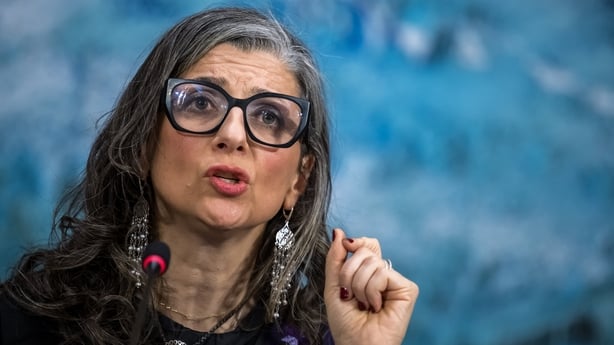
In her latest report presented to the UN Human Rights Council in Geneva on Monday, Francesca Albanese detailed accusations of torture of Palestinians.
The report concluded that "these practices are designed to inflict harm and obliterate once and for all the Palestinian right to self-determination, eroding the possibility of political, cultural and territorial continuity".
The death penalty bill currently before the Knesset once again reiterates the message the Palestinian UN Ambassador Riyad Mansour, delivered to the UN Security Council last year, that the only right Palestinians have, is to die.