


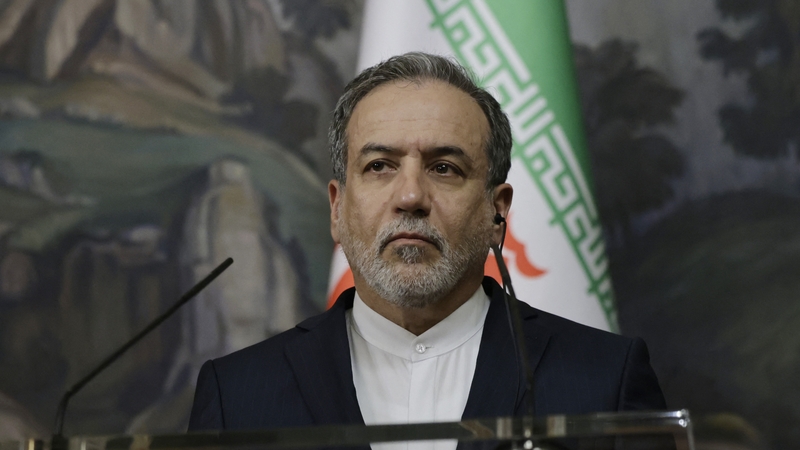
Iranian Foreign Minister Abbas Araghchi has said that Iran did not plan to negotiate with the United States and that Tehran intended to keep fighting, after President Donald Trump said Washington had proposed a peace plan.
"At present, our policy is the continuation of resistance", Mr Araghchi said on state TV, adding: "We do not intend to negotiate - so far, no negotiations have taken place, and I believe our position is completely principled."
"Speaking of negotiations now is an admission of defeat," he said.
The comments came after White House press secretary Karoline Leavitt said Mr Trump will hit Iran harder if Tehran fails to accept that the country has been "defeated militarily".
"President Trump does not bluff and he is prepared to unleash hell. Iran should not miscalculate again," Ms Leavitt told reporters in a press briefing.
"If Iran fails to accept the reality of the current moment, if they fail to understand that they have been defeated militarily, and will continue to be, President Trump will ensure they are hit harder than they have ever been hit before," she said.
As the joint US-Israeli war on Iran entered its fourth week, there have been efforts by multiple countries such as Pakistan, Turkey and Egypt to mediate.
Iran is still reviewing a US proposal to end the war in the Gulf, despite an initial response that was negative, a senior Iranian official said earlier before Mr Araghchi's comments.
Talks with Iran were still under way, Ms Leavitt said.
"Talks continue. They are productive, as the president said on Monday, and they continue to be," she added.
Watch: White House warns Trump 'prepared to unleash hell' if Iran does not make deal
Publicly, Iranian officials poured withering scorn on the prospect of any negotiations with the US administration.
But an apparent delay in delivering a formal response to Pakistan, which delivered a 15-point proposal on behalf of Washington, appeared to signal that at least some figures in Tehran may be considering it.
The senior Iranian official's comments that the proposal was still under review - though the initial response was "not positive" - appeared to contradict a report by Iran's Press TV that cited an unidentified official as saying Iran had rejected it.
A senior Pakistani security official said that Pakistan had followed up with Iran's foreign minister and was still awaiting a formal reply.
A second Pakistani source said: "The Iranians told us they will get back to us tonight. The media is reporting they've said no. But we have not received any official confirmation from Iran. So we are just waiting. They are all underground and communication is a big challenge."
Another senior Iranian official had earlier confirmed that Tehran had received a proposal and said that talks, if they went ahead, could be held in either Pakistan or Turkey.
Pentagon to send more troops
Oil prices fell and shares regained some ground after reports that Washington had sent the 15-point plan to Iran, with investors hoping for an end to a war that has killed thousands of people and disrupted global energy supplies.
The senior Pakistani security official said Pakistani intelligence had delivered the US proposal to Iran, and Foreign Minister Ishaq Dar had followed up with Mr Araqchi.
So far there had been no response from the Iranians, or any confirmed dates or venue for talks, the Pakistani official said.
Three Israeli cabinet sources said Prime Minister Benjamin Netanyahu's security cabinet had been briefed on the US proposal.
They said its terms included removing Iran's stocks of highly enriched uranium, halting enrichment, curbing its ballistic missile programme and ending funding for regional allies.
The Pentagon is meanwhile planning to send thousands of airborne troops to the Gulf to give Mr Trump more options to order a ground assault, sources have told Reuters, adding to two contingents of Marines already on their way.
The first Marine Expeditionary Unit aboard a huge amphibious assault ship could arrive around the end of the month.
Iranian military rules out deal with Trump
Pakistan has offered to host talks attended by senior US officials as soon as this week.
A senior ruling party official in Turkey, Harun Armagan, told Reuters that Ankara was also "playing a role passing messages" between Iran and the US.
But so far there has been no public recognition from Iran that it is willing to negotiate at all, and its assertions that it will not do so have become increasingly caustic.
"Has the level of your inner struggle reached the stage of you negotiating with yourself?" the top spokesperson for Iran's joint military command, Ebrahim Zolfaqari, taunted Mr Trump in comments on Iranian state TV.
"People like us can never get along with people like you," he said. "As we have always said ... no one like us will make a deal with you. Not now. Not ever."
Iran's foreign ministry spokesperson Esmail Beghaei appearing on television in India, said nuclear talks had already been under way when Mr Trump attacked.
He called this "a betrayal of diplomacy" that proved further talks were pointless.
There are "no talks or negotiations between Iran and the United States", he said. "No one can trust United States diplomacy."
A senior Israeli defence official said Israel was sceptical Iran would agree to the terms, and that Israel was concerned that US negotiators might make concessions in any talks.
More strikes
The war has raged on with no let-up in air attacks against Iran, or in Iranian drone and missile strikes against Israel and US allies.
An Israeli military official, asked whether Israel had adjusted its military plans since Mr Trump said talks were under way, said it was "pretty much business as usual".
The Israeli military described several new waves of attacks on Iran during the day, including one on Iran's construction of ships and submarines.
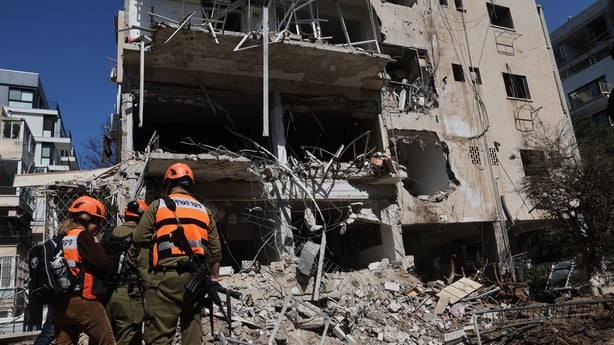
The semi-official Iranian SNN News Agency said a residential area was hit in Tehran, with rescuers searching the rubble.
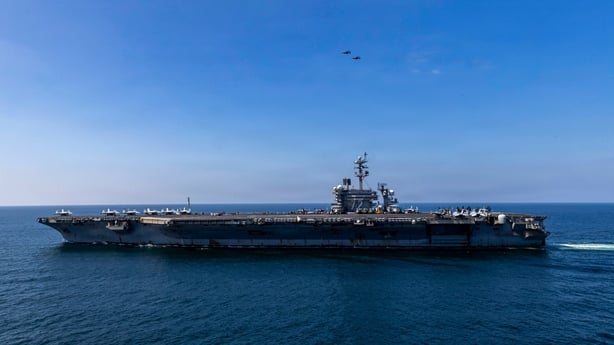
Iran's military, meanwhile, said its cruise missiles fired at the USS Abraham Lincoln carrier group had "forced it to change its position", warning of "powerful strikes" when the fleet comes into range.
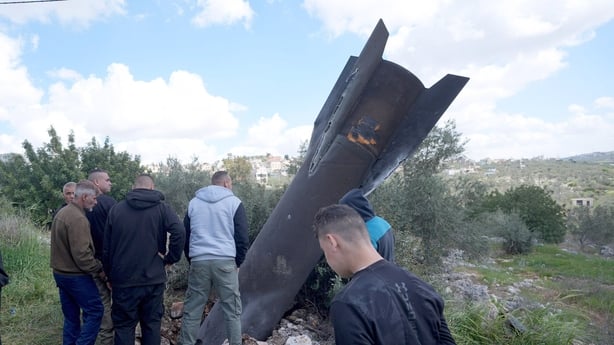
Kuwait and Saudi Arabia said they had repelled new drone attacks.
Iran's Revolutionary Guards said they had launched new attacks against Israel and US bases in Kuwait, Jordan and Bahrain.
Since the start of what the US calls "Operation Epic Fury", Iran has attacked countries that host US bases and effectively closed the Strait of Hormuz, conduit for a fifth of the world's oil and liquefied natural gas.
Iran has told the United Nations Security Council and the International Maritime Organization that "non-hostile vessels" may transit the strait if they coordinate with Iranian authorities.
In practice, however, only Iran's own oil and a handful of ships from friendly countries have made it through.
