


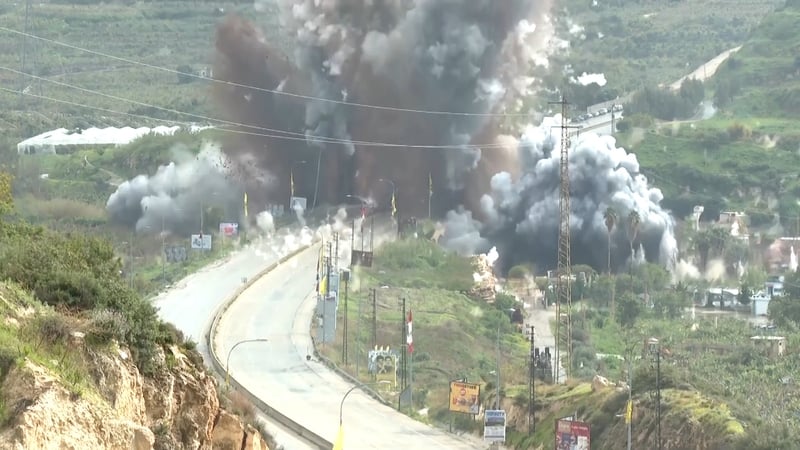
Lebanese President Joseph Aoun has criticised Israeli strikes on bridges and other infrastructure in the country's south, calling such attacks a "prelude to a ground invasion".
Mr Aoun "condemned Israel's targeting and destruction of infrastructure and vital facilities in southern Lebanon, particularly the Qasmiyeh bridge over the Litani River and other bridges", a presidency statement said.
"These attacks represent a dangerous escalation and flagrant violation of Lebanon's sovereignty and are considered a prelude to a ground invasion," Mr Aoun said.
The Israeli military announced it was expanding its ground campaign against Hezbolla, warning of a lengthy operation.
"The operation against the Hezbollah terrorist organisation has only begun ... This is a prolonged operation," Lieutenant General Eyal Zamir said in a statement.
"We are now preparing to advance the targeted ground operations and strikes according to an organised plan," he added.
In a separate statement Sunday, military spokesperson Brigadier General Effie Defrin said the expansion of the ground operation would begin within the coming week.
Israel said it struck Hezbollah targets in south Lebanon shortly after the military was ordered to destroy bridges used by the Iran-backed militant group across the Litani River.
Lebanese official media also reported Israeli raids in several areas of the south, while an AFP correspondent saw smoke billowing from a key bridge that was hit outside the city of Tyre, in an escalation in violence in Lebanon after two days of relative reprieve.
Watch: Moment Israeli army hits Qasmiyeh bridge in south Lebanon
Lebanon was pulled into the Middle East war when Hezbollah began firing rockets into Israel on 2 March to avenge the killing of Iran's supreme leader Ayatollah Ali Khamenei in Israeli-US attacks.
Israel has already sent troops into Lebanon and carried out extensive airstrikes in the country, while Hezbollah has kept up rocket barrages.
Israel's military said it began "a wide wave of strikes" against Hezbollah infrastructure in southern Lebanon.
Earlier, Israel said rocket fire from Lebanon killed one person, the first fatality there due to Hezbollah fire since the latest war erupted three weeks ago.
According to the military, two Israeli soldiers had previously been killed in southern Lebanon.
Lebanon's health ministry said four people were killed in two strikes in the south, while authorities have reported 1,029 dead in three weeks of conflict and more than one million displaced.
Israel's ZAKA 360 emergency response unit said a person was pronounced dead after a strike on their vehicle "carried out by a rocket fired from Lebanon".
Local firefighters said flames had engulfed two vehicles after a "direct hit" in the northern Israeli kibbutz community of Misgav Am.
Hezbollah said in a statement that its fighters targeted "a gathering of Israeli enemy soldiers" in Misgav Am "with a rocket barrage".
It was among a series of attacks the group claimed, mainly against Israeli troops in northern Israel and in southern Lebanon, where Israeli soldiers have been carrying out ground incursions.
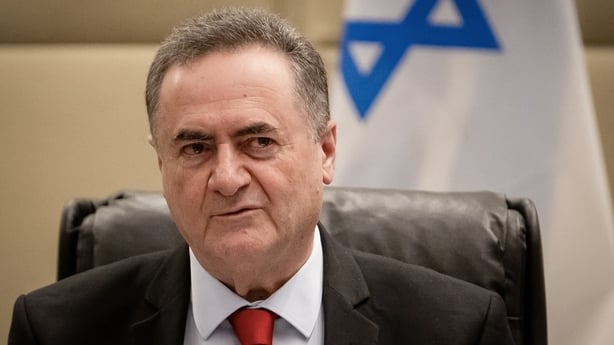
The Israeli defence minister said in a statement that he and Israeli Prime Minister Benjamin Netanyahu instructed the military "to immediately destroy all the bridges over the Litani River that are used for terrorist activity, in order to prevent Hezbollah terrorists and weapons from moving south".
The Litani River runs around 30km north of the Israeli border.
The Israeli army later bombed the key Qasmiyeh bridge, located on a main highway outside the city of Tyre, with the AFP correspondent reporting the bridge was partly destroyed.
Earlier this week, Israel attacked two bridges spanning the Litani, also alleging they were being used by Hezbollah.
Israel Katz said the military was also instructed to "accelerate the demolition of Lebanese houses in the contact villages in order to thwart threats to Israeli communities".
Lebanon's state-run National News Agency also reported at least one strike on the Bekaa Valley in the country's east.
Hezbollah said its fighters repeatedly targeted Israeli soldiers and vehicles in or near the border town of Taybeh, as well as in or near the strategic town of Khiam, where the group has repeatedly said it has targeted Israeli forces in recent days.
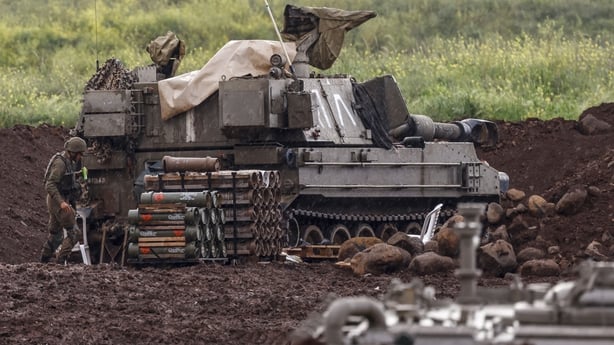
Yesterday, Hezbollah said its fighters clashed with Israeli forces in Khiam and in the coastal town of Naqura.
The group also claimed attacks on northern Israel yesterday, including targeting an air defence system in Maalot-Tarshiha, where Israeli public broadcaster Kan 11 reported three people were lightly wounded.
The Israeli military said it killed a fighter who was the "commander of the special forces in Hezbollah's Radwan Force", referring to the group's elite unit.
Israel has warned residents of swathes of south Lebanon to evacuate and has said it wants to create a buffer zone in Lebanon to protect residents of northern Israel.
Meanwhile Minister for Foreign Affairs Helen McEntee called developments in Lebanon "deeply worrying", adding that it reinforces "the need to deescalate, including in order to protect UNIFIL personnel and preserve regional stability".
"I call on all parties to step back, de-escalate, halt attacks and create the space for dialogue that can lead to lasting diplomatic solutions," she said.
The minister said the world is "at a dangerous moment" due to "a growing cycle of escalation and violence" in the Middle East.
"Urgent action is now needed to prevent this crisis from deepening further," she said.
