


Natural gas prices in Europe surged as much as 35% as Israeli and Iranian strikes targeted some of the Middle East's most important gas infrastructure, doing damage that will likely take years to repair.
The strikes on energy facilities since the onset of the US and Israeli war on Iran have brought to life some of the energy industry's worst fears - that a conflict in the region will leave long-term damage and shortages in global energy supplies.
"We are now well on the road to the doomsday gas-crisis scenario," said Saul Kavonic, an energy analyst at MST Financial.
He added: "Even once the war ends, the disruption to LNG supply could last for months or even years."
Iran struck the Ras Laffan liquefied natural gas facility in Qatar, the world's largest LNG complex, a day after Israel attacked Iran's huge South Pars gas facilities.
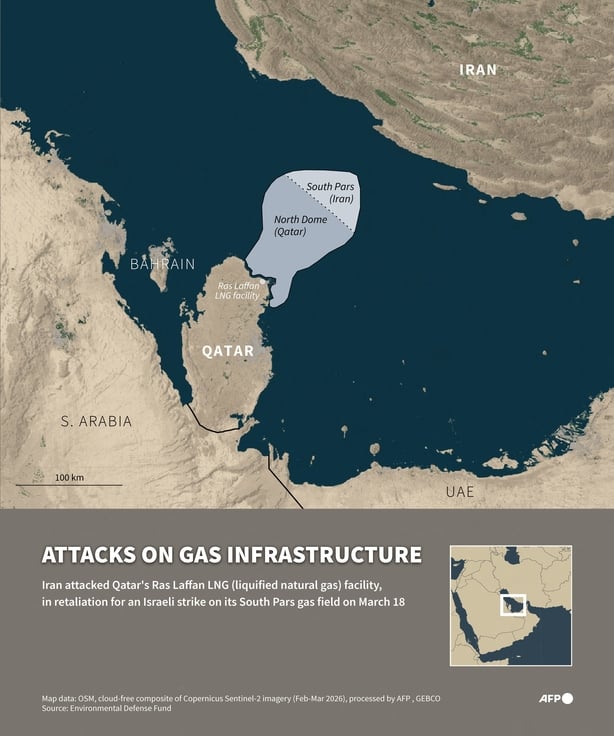
The hit on Ras Laffan destroyed two LNG trains that could cause a reduction of around 17% of Qatar's liquefied natural gas exports for between three and five years.
"I never in my wildest dreams would have thought that Qatar would be - Qatar and the region - in such an attack, especially from a brotherly Muslim country in the month of Ramadan, attacking us in this way," QatarEnergy CEO Saad al-Kaabi told Reuters.
He said the state-owned gas company may have to declare force majeure on long-term contracts to Belgium, China, Italy and South Korea.
Gas prices in Europe rose by as much as 35% on Thursday and oil jumped as much as 10%, before paring gains.
Sharp escalation in the conflict
Analysts say Israel's attack on South Pars and the retaliatory strike on the Ras Laffan plant represent a sharp escalation in the conflict.
Aerial attacks by Iran have already targeted a refinery in Saudi Arabia, forced the United Arab Emirates to shut gas facilities, and started fires at two Kuwaiti refineries.
US President Donald Trump threatened retaliation if they persisted.
"This latest escalation feels like a turning point for markets because the conflict is no longer just about military headlines or Strait of Hormuz closure," said Charu Chanana, chief investment strategist at Saxo in Singapore, referring to the closure of a key waterway bordering Iran's coast through which a fifth of the world's crude oil and liquefied natural gas normally flows.
She added: "It is now hitting the plumbing of the global energy system. What is unsettling markets now is the growing stagflation risk."
Euro zone inflation expected to rise
The European Central Bank said the war in Iran would have a "material impact" on near-term inflation, depending on its intensity and duration.
Financial markets expect euro zone inflation to climb close to 4% over the next year, then take years to return to the ECB's 2% target.
Traders are pricing in two or three rate hikes by December, betting that the ECB would not tolerate another war-fuelled spike in inflation after being stung by Russia's invasion of Ukraine four years ago.
The yield on the two-year US Treasury note, a proxy for expectations of where the Federal Reserve is headed with interest rates, shot to the highest in nearly eight months, unwinding most of the three rate cuts the Fed delivered last year.
An International Monetary Fund official estimated that every 10% increase in oil prices, if sustained through the year-end, adds about 40 basis points to global inflation and cuts economic output by 0.1% to 0.2%.
The UK, France, Germany, Italy, Japan and the Netherlands called for an immediate moratorium on attacks on oil and gas facilities and said they are working with energy-producing nations to stabilise markets, according to a joint statement.
Mr Trump earlier warned Iran on social media not to retaliate by attacking Qatari LNG facilities again and threatened to "massively blow up the entirety of the South Pars Gas Field" if it did so.
Qatar shares the South Pars gas field, the world’s largest, with Iran.
Iran says will show 'zero restraint’ if attacked again
Mr Trump, politically vulnerable to rising fuel prices among his core voters, has lashed out at allies who have responded cautiously to his demands that they help secure the Strait of Hormuz.
Israeli Prime Minister Benjamin Netanyahu said in a call that he would not attack any more Iranian energy facilities, Mr Trump said.
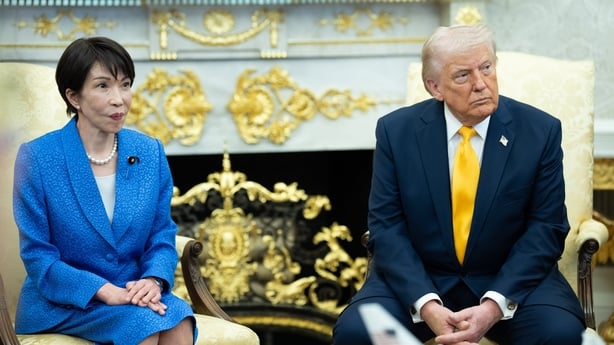
"I told him, 'Don't do that', and he won't do that," he told reporters in the Oval Office, where he met Japanese Prime Minister Sanae Takaichi.
A US official and three other people familiar with the planning said that Mr Trump was considering sending thousands more US troops to the Middle East.
But at his meeting with Ms Takaichi, Mr Trump said he had no plans to deploy ground forces.
Watch: Israeli strike ignites large fire at Iran's South Pars gas field
"I'm not putting troops anywhere," he said
Iran will show "zero restraint" if its infrastructure is attacked again, Foreign Minister Abbas Araghchi said on X.
Mr Netanyahu, meanwhile, told a news conference this evening that Israel is "winning" and Iran is being "decimated".
Mr Netanyahu, without providing evidence, said Iran no longer has the capacity to enrich uranium or make ballistic missiles.
The Israeli prime minister also said that he sees the war "ending a lot faster than people think".
He added that there are "many possibilities for a ground component" for its war on Iran.
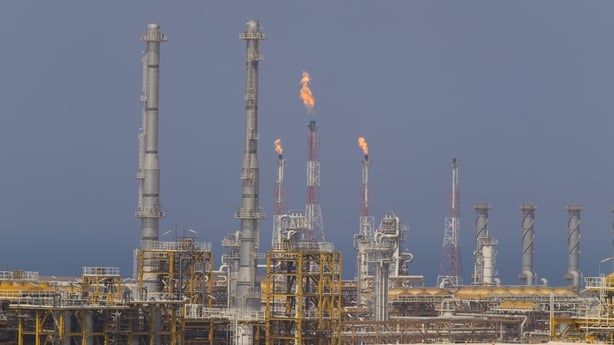
Gas prices in Europe have doubled since late February before the US and Israel launched their war on Iran.
Oil loadings by Saudi Arabia at the Red Sea port of Yanbu were disrupted briefly, two sources told Reuters, after a drone fell on the nearby Aramco-Exxon refinery, SAMREF.
The port is the only export outlet for the world's largest oil exporter after Iran effectively blocked tanker traffic leaving the Gulf via the Strait of Hormuz.
Kuwait Petroleum Corp's Mina al-Ahmadi and Mina Abdullah refineries were also targeted by drones, resulting in fires at both sites, the state news agency said.
The UAE shut its Habshan gas facilities after intercepting missiles early in the day.
No injuries were reported, the Abu Dhabi Media Office said.
UAE authorities said they were responding to an incident at the Bab oilfield caused by falling debris from intercepted missiles.
We need your consent to load this rte-player contentWe use rte-player to manage extra content that can set cookies on your device and collect data about your activity. Please review their details and accept them to load the content.Manage Preferences
UN chief calls on US, Israel to end war
United Nations Secretary-General Antonio Guterres has called on the United States and Israel to end their war with Iran before it spirals "out of control," warning of "potential tragic consequences" for civilians as well as the global economy.
"To the United States and to Israel: it's high time to end this war that is risking to get completely out of control," Mr Guterres told reporters at an EU summit in Brussels.
"To Iran, stop attacking your neighbours. They were never parties to the conflict," he said.
Mr Guterres reiterated his message in a post on X, adding that the prolonged closure of the Strait of Hormuz causes "enormous pain" for many around the world.
"It's time for the force of the law to prevail over the law of the force.
"It's time for diplomacy to prevail over war," Mr Guterres said.
Watch: Guterres calls on Israel and US to end war
I have two clear messages:
— António Guterres (@antonioguterres) March 19, 2026
First, to the United States & Israel:
It's high time to end this war that is risking to get out of control, causing immense suffering on civilians, with dramatic effects on the global economy & potentially tragic consequences, especially for the least… pic.twitter.com/1GGzoK2LNM
More than 3,000 people have been killed in Iran since the US-Israeli attacks began on 28 February, the US-based Iran human rights group HRANA estimates.
Lebanon's health ministry said that Israeli attacks have killed 1,001 people in the country since war erupted between Israel and Hezbollah on 2 March, raising a previous toll of 968 a day earlier.
The new ministry statement said the toll included 79 women, 118 children and 40 health workers, with 2,584 other people wounded.
Authorities in Lebanon said 800,000 forced to flee their homes.
Iranian attacks have killed people in Iraq and across the Gulf states, and at least 13 US military service members have been killed in the war.
Read more:
UN body proposes safe corridor for Middle East shipping
The uniquely complex power structure of Iran
How many ships have been attacked in the Gulf?
