


Iran has warned that it would destroy the oil and gas industry of its Gulf neighbours, which it considers American interests, it its own energy sector is harmed again.
"We warn you once again that you made a big mistake in attacking the energy infrastructure of the Islamic Republic, the response to which is being implemented," the Revolutionary Guards announced, in a statement carried by Iranian media.
"If it is repeated again, further attacks on your energy infrastructure and that of your allies will not stop until it is completely destroyed, and our response will be much more severe than tonight's attacks."
Meanwhile, the European Union has called on Israel to cease its military campaign in Lebanon, after the latest Israeli strikes on Beirut.
"The EU is deeply concerned about the ongoing Israeli offensive in Lebanon which already has devastating humanitarian consequences and risks triggering a prolonged conflict," a spokesperson said.
"Israel should cease its operations in Lebanon."
Lebanon was drawn into the Middle East war on 2 March when Hezbollah militants launched rockets at Israel after the killing of Iran's supreme leader Ayatollah Ali Khamenei.
Israeli strikes have killed at least 968 people and displaced over a million, according to local authorities.
Earlier Iran's new supreme leader Mojtaba Khamenei said in a written message that the killers of security chief Ali Larijani, who died in an Israeli strike, "will have to pay for it".
"Without a doubt, the assassination of such a figure attests to his importance and to the hatred that the enemies of Islam harbour toward him," Mr Khamenei said, in a message published on his official Telegram channel on the day of Mr Larijani's funeral in Tehran.
"Every drop of spilled blood comes at a price, and the criminal murderers of these martyrs will soon have to pay it," added Mr Khamenei, who has yet to appear in public after taking office following the killing of his father, ex-supreme leader Ali Khamenei at the start of the war.
While Lebanese militant group Hezbollah condemned Israel's killing of Mr Larijani, calling it "cowardly".
"We in Hezbollah, as we condemn this cowardly assassination and the ongoing criminal American-Israeli aggression, affirm that the assassination of leaders will neither break the will of the Islamic Republic nor undermine the determination of its leadership, its people, and its fighters," the Iran-backed group said.
We need your consent to load this rte-player contentWe use rte-player to manage extra content that can set cookies on your device and collect data about your activity. Please review their details and accept them to load the content.Manage Preferences
Mr Larijani, one of the most powerful men in Iran, was killed in an Israeli air strike, Tehran confirmed yesterday.
A day after killing Iran's powerful security chief Mr Larijani in the highest-level targeted killing since that of the supreme leader on the war's first day, Israel said it had killed Intelligence Minister Esmail Khatib.
Israel also hit central Beirut, destroying apartment buildings in some of the most intense airstrikes on the Lebanese capital for decades, Israel's other front in the war it launched with the United States against Iran.
"No one in Iran has immunity and everyone is in the crosshairs," Defence Minister Israel Katz said.
"The Prime Minister, Benjamin Netanyahu, and I have authorised the Israel Defence Forces to target any senior Iranian official for whom an intelligence and operational opportunity arises, without the need for additional approval."
It appeared to be the first time Israel has publicly stated that it would let the military target enemy officials without seeking special permission from political leaders for missions.
Mr Katz did not say when the order had been given.
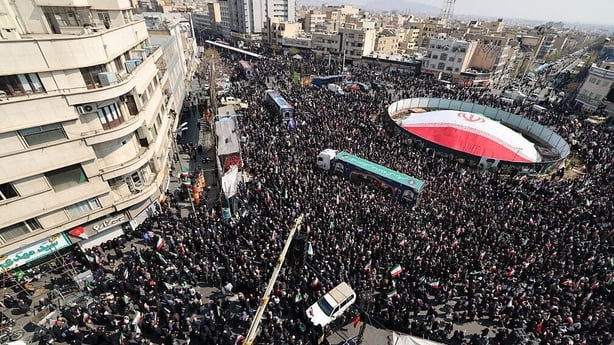
In Tehran, thousands of people appeared in the streets for a funeral for Mr Larijani and other figures killed in US-Israeli strikes.
The crowd waved Iranian flags and carried portraits of the slain officials as a eulogist sang: "Martyrs are leading the way, they've become more alive, burning with love."
Iran retaliated for the killing of Mr Larijani by firing missiles with multiple warheads at Israel, attacks which Israeli authorities said killed two people near Tel Aviv. Tehran said it fired overnight on Tel Aviv, Haifa and Beersheba in Israel, and at US bases in Bahrain, Iraq, Jordan, Kuwait, Saudi Arabia and the UAE.
Iranian Foreign Minister Abbas Araqchi said the US and Israel failed to understand that the Islamic Republic was a robust political system that did not depend on any single individual.
Iran threatens Gulf energy targets after huge gas field is struck
Iran's huge Pars gas field was hit in the first reported strikes on Iran's Gulf energy infrastructure of the US-Israeli war, prompting Tehran to announce it would respond with attacks on oil and gas targets throughout the Gulf.
Oil prices shot up after the attack, a major escalation in a war that has already halted shipping from the world's most important energy-producing region and could now bring lasting damage to its infrastructure.
Pars is the Iranian sector of the world's largest natural gas deposit, which Iran shares with Qatar across the Gulf.
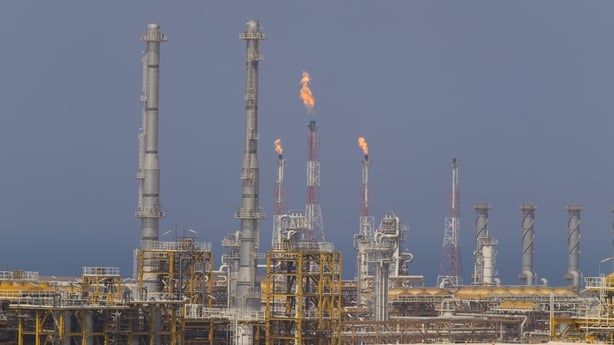
Iran's Fars news agency reported that gas tanks and parts of a refinery had been hit, workers had been evacuated to a safe location and emergency crews were trying to put out a fire.
State media later said the fire was under control.
The attack was widely reported in Israeli media to have been carried out by Israel with US consent, though neither country acknowledged immediate responsibility.
The Israeli military did not respond to requests for comment.
Qatar, a close US ally which hosts the largest US airbase in the region, blamed the attack on Israel without mentioning any US role.
The Qatari foreign ministry spokesperson called it a "dangerous and irresponsible" escalation that put global energy security at risk. The UAE also denounced the attack.
Iran listed an array of prominent regional oil and gas targets belonging to Saudi Arabia, the UAE and Qatar, which it said were now "direct and legitimate targets" and should be evacuated at once before it struck them in the coming hours.
Previously during nearly three weeks of war, the US and Israel had held back from targeting Iran's energy production facilities in the Gulf, averting Iranian retaliation against the oil and gas industries of its neighbours.
Nearly three weeks into the conflict, there is no sign of de-escalation
Iran's new supreme leader has rejected proposals conveyed to Tehran by intermediary countries to de-escalate the conflict, saying that the United States and Israel must first be "brought to their knees", according to a senior Iranian official who asked not to be identified.
In a second major front in the war, Israel has stepped up strikes on Lebanon and a ground assault in the south in pursuit of the Iran-backed Hezbollah group, which has fired across the border in solidarity with Tehran.
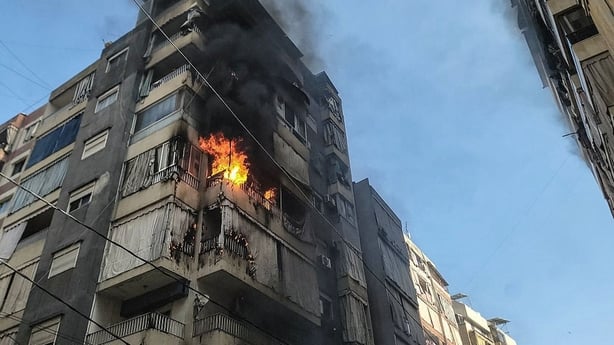
In central Beirut's Bachoura district, Israel warned residents early this morning to leave a building it said was used by Hezbollah, which it then completely flattened. Eyewitness video, verified by Reuters, showed it crumbling into dust as it was struck at dawn.
Abu Khalil, who lives in the area, said he had helped people flee nearby homes after the Israeli warning. "It's just an operation to hurt, to terrify people, to terrify children," he told Reuters, insisting there were no military targets nearby.
No similar warnings were given for strikes that hit apartment buildings in two other central districts, killing at least ten people, according to Lebanese authorities. Smoke poured from the balcony of one building as residents swept debris from the street.
Inside Israel, an Iranian missile tore a crater into the pavement and set cars ablaze in a residential area of Holon, just south of Tel Aviv.
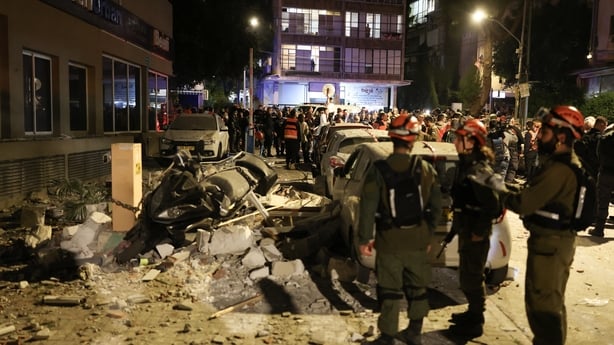
"There was an alarm, we went into the shelter, we heard a crazy boom," resident Leah Palteal said.
Israel also acknowledged that its troops in southern Lebanon had fired from a tank at a UN base on 6 March, injuring three Ghanaian peacekeepers in what it said was a mistake.
Mounting casualties across the region
US-based Iran human rights group HRANA said on Monday that an estimated 3,000-plus people have been killed in Iran since the US-Israeli attacks began at the end of February. Authorities in Lebanon say 900 people have been killed there and 800,000 forced to flee their homes.
Iranian attacks have killed people in Iraq and across the Gulf states, with 14 killed in Israel.
Israel and the United States said their war aim is to prevent Iran from being able to project force beyond its borders and destroy its nuclear and missile programmes.
They have also urged Iranians to rise up and overthrow their clerical rulers, just weeks after authorities killed thousands of anti-government protesters. However, there has been no sign of organised dissent inside Iran since the bombing began.
The Israel Defence Forces said it struck targets in Tehran yesterday that included the headquarters of the Revolutionary Guards' security unit tasked with suppressing unrest.
Iran told the UN nuclear watchdog that a projectile had also hit an area near the Bushehr nuclear power plant yesterday evening but caused no damage or injuries. IAEA chief Rafael Grossi reiterated his call for maximum restraint.
The US military said it had targeted sites along Iran's coastline near the Strait of Hormuz with powerful "bunker-buster" bombs, saying Iranian anti-ship missiles there posed a threat to international shipping.
The strait, where a fifth of global oil and liquefied natural gas supplies normally pass within a few miles of Iran's coast, remains largely closed as Iran threatens to attack tankers linked to the US and Israel.
