


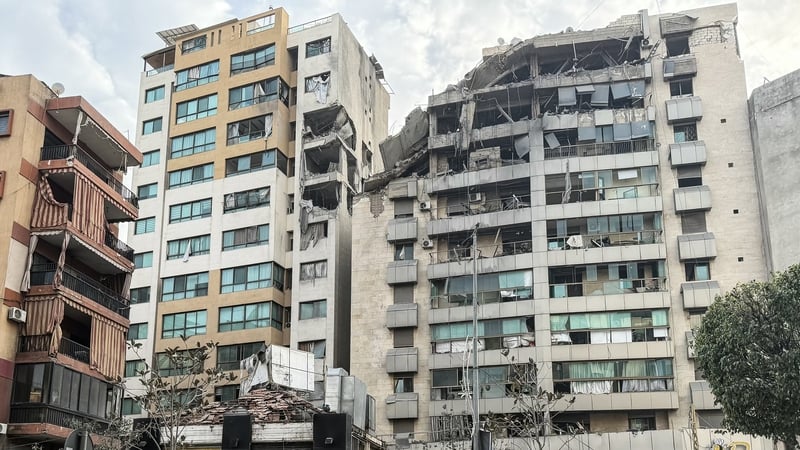
The United Nations' refugee agency has said that up to 3.2 million people in Iran have been displaced since the war began almost a fortnight ago.
"This figure is likely to continue rising as hostilities persist, marking a worrying escalation in humanitarian needs," the UN High Commissioner for Refugees said in a statement, citing preliminary assessments based on the number of uprooted households.
Iran's new Supreme Leader Mojtaba Khamenei said that his country would avenge the blood of its martyrs, keep the Strait of Hormuz closed and attack US bases.
The remarks - the first since his father Ayatollah Ali Khamenei was killed - were in a statement read on state television.
In the defiant address, Mr Khamenei said the United States must close all of its bases in the region.
He said the strait should remain shut to put pressure on the enemy. The passage is off the Iranian coast and supplies one-fifth of the world's oil.
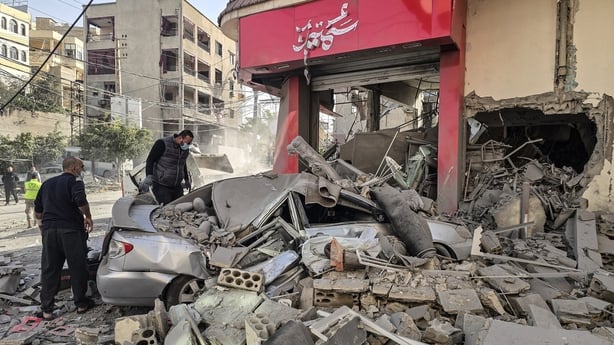
Two tankers were on fire in an Iraqi port after being struck by suspected Iranian explosive-laden boats yesterday.
It was a step-up in attacks that have cut off oil from the Middle East and defied US President Donald Trump's claim to have won the war that began a fortnight ago.
Images verified by Reuters as having been filmed from the shore of the port of Basra showed ships engulfed in orange fireballs, blamed by Iraqi authorities on Iranian boats.
At least one crew member was killed.
Hours earlier, three other ships were struck in the Gulf.
Iran's Revolutionary Guards claimed responsibility for at least one of these attacks, on a Thai bulk carrier that was set ablaze, which the guards said had disobeyed orders.
Another container vessel reported being struck by an unknown projectile near the United Arab Emirates.
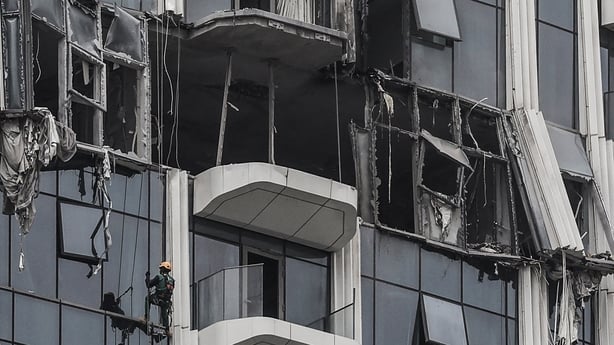
The war, launched by the US and Israel almost a fortnight ago, has killed around 2,000 people and caused the biggest disruption to global energy supplies since the 1970s.
The United Nations Children's Fund (UNICEF) said that more than 1,100 children had died or been injured.
Undermining US and Israeli claims to have knocked out much of Iran's stock of long-range weapons, more drones were reported flying over Kuwait, Iraq, the United Arab Emirates, Bahrain and Oman.
Lebanon's Iran-backed Hezbollah launched its biggest volley of rockets into Israel of the war, prompting fresh Israeli strikes on Beirut.
The Israeli military has been instructed to expand its operations in Lebanon, defence minister Israel Katz said, in response to the militant group's action.
Mr Katz warned Lebanese President Joseph Aoun that if his government could not stop Hezbollah attacks, Israel "would do it ourselves", according to a statement released by his office.
Oil prices had decreased earlier in the week after President Trump said the war would soon be over. They are now back above $100 a barrel.
Watch: Trump says US looking 'strongly at the straits'
President Trump has repeatedly tried to calm energy markets by saying the surge in oil prices will be short-lived.
However, he has not fully explained how the war will end, or presented a plan to reopen the Strait of Hormuz.
US and Israeli officials say the aim is to destroy Iran's missile and nuclear programmes, but Mr Trump has also demanded the country's "unconditional surrender" and the power to determine its leaders.
"You never like to say too early you won. We won," the president told a campaign-style rally in Kentucky. "In the first hour it was over."
The US had "virtually destroyed Iran", he said, but: "We don't want to leave early do we? We got to finish the job".
Sources said that US intelligence indicated Iran's leadership was still largely intact and not at risk of collapse any time soon.
Read more:
Follow live updates on the Iran war
Latest Middle East stories
