


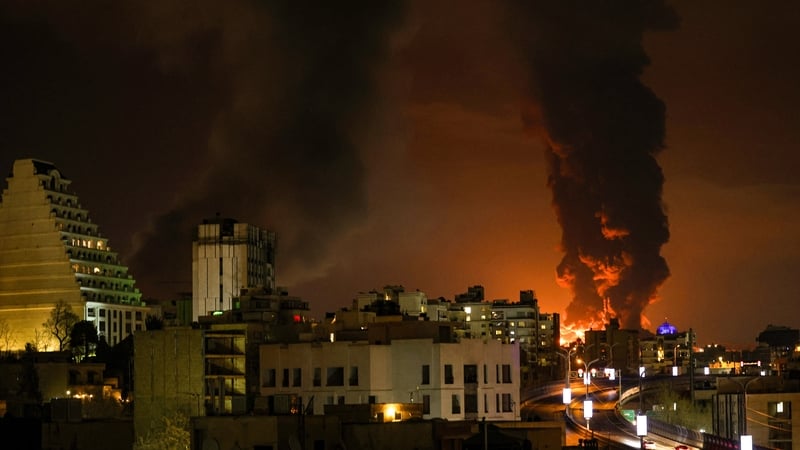
Iran launched waves of missile and drone attacks on its Gulf neighbours hosting US forces and vowed no surrender despite threats from President Donald Trump to widen the conflict.
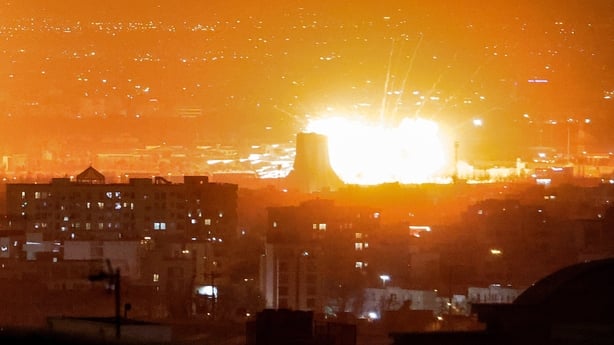
Israel and the United States pounded Iran again, with one air strike setting a Tehran airport ablaze, but Iran demonstrated that it retained the capacity to retaliate.
Iran's Revolutionary Guards said they had struck America's Juffair base in Bahrain, adding that it had been used to attack an Iranian desalination plant earlier.
There were air raid warnings and blasts in Jerusalem in Israel and Doha in Qatar, and attacks on the United Arab Emirates and Bahrain.
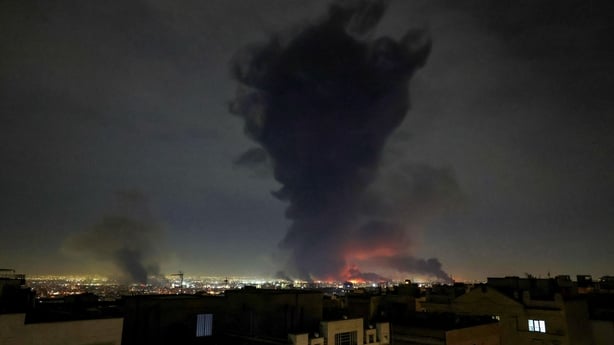
The UAE said its air defences intercepted 15 missiles and 119 drones and video footage showed one projectile crashing at Dubai airport.
Earlier, President Masoud Pezeshkian had issued an apology to Iran's neighbours, which host major US military bases.
Saudi Arabia said it had intercepted a missile fired at an airbase housing US personnel, while Jordan accused Iran of "targeting vital installations" inside the country over the last week.
Mr Pezeshkian struck a defiant tone in a speech in which he also appeared to address Trump's demand for "unconditional surrender".
Iran's enemies "must take their wish for the unconditional surrender of the Iranian people to their graves", Mr Pezeshkian said.
Air raids
Israel launched some of its biggest raids since the bombardment began with a military academy, an underground command centre and a missile storage facility named as targets.
Fire and smoke billowed from Tehran's Mehrabad International Airport after a predawn attack in which Israel said it had destroyed 16 aircraft and fighter jets.
"Today Iran will be hit very hard!" Mr Trump posted on his Truth Social media platform.
We need your consent to load this rte-player contentWe use rte-player to manage extra content that can set cookies on your device and collect data about your activity. Please review their details and accept them to load the content.Manage Preferences
"Under serious consideration for complete destruction and certain death, because of Iran's bad behavior, are areas and groups of people that were not considered for targeting up until this moment in time."
He later said in Florida: "We're doing very well in Iran."
Repeating his claim that Iran had been close to having a nuclear weapon, he added:
"They're crazy and they would have used it. So we did the world a favour."
Now into a second week, the war was sparked by joint Israeli and US air strikes that killed Iranian supreme leader Ali Khamenei.
The conflict has since widened to Lebanon, as well as Cyprus, Turkey and Azerbaijan, and reached as far as the seas off Sri Lanka where US forces sank an Iranian warship with a torpedo.
Inside Iran, damage to infrastructure and residential buildings is mounting, while residents of Tehran report growing anxiety and a heavy presence of security forces.
Israel has intensified its air strikes on Lebanon, repeatedly bombing and ordering the evacuation of Beirut's southern suburbs, where the Iran-backed militant group Hezbollah holds sway.
Israeli Defence Minister Israel Katz warned Lebanese President Joseph Aoun that his country would pay a "very heavy price" if it failed to disarm Hezbollah.
Israeli commandos launched an unsuccessful mission overnight to retrieve the remains of an air force navigator lost in 1986, killing 41 people in the process in the town of Nabi Sheet.
Lebanon's health ministry said at least 294 people have been killed in Israeli air strikes over the last week, while Prime Minister Nawaf Salam has warned of a "humanitarian disaster".
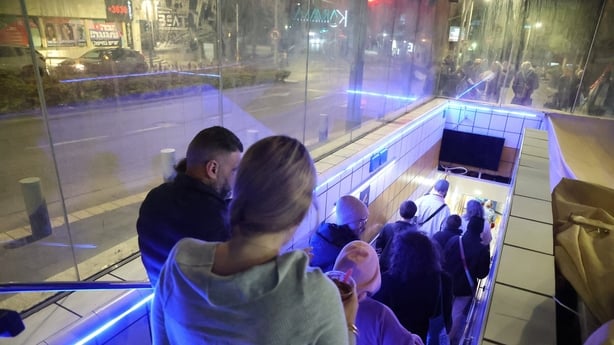
The consequences of the conflict reach far beyond those in the immediate firing line.
Iran's Revolutionary Guards said they had hit two oil tankers with exploding drones in the Gulf as they continued to paralyse oil and gas traffic through the Strait of Hormuz, a key chokepoint for global shipping.
Defiance
Protesters came out in various cities around the globe - for Iran, against the war or in support of Reza Pahlavi, the US-based son of the late shah.
Mr Trump has promised to help rebuild Iran's economy if Tehran installs someone "acceptable" to him to replace its late supreme leader.
Amir Saeid Iravani, Iran's ambassador to the United Nations, said the US would have no role in selecting Mr Khamenei's successor.
"The selection of Iran's leadership will take place strictly in accordance with our constitutional procedures and solely by the will of the Iranian people, without any foreign interference," he added.
Read more:
Follow live updates from the conflict in the Middle East
194 people on board Govt-chartered flight from Oman to Dublin
Operation Epic Fury a high-stakes gamble for Trump administration
