


Iran's top diplomat has voiced hope of "a new window of opportunity" that fresh nuclear talks with Washington would lead to a lasting solution to the two countries' standoff.
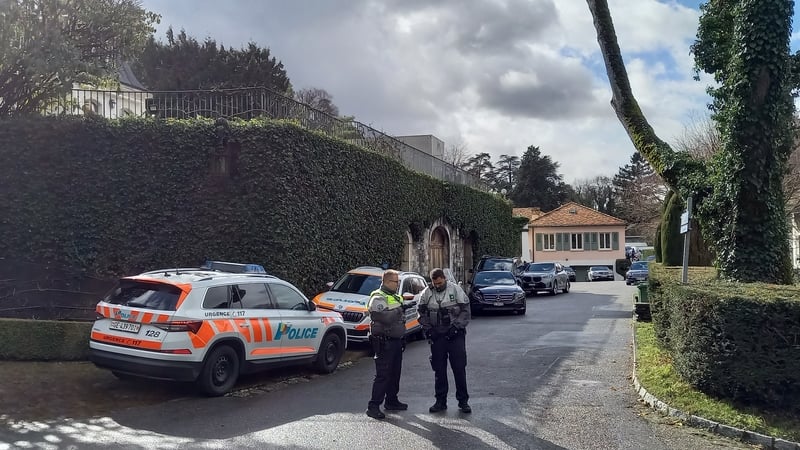
Iranian Foreign Minister Abbas Araghchi told the Conference on Disarmament in Geneva that "a new window of opportunity has opened, under which we had the second round of the negotiations with the United States earlier today here in Geneva".
"We are hopeful that negotiation will lead to a sustainable and negotiated solution which can serve the interest of relevant parties and the broader region," he said, stressing though that "Iran remains fully prepared to defend itself against any threat or act of aggression".
Minister Abbas Araghchi said the latest talks with the United States saw them agree on "a set of guiding principles" that would pave the way for a deal.
"Ultimately, we were able to reach broad agreement on a set of guiding principles, based on which we will move forward and begin working on the text of a potential agreement," Mr Araghchi told state TV.
"I can say that, compared with the previous round, fully serious discussions were raised and the atmosphere was more constructive," he added.
Tehran and Washington held a second round of negotiations - which began earlier this month - after talks last year collapsed following Israel's attack on Iran in June, which triggered a 12-day war.
We need your consent to load this rte-player contentWe use rte-player to manage extra content that can set cookies on your device and collect data about your activity. Please review their details and accept them to load the content.Manage Preferences
That war saw the United States briefly join Israel with strikes on key Iranian nuclear sites.
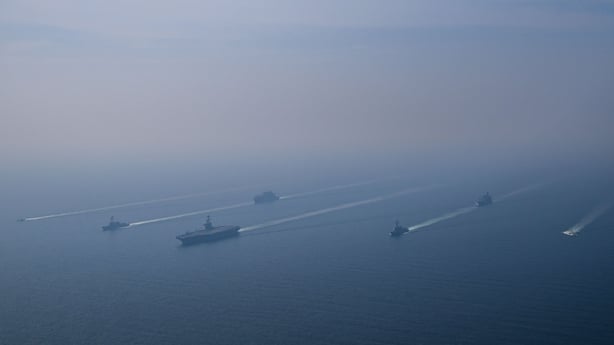
The latest talks were held after Washington deployed an aircraft carrier group to the Middle East following Iran's deadly crackdown last month on anti-government protests, first sparked by economic hardships.
During the interview with state TV, Mr Araghchi said the two sides have begun a path towards an agreement, but noted that "this does not mean we can reach a deal quickly".
"We hope this process can be completed as soon as possible and we are ready to devote sufficient time to it," he added.
He acknowledged that it "will take time to narrow" the gap between the positions of both sides, "but at least we now have a set of guiding principles and a clearer path to move forward on".
US envoy Steve Witkoff and US President Donald Trump's son-in-law Jared Kushner took part in the negotiations, with Mr Trump saying that he would be involved "indirectly".
"I don't think they want the consequences of not making a deal," Mr Trump told reporters aboard Air Force One last night.
"We could have had a deal instead of sending the B-2s in to knock out their nuclear potential. And we had to send the B-2s."
A senior Iranian official said that US seriousness on lifting sanctions on Iran and avoiding unrealistic demands are key to ensuring effective talks in Geneva.
The official, who declined to be named, said Tehran was coming to the negotiating table with "genuine and constructive proposals".
Iran began a military drill yesterday in the Strait of Hormuz, a vital international waterway and oil export route from Gulf Arab states, which have been appealing for diplomacy to end the dispute.
Benchmark Brent oil prices drifted lower in Asian trade today as investors assessed the risk of supply disruption after Iran conducted the naval drills ahead of the talks.
Watch: Trump warns Iran of consequences of not doing a deal
Tehran and Washington renewed negotiations on 6 February on their decades-long dispute.
Washington and its close ally Israel believe Iran aspires to build a nuclear weapon that could threaten Israel's existence.
Iran says its nuclear programme is purely peaceful, even though it has enriched uranium far beyond the purity needed for power generation, and close to what is required for a bomb.
Since the June strikes, Iran's Islamic rulers have been weakened by street protests, put down at a cost of thousands of lives, against a cost-of-living crisis driven in part by international sanctions that have strangled Iran's oil income.
The US has now placed what Mr Trump calls a massive naval armada in the region.
Iran has joined the nuclear Non-Proliferation Treaty, which guarantees countries the right to pursue civilian nuclear power in return for requiring them to forgo atomic weapons and cooperate with the UN nuclear watchdog, the International Atomic Energy Agency.
Israel, which has not signed the NPT, neither confirms nor denies having nuclear weaponry, under a decades-old ambiguity policy designed to deter surrounding enemies.
Scholars believe it does, having acquired the first bomb in 1966. Israeli journalists, circumscribed by military censorship, often refer cryptically to such capabilities or cite foreign media reporting on them.
Washington has sought to expand the scope of talks to non-nuclear issues such as Iran's missile stockpile.
Tehran says it is willing only to discuss curbs on its nuclear programme - in exchange for sanctions relief - and that it will not give up uranium enrichment completely or discuss its missile programme.
Yesterday, US Secretary of State Marco Rubio told a news conference in Budapest that it was hard to do a deal with Iran, but the US was willing to try.
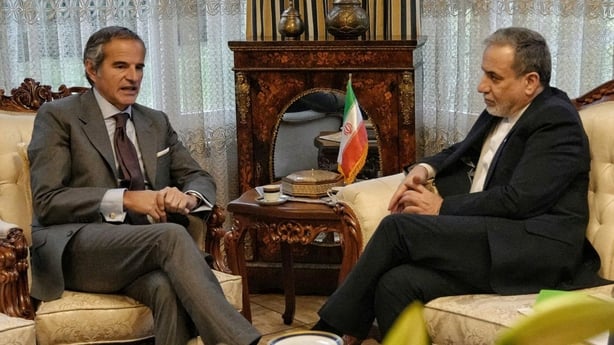
Mr Araghchi met Rafael Grossi, head of the IAEA, in Geneva yesterday to discuss cooperation with the nuclear watchdog and technical aspects of the impending talks with the US.
This afternoon, Mr Witkoff and Mr Kushner will participate in three-way talks with Russia and Ukraine as Washington attempts to coax Ukraine and Russia into an agreement to end Moscow's four-year-old invasion of Ukraine, the source said.
Iran holds memorial for thousands killed in protests
Iranian authorities have held a commemoration ceremony in Tehran for thousands of people killed during the recent unrest that followed nationwide protests over the rising cost of living.
The memorial, held at the Imam Khomeini Grand Mosalla mosque, marked the 40th day since the deaths, in line with Shiite mourning tradition.
Crowds carried Iranian flags and portraits of those killed as nationalist songs played and chants of "Death to America" and "Death to Israel" echoed through the venue.
Protests erupted in late December before expanding into nationwide anti-government demonstrations that peaked on 8 and 9 January.
Tehran has acknowledged that more than 3,000 people died during the unrest, including members of the security forces and bystanders, attributing the violence to "terrorist acts".
Authorities say the protests began peacefully before turning into "foreign-instigated riots" involving killings and vandalism, which they blamed on the United States and Israel.
International organisations have put the toll far higher. The US-based Human Rights Activists News Agency (HRANA) says more than 7,000 people were killed, most of them protesters.
Senior officials, including First Vice President Mohammad Reza Aref and Revolutionary Guards commander Esmail Qaani, attended the ceremony.
"Those who supported rioters and terrorists are criminals and will face the consequences," Mr Qaani said, according to Tasnim news agency.
Last Friday, Iran said it had established a fact-finding committee to investigate the unrest, while authorities pledged swift trials for those involved in the violence.
State television has in recent weeks aired what it described as interrogation sessions with suspects accused of armed attacks on public property and security personnel.
