


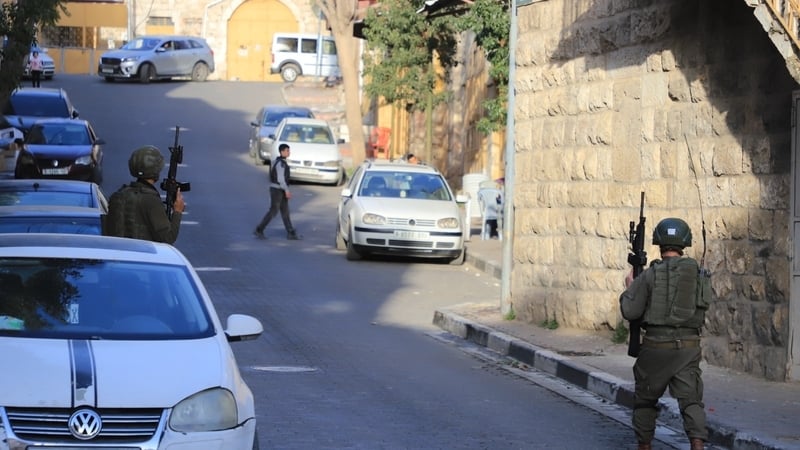
Israel's government has approved a process to register land in the West Bank as "state property", drawing condemnation from Arab nations and critics who said it would accelerate annexation of the Palestinian territory.
Israel's foreign ministry said the measure, approved late on Sunday, would enable "transparent and thorough clarification of rights to resolve legal disputes" and was needed after unlawful land registration in areas controlled by the Palestinian Authority.
Arab nations Saudi Arabia, Egypt, Qatar and Jordan criticised the move as illegal under international law.
The measure is "aimed at imposing a new legal and administrative reality in the occupied West Bank" that would undermine peace efforts in the region, Saudi Arabia's foreign affairs ministry said in a statement.
Jordan's King Abdullah II said the actions "undermine efforts to restore calm and threaten to exacerbate the conflict," according to a statement released by the royal court.
UN Secretary-General Antonio Guterres called on Israel to reverse the policy.
Guterres believes this new measure is "destabilizing" and "unlawful," his spokesman Stephane Dujarric said in a statement.
The European Union also called on Israel to reverse the move.
"This constitutes a new escalation after recent measures already aimed at extending Israeli control," EU foreign affairs spokesman Anouar El Anouni said.
"We reiterate that annexation is illegal under international law."
The Ramallah-based Palestinian Authority called for international intervention to prevent the "de facto beginning of the annexation process and the undermining of the foundations of the Palestinian state".
Israeli anti-settlement watchdog Peace Now called the measure a "mega land grab".
Jonathan Mizrachi, the NGO's co-director, told AFP that the move would attribute new resources for land registration.
The process will take place only in Area C, which constitutes some 60% of West Bank territory and is under Israeli security and administrative control.
"There was a lot of ambiguity regarding the land, and Israel decided now to deal with it," Mr Mizrachi said, adding that the grey area over Area C land ownership is likely to be used against Palestinians.
"A lot of land that Palestinians consider theirs, they will find out it's not theirs under this new registration process," he said, believing the move would further the Israeli right's annexation agenda.
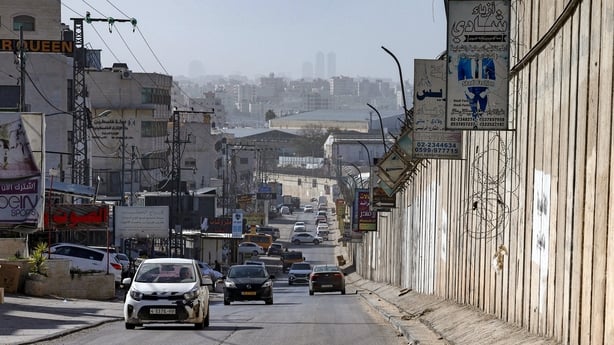
Changing demography
Palestinians see the West Bank as foundational to any future Palestinian state, but many on Israel's religious right want to take over the land.
Last week, Israel's security cabinet approved a series of measures backed by far-right ministers to tighten control over areas of the West Bank administered by the Palestinian Authority under the Oslo accords, in place since the 1990s.
Those measures, which also sparked international backlash, include allowing Jewish Israelis to buy West Bank land directly and allowing Israeli authorities to administer certain religious sites in areas under the Palestinian Authority's control.
The latest Israeli initiatives come in the wider context of increasing attacks by Israeli settlers against Palestinians in the West Bank, according to rights groups.
"We are witnessing rapid steps to change permanently the demography of the occupied Palestinian territory, stripping its people of their lands and forcing them to leave," UN rights chief Volker Turk said in a recent statement.
US President Donald Trump has opposed Israel's annexation of the West Bank, saying stability in the territory helps keep Israel secure.
However, Mr Trump has held off from directly criticising the new Israeli measures, despite the international outrage.
Excluding Israeli-annexed east Jerusalem, more than 500,000 Israelis live in West Bank settlements and outposts, which are illegal under international law.
Around three million Palestinians live in the territory, which Israel has occupied since 1967.
German president urges Lebanon to keep up disarmament of Hezbollah
Separately, visiting German President Frank-Walter Steinmeier has urged Beirut to keep disarming militant group Hezbollah, saying it would help ensure the withdrawal of Israel's army from Lebanese territory.
Israel has kept up regular strikes and maintained troops in five south Lebanon areas despite a November 2024 truce that sought to end more than a year of hostilities with the Iran-backed group.
Lebanon's government has committed to disarming Hezbollah, and the army last month said it had completed the first phase of the plan, covering the area between the Litani River and the Israeli border.
Mr Steinmeier said his visit was about "the demand that both sides fulfil their obligations under the ceasefire agreement and that the disarmament of Hezbollah here in Lebanon continues, thereby creating the conditions for the Israeli army to withdraw from southern Lebanon".
"Both sides are obliged to fulfil the ceasefire agreement - I say this in Israel as well as in Lebanon," he told a press conference with his Lebanese counterpart Joseph Aoun, calling the deal "an opportunity".
Israel, which accuses Hezbollah of rearming, has criticised the army's progress as insufficient, while Hezbollah - which was badly weakened by war with Israel - has rejected calls to surrender its weapons.
Lebanon's army is expected to update the cabinet over its progress on disarmament and the second phase, which covers the area between the Litani and the Awali rivers, around 40 kilometres south of Beirut.
Mr Aoun said Lebanon asked Germany to "demand the Israeli side implement the ceasefire agreement and withdraw from the territories it occupies".
He also asked Germany to assist the Lebanese army and to play a "key role" after the departure of United Nations peacekeepers, whose mandate expires this year.
Germany has 179 personnel in the United Nations Interim Force in Lebanon, according to the peacekeepers.
It has headed UNIFIL's maritime taskforce since 2021.
