


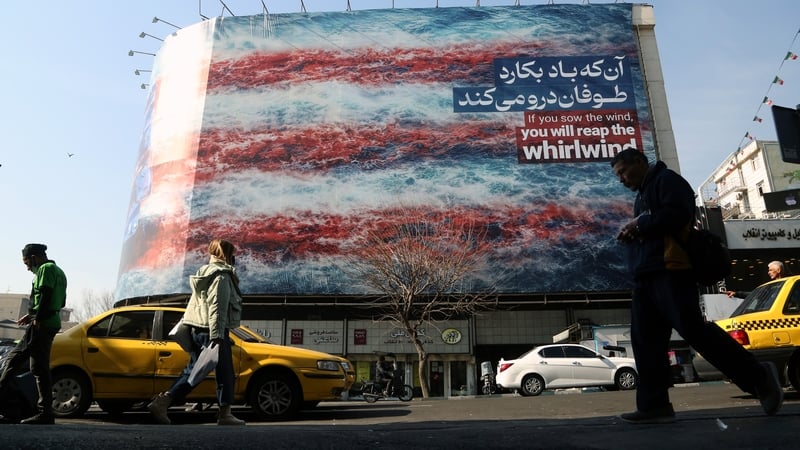
European Union foreign ministers have agreed to include the Islamic Revolutionary Guard Corps on the bloc's list of terrorist organisations, putting the powerful guards in a category similar to that of Islamic State and al Qaeda and marking a symbolic shift in Europe's approach to Iran's leadership.
"Repression cannot go unanswered," European Union foreign policy chief Kaja Kallas wrote on social media.
"Any regime that kills thousands of its own people is working toward its own demise," she added.
Set up after Iran's 1979 Islamic Revolution to protect the Shi'ite clerical ruling system, the IRGC has great sway in the country, controlling swathes of the economy and armed forces.
Repression cannot go unanswered.
— Kaja Kallas (@kajakallas) January 29, 2026
EU Foreign Ministers just took the decisive step of designating Iran's Revolutionary Guard as a terrorist organisation.
Any regime that kills thousands of its own people is working toward its own demise.
The guards were also put in charge of Iran's ballistic missile and nuclear programmes.
While some EU member states have previously pushed for the IRGC to be added to the EU's terrorist list, others have been more cautious, fearing that it could hinder communication with Iran's government and endanger European citizens inside the country.
But a brutal crackdown on a nationwide protest movement earlier this month, killing thousands of people, increased momentum for the move.
"It's important that we send this signal that the bloodshed that we've seen, the bestiality of the violence that's been used against protesters, cannot be tolerated," Dutch Foreign Minister David van Weel said this morning.
France and Italy, which were previously reluctant to list the IRGC, lent their backing this week.
Despite concerns from some capitals that a decision to label the IRGC a terrorist organisation could lead to a complete breakdown in ties with Iran, Ms Kallas told reporters this morning that "the estimate is that still the diplomatic channels will remain open, even after the listing of the Revolutionary Guards".
Iran had earlier warned of "destructive consequences" if the designation was greenlit.
The EU has also adopted sanctions targeting 15 individuals and six entities "responsible for serious human rights violations in Iran", the Council of the European Union said in a statement.
Iranian Interior Minister Eskandar Momeni, Prosecutor General Mohammad Movahedi Azad, a number of Islamic Revolutionary Guard Corps commanders and some senior law enforcement officials were among those sanctioned, the statement said.
We need your consent to load this rte-player contentWe use rte-player to manage extra content that can set cookies on your device and collect data about your activity. Please review their details and accept them to load the content.Manage Preferences
Entities sanctioned include the Iranian Audio-Visual Media Regulatory Authority and several software companies which the EU said were "involved in censoring activities, trolling campaigns on social media, spreading disinformation and misinformation online, or contributed to the widespread disruption of access to the internet by developing surveillance and repression tools".
The EU also sanctioned four individuals and six entities connected to Iran's drone and missile programme and "decided to extend the prohibition on the export, sale, transfer or supply from the EU to Iran to include further components and technologies used in the development and production of UAVs and missiles," the Council said.
'Crushing response'
Iran meanwhile has vowed a "crushing response" to any attack on the country after US President Donald Trump warned time was running out for a nuclear deal.
Washington and Tehran have exchanged sharp warnings since a protest wave in Iran led Mr Trump to threaten military action over the violent crackdown, while Iran blamed the US for fuelling what it deemed "riots".
The face-off has sent diplomatic shock waves across the region, with calls for negotiations to defuse tensions drawing in key regional actors.
Iranian officials have also ratcheted up warnings that Tehran would respond forcefully to any US military action, while not ruling out diplomatic solutions.
Iran's army chief Amir Hatami vowed a "crushing response" to any attack, according to state television, which reported 1,000 "strategic drones" had joined the combat regiments.
A US naval strike group arrived in Middle East waters on Monday, with Mr Trump warning it was "ready, willing and able" to hit Iran "if necessary".
He said yesterday that "time is running out" for Iran to negotiate a deal over its nuclear programme, which the West believes is aimed at making an atomic bomb.
The US had hit Iranian nuclear targets when it briefly joined Israel's war against Iran in June.
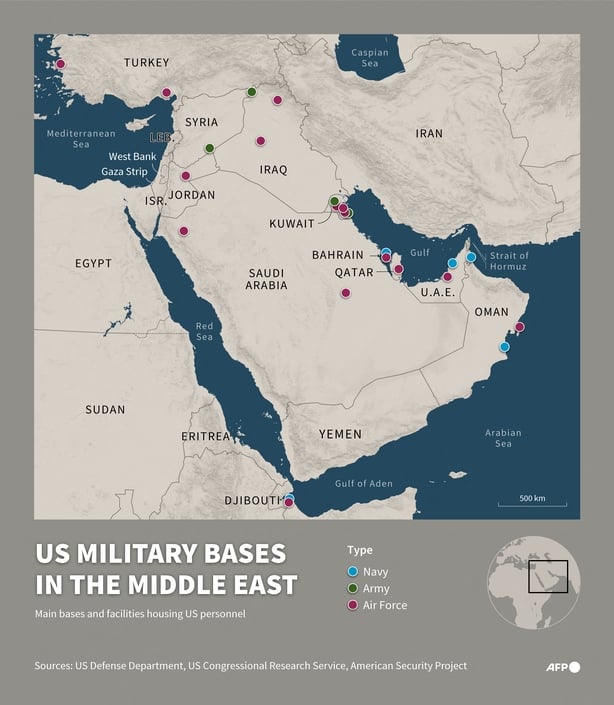
Iran's neighbours, including Gulf states that host US military sites, have called for calm.
A Gulf official told AFP that fears of a US strike on Iran are "very clear".
"It would bring the region into chaos, it would hurt the economy not just in the region but in the US and cause oil and gas prices to skyrocket," the official added.
Turkey has said it would offer to mediate between Washington and Tehran during an upcoming visit by Iranian Foreign Minister Abbas Araghchi, after Ankara's top diplomat urged Washington to start nuclear talks with Tehran.
"It's wrong to attack Iran. It's wrong to start the war again. Iran is ready to negotiate on the nuclear file again," Turkish Foreign Minister Hakan Fidan told Qatar-based Al-Jazeera television in English.
NATO member Turkey is also weighing contingency plans along its 530km border with Iran should the dispute escalate, a senior official said.
