A Palestinian doctor living in Co Meath, whose family members have been killed in the war in Gaza, has called for more aid for the people of the enclave.
Four of Dr Mahmoud Abumarzouq's close relatives were killed in an Israeli strike earlier this year.
At his home in Navan, Dr Abumarzouq is going through some family photos. He knows more than most about the misery the war has brought.
His younger brother Ahmed, who was 30 years old, was killed in the early stages of the war, leaving behind a young son.
"For the past two-and-a half years, we have experienced the most horrific kind of experience you can imagine in your real life," he says.
"This genocide, or you call war or ethnic cleansing, bombardment, all day, and night. My family is one of those, many, many families in Gaza to have lost many family members."
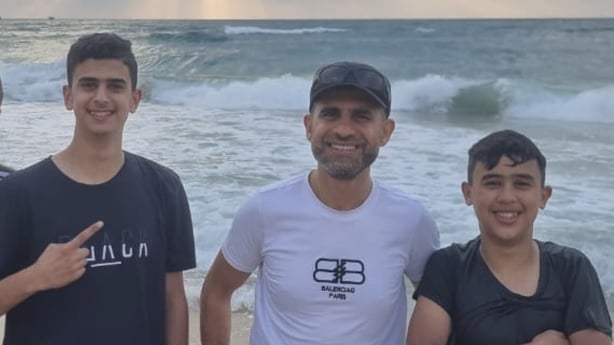
He says his sister Saham, who is their mother, spent six hours under the rubble of her house, and suffered fractures to her back and wrist.
"More horrific is the pain in her heart, losing four of her kids at once. It is difficult," he says.
"This kind of pain, sorrow in the broken heart. Every morning, I have that experience"
Mohamed, aged 16, had just finished his school exams while 14-year-old Refat was also a student.
Dina, aged 23, was studying design, while 25-year-old Noor was an English teacher.
"When I visited Gaza [before the war], every morning, I would drink my coffee with her [Noor]. And since that event, when I drink my coffee, all those memories come to me.
"This kind of pain, sorrow in the broken heart. Every morning, I have that experience."
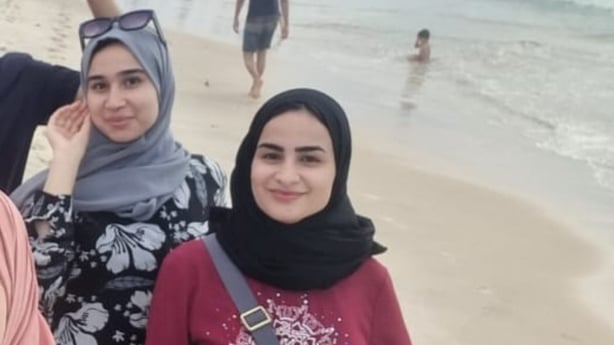
Just three days before her death, Noor had given birth.
Her baby girl, Yaqut, is now six months old. Although physically injured in the attack that killed her mother, the baby’s development is lagging, says Dr Abumarzouq.
"I have seen her in videos, she's a little bit slower in her milestones, in her motor skills. She doesn't move her upper limbs as fast as her lower limbs, and she doesn't support her neck [as a six-month-old should].
"But she’s getting better all the time because she’s engaged in physiotherapy," he says.
We need your consent to load this rte-player contentWe use rte-player to manage extra content that can set cookies on your device and collect data about your activity. Please review their details and accept them to load the content.Manage Preferences
For the remaining members of his family, the conditions they are living in in Gaza are almost unbearable, he says.
"They are in a kind of … warehouse. And they try to reconstruct it as much as can to be habitable. They have no electricity at all.
"My mom and dad are in their 70s and have their own chronic diseases. And to get the medication for diabetes, for high blood pressure, is very difficult."
He tries to help financially but that too is a challenge.
"It’s almost near impossible, but we try our best by all means. It is very difficult, because they banned every bank to send money to Gaza."
The Hamas-run health ministry in Gaza has said 70,000 people have been killed, since the outbreak of the war and the 7 October attacks.
Dr Abumarzouq says he knows of four doctors that have either been killed or who are missing, and says he knows many more of the dead.
"Sometimes, when you scroll on your WhatsApp and put in the first letter, many names come up and they are not among us. I can't WhatsApp them anymore."
"Palestinian people in Gaza ...are very resilient, and they will stand up again, and they will rebuild their towns. They'll rebuild their houses"
A brittle ceasefire has been in place, but both sides have accused each other of breaches of the deal. Nearly three months on from the deal, most fighting has stopped.
"We're hoping for a complete ceasefire," says Dr Amumarzouq. He is also calling for rebuilding to begin.
"I'm hoping for the hospitals that were completely demolished, to start building up again and reconstruct the universities.
"Most of the primary and secondary schools have also been completely demolished and destroyed. So hopefully, the international community and the people around the world will help Palestinian people to stand up again.
"Palestinian people in Gaza ... are very resilient, and they will stand up again, and they will rebuild their towns. They'll rebuild their houses."
For now though, Dr Amumarzouq says the priority is getting more aid in - food and medicines to get Gazans through a biting winter.
An orthopedic surgeon, Dr Abumarzouq hopes to one day return to Gaza and treat the many in need. Until then he watches from afar.