


Israel is due to send a delegation to Doha for a fresh round of talks on extending a fragile ceasefire in Gaza, after cutting off the electricity supply to ramp up pressure on Hamas.
The first phase of the truce ended on 1 March with no agreement on subsequent stages that could secure a permanent end to the war, but both sides have since refrained from resuming full-scale fighting.
There are still significant differences over the terms of a potential second phase of the truce, which has largely halted the violence that raged since Hamas's 7 October 2023 attack on Israel.
Hamas has repeatedly called for immediate negotiations on the next phase, while Israel prefers an extension of the current one.
Media reports said a top official from the domestic security agency Shin Bet will lead Israel's delegation.
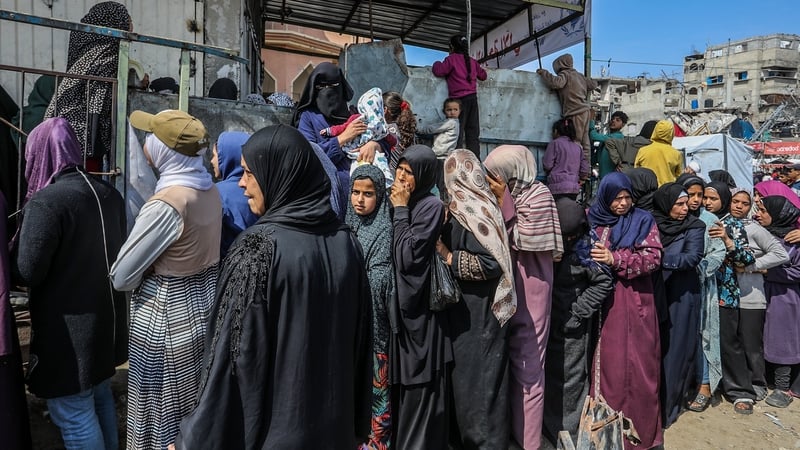
Israel has halted aid deliveries to Gaza amid the deadlock, and yesterday announced it was cutting off the electricity supply in a bid to force Hamas to release hostages.
"We will use all the tools at our disposal to bring back the hostages and ensure that Hamas is no longer in Gaza the day after" the war, Energy Minister Eli Cohen said as he ordered the power cut.
The move echoed the early days of the war when Israel announced a "siege" on Gaza, severing the electricity supply which was only restored in mid-2024.
Hamas spokesman Abdul Latif al-Qanoua said that Israel's move will impact its hostages still held in Gaza.
"The decision to cut electricity is a failed option and poses a threat to its (Israeli) prisoners, who will only be freed through negotiations," he said in a statement.
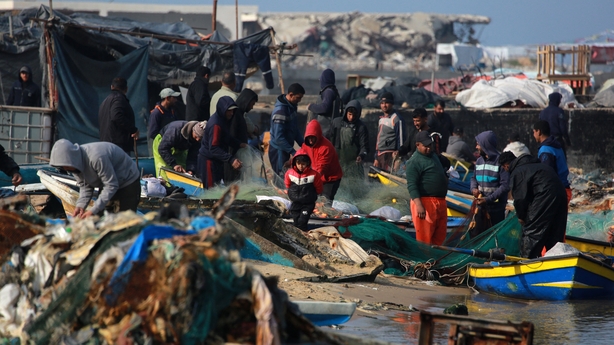
The sole power line between Israel and Gaza supplies the Palestinian territory's main desalination plant, and Gazans now mainly rely on solar panels and fuel-powered generators to produce electricity.
Hundreds of thousands of Palestinians are living in tents across Gaza.
Top Hamas official Izzat al-Rishq said the Israeli decision "to cut off electricity to Gaza, after depriving it of food, medicine, and water" was a "desperate attempt to pressure our people and their resistance".
Hamas has repeatedly demanded that the second phase of the truce - brokered by Qatar, Egypt and the United States - would include a comprehensive hostage-prisoner exchange, a complete Israeli withdrawal from Gaza, a permanent ceasefire, and the reopening of border crossings to end the blockade.
Spokesman Hazem Qassem told journalists that Hamas wanted the mediators to ensure Israel "complies with the agreement ... and proceeds with the second phase according to the agreed-upon terms".
Former US president Joe Biden had outlined a second phase involving hostage release and the withdrawal of all Israeli forces left in Gaza.
US envoy Adam Boehler, who has held unprecedented direct talks with Hamas, told CNN that a deal could be reached "within weeks" to secure the release of all remaining hostages, not just the five dual Israeli-US nationals, most of whom have been confirmed dead.
Of the 251 hostages taken during the October 7 attack, 58 are still held in Gaza, including 34 the Israeli military has confirmed dead.
Mr Boehler told CNN that a "long-term truce" was "real close", but later he told Israel's Channel 12 that the US would back any Israeli decision, including a return to war.
Late last month, US President Donald Trump had issued what he called a "last warning" to Hamas, threatening further destruction if the group did not release all remaining hostages.
An earlier proposal from Mr Trump to expel Palestinians from Gaza prompted Arab leaders to offer an alternative reconstruction plan without displacement.
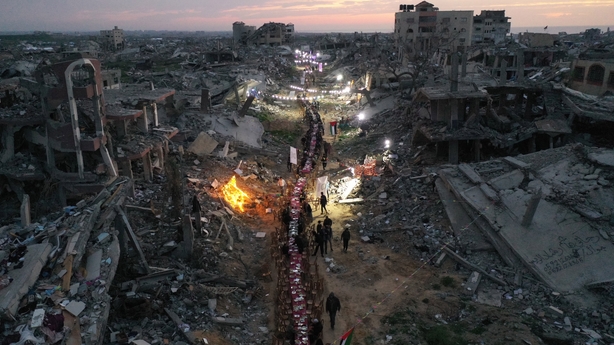
The initial phase of the truce, which began on 19 January, reduced hostilities after more than 15 months of relentless fighting that displaced nearly all of Gaza's 2.4 million people.
During this period, 25 living Israeli hostages and eight bodies were exchanged for the release of about 1,800 Palestinians in Israeli custody.
The truce also allowed in much-needed food, shelter and medical assistance.
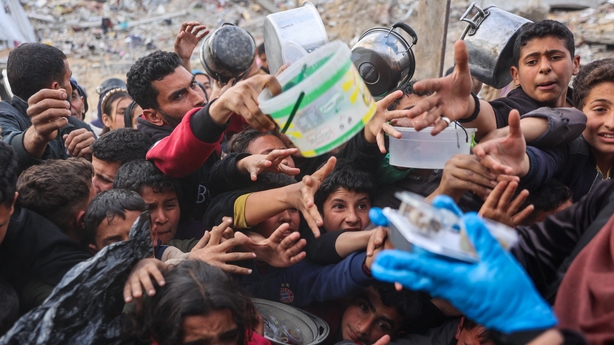
After Israel cut off the aid flow on 2 March, UN rights experts accused the government of "weaponising starvation".
At a UN distribution of flour in Jabalia, northern Gaza, Abu Mahmoud Salman said that with fresh supplies now closed off, "there is nothing available".
"The markets are empty... prices are high, and there is no income. The situation in Gaza is difficult," the 56-year-old said.
Hamas's 2023 attack resulted in the deaths of 1,218 people on the Israeli side, most of them civilians, while Israel's retaliatory campaign has killed at least 48,467 people in Gaza, also mostly civilians, according to data from both sides.
