


The joy of thousands of Palestinian families who returned from southern to northern Gaza after a ceasefire began is turning to despair as the cold reality of uninhabitable, bombed-out homes and dire shortages of basic supplies sets in.
Many have begun complaining about a lack of running water that forces them to queue for hours to fill plastic containers for drinking or cleaning.
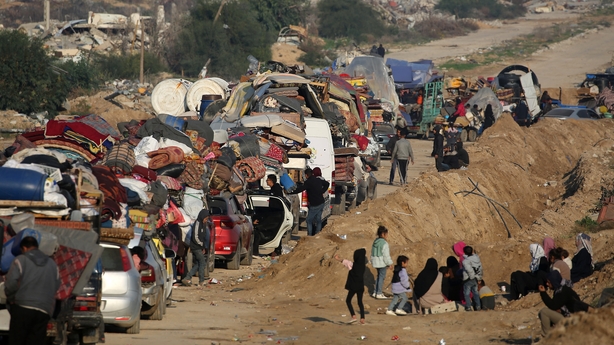
With most homes now heaps of rubble as far as the eye can see, returnees have scoured whatever useful items remain from their properties to erect makeshift tents.
At night, residential districts laid to waste by Israeli airstrikes and shelling sink into darkness due to a lack of electricity or fuel to operate standby generators.
"There is nothing, no life, no water, no food, no drink, nothing for living. Life is very, very hard. There is no Jabalia camp," Hisham El-Err said, standing by the ruins of his multi-storey house in the biggest and mostly densely populated of Gaza's eight historic refugee camps.
His extended family is huddling in tents, which offer scant protection from the mid-winter chill.
Hamas authorities said that most of the 650,000 people displaced from the north by the war had re-entered Gaza City and the north edge of the enclave from areas to the south where fighting was less intense and destructive.
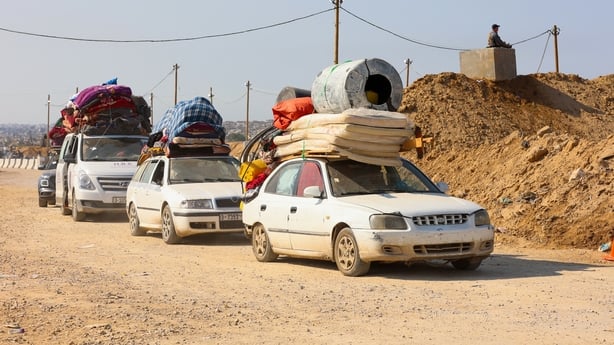
Many of those returning, often laden with what personal possessions they still have after months of being shunted around as battlegrounds shifted, had trekked 20km or more along the coastal highway.
Fahad Abu Jalhoum returned with his family to Jabalia from the Al Mawasi area in southern Gaza, but the destruction they found was so bad that they have been forced to go back south.
"It's just ghosts without souls (in the north)," Abu Jalhoum said.
"We all missed the north but when I went there I was shocked. So I returned to (the south) until we get relief from God."
A Hamas official said that smaller amounts of fuel, cooking gas and tents had been brought into Gaza than what had been agreed in ceasefire negotiations, which Israel strongly denied.
The territory's Hamas-run government put the initial number of tents needed at 135,000, but the official said that only around 2,000 had got in since the deal took effect on 19 January.
He also said work to rehabilitate hospitals and bakeries knocked out by the fighting has not begun and urged mediators to ensure more aid flows in, adding that dissatisfaction among militant groups could affect the truce.
A spokesperson for COGAT, the Israeli defence agency that liaises with Palestinians, said that tens of thousands of tents have entered Gaza since the ceasefire and that gas and fuel are being delivered daily and in keeping with agreements.
Under the deal, 33 hostages held by Palestinian militants in Gaza are to be freed in the first six weeks of the truce in exchange for hundreds of Palestinian prisoners, many of them serving life sentences in Israel.
A second stage, due to begin by 4 February, is meant to open the way to the release of over 60 other hostages, including men of military age, as well as a full Israeli military withdrawal from Gaza.
If that succeeds, a formal end to the war could follow along with talks on the monumental challenge of reconstructing Gaza, widely demolished in an Israeli onslaught that killed almost 47,000 Palestinians, according to the territory's health ministry.
The conflict was triggered by a Hamas-led cross-border attack in southern Israel that killed 1,200 people, according to Israeli tallies, and saw more than 250 taken hostage.
In Jabalia, Khamis Amara returned to the ruins of his house to dig for the bodies of his father and brother, among the roughly 10,000 people missing and feared dead in Gaza, according to the local civil emergency service.
"I was once under the rubble with my father and brother, just as they still are. But I made it out," he said.
"Life here is unbearable. Honestly, it's all a lie. Those in the south should just stay there - it's better for them."
