


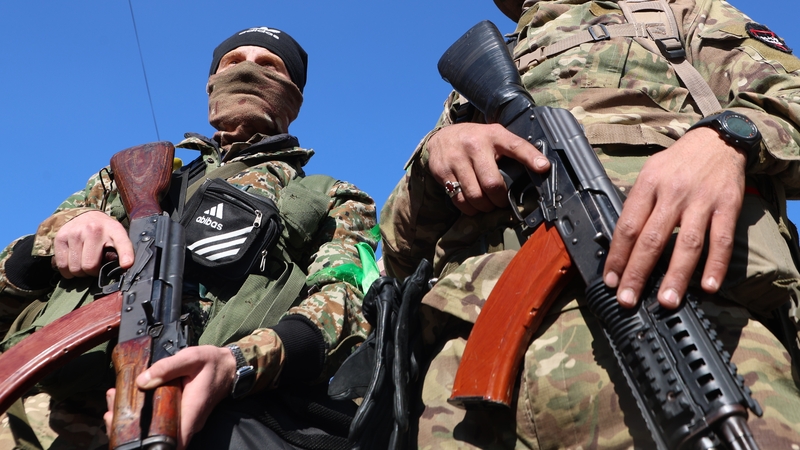
Fighters in southern Syria who helped topple President Bashar al-Assad are reluctant to disarm and disband as ordered by the country's new rulers, a spokesperson has said.
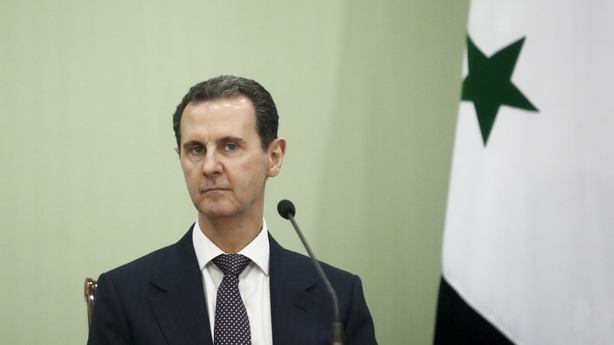
An Islamist-led offensive ripped through Syria from the north and into Damascus on 8 December, bringing to a sudden end five decades of rule by the Assad clan.
On 25 December, the country's new Islamist rulers said they had reached an agreement with rebel groups on their dissolution and integration under the defence ministry.
New leader Ahmed al-Sharaa said the authorities would "absolutely not allow there to be weapons in the country outside state control".
However, a spokesman for the Southern Operations Room - a coalition of armed groups from the southern province of Daraa formed on 6 December to help topple Mr Assad - said the alliance did not agree.
"We're not convinced by the idea of dissolving armed groups," said its spokesman Naseem Abu Orra.
"We're an organised force in the south... headed by officers who defected" from Mr Assad's army, he told AFP in Daraa's town of Bosra.
He continued: "We can integrate the defence ministry as a pre-organised entity... We have weapons, heavy equipment."
Mr Abu Orra said the group, led by local leader Ahmed al-Awdeh, included thousands of men, without any Islamist affiliation.
Mr Awdeh has good relations with former Assad ally Russia, as well as neighbouring Jordan and the United Arab Emirates, sources close to his group said.
Liberating the south
Daraa became known as the birthplace of the Syrian uprising after protests erupted there in 2011 against Assad's rule.
As they spread across the country, government forces cracked down on the demonstrators, triggering defections from the army and one of the deadliest wars of the century.
After losing swathes of territory to rebels and jihadists, Mr Assad's forces clawed back control of much of the country with the backing of Iran and Russia.
Daraa returned to government control in 2018, but under a deal mediated by Russia rebels were allowed to keep their weapons and continue to ensure security in their region.
Then, after more than 13 years of civil war that had killed more than half a million people and ravaged the country, everything changed.
In the north of Syria, an Islamist-led rebel coalition called Hayat Tahrir al-Sham (HTS) moved rapidly out of its bastion on the Turkish border to seize second city Aleppo from Mr Assad's forces on 1 December.
Its fighters then advanced southwards towards the cities of Hama and Homs on their way to the capital.
"We... decided to begin liberating the south of the country to reach Damascus" from the other direction, Mr Abu Orra said.
He explained they elaborated their own military plans in Daraa, but there was "some coordination" with HTS in the north.
Withdrew to avoid 'chaos'
Several witnesses told AFP that they saw Mr Awdeh's men, recognisable by their headdress typical of southern Syria, posted near the Central Bank and in several neighbourhoods in the early hours of December 8.
By then, Mr Assad had already fled the country, according to former officials.
"It was chaos but we were briefly able to take control of vital institutions to ensure their protection," Mr Abu Orra said.
He outlined that the Southern Operations Room also stood guard outside several embassies, including those of Egypt and Jordan and led some foreign diplomats to a prominent hotel to ensure their safety.
He said that "several foreign countries" had called Mr Awdeh to request his help and that when HTS forces arrived in town at the end of the afternoon, the Southern Operations Room withdrew to Daraa to avoid "chaos or armed clashes".
Two days later, Mr Awdeh met Syria's new leader Sharaa but he did not attend the December 25 meeting during which other rebel factions agreed to disband and join a future army.
