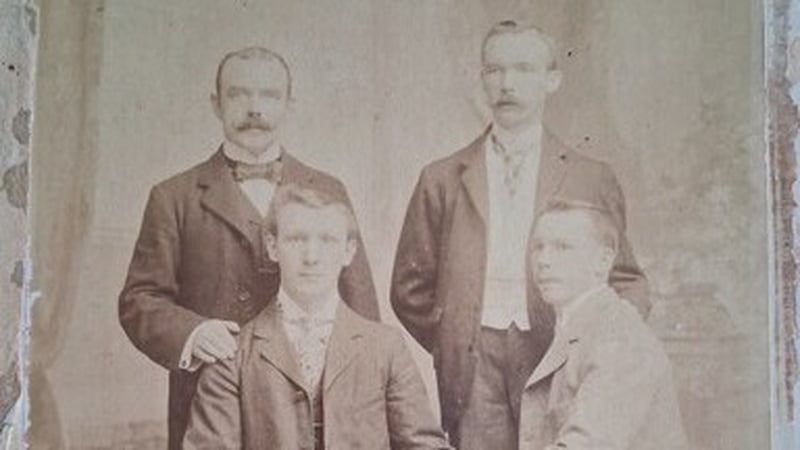

From Ballymore to Buenos Aires: For around 100 years, there was large-scale emigration from Ireland to Argentina.
It is estimated that some 30,000 Irish emigrants travelled to Argentina between the end of the Famine and the 1930s.
It has resulted in the South American country providing a home to the fifth largest Irish community in the world.
It is estimated that a half million Argentines have some Irish ancestry.
Parts of counties Longford and Westmeath are among the areas from which the greatest numbers of Ireland's emigrants to Argentina hailed.
But in fact, there were emigrants too from Offaly, Wexford and Galway.
The hurling club, located in Buenos Aires, is well known and also still in existence is the almost 150-year-old newspaper for Argentina’s Irish community, The Southern Cross.
Now an oral history project - available at the libraries in Longford and Mullingar - focusing on the emigration stories from counties Longford and Westmeath has been completed and aims to ensure that the history and connections are captured forever.
Oral historian Adrian Roche from The History Trail carried out the interviews with people from the two counties.
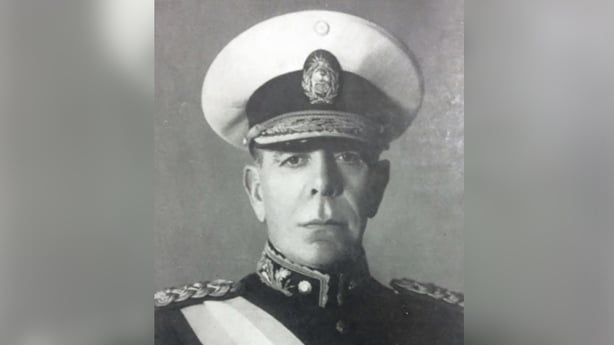
"We spoke to many fascinating people from both counties as well as people in Argentina, including Maria Claudia Carbone Farrell," said Mr Roche.
"Her grand-father Edelmiro Farrell was President of Argentina," he explained.
"But the family go back much further than that. There was a Matthew Farrell, who went out to Argentina in the early 1800s," he said.
Edelmiro Farrell, an army general, was president for 27 months between 1944 and 1946.
He introduced his assistant Juan Perón into government and paved the way for Perón's subsequent political career.
"Edelmiro Farrell had a great influence. In his early military career, he spent time in Italy where he learned survival techniques in the Alps," said Mr Roche.
"He then went back to Argentina and went on to train the Argentinian troops in those skills, and he became quite well known for that in and around Mendoza," he added.
Watch: Ireland's links to Argentina remembered
Most of the emigrants were single farmers in their 20s, non-inheriting children of Catholic middle-sized families.
Argentina was attractive to Irish emigrants because of its reputation as a place where land was relatively easy to acquire.
Migration networks had been gradually established, and many young men were hired to work on sheep-farms in the Pampas.
They faced into life in a country far away and where English was not the spoken language.
"Going out there, they had to learn Spanish," said Mr Roche.
"From what we're told, many of them were operating on farms that were hundreds, if not thousands of acres [big], so it must have been hugely different from the small farms they were used to in Ireland."
Mr Roche said many of the families he interviewed had been doing their own research into the history, but in some cases connections might have been lost over the decades.
"It was only when maybe one family member decided to take an interest, or when someone from Argentina arrived on their doorstep, that people found out they had relatives in Argentina," he said.
For decades, the Longford-Westmeath Argentina Society has been very active in keeping awareness alive of the story.
Set up in 1989, it has hailed this project as an important milestone in honouring the shared heritage.
"There were so many stories I had heard, some from my mother and from other people and I thought it's really important that we get them down and that they're preserved," said Chairperson Una Byrne, who is from Ardagh, Co Longford.
Una's grandfather, Bernard Gannon, was born in Suipacha in Buenos Aires in 1881. His Irish-born parents had gone to join a relative. Bernard was the only one of the family of seven to return to Ireland.
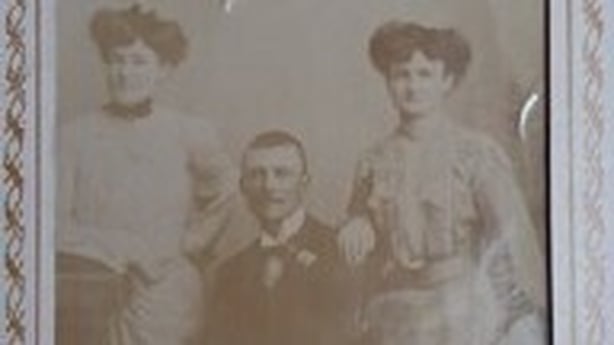
"If you take a map of the area, you have places like Ballymahon, Tang, Moyvore and Ballymore. Those areas had a huge number of people who emigrated," Ms Byrne said.
"I believe in Ballymore, nearly every family home has somebody who has a connection to Argentina."
In Argentina today, there are many reminders of the Irish influence and the strong connection between both countries, said Ms Byrne.
"It has the fifth largest diaspora in the world, the Irish in Argentina, so there is a huge connection," she said.
"There’s also a lot of people involved that don’t even have Irish connections, but they just see this strong connection and want to be part of it."
Michael McCormack, from Moyvore in Co Westmeath, was another contributor to the project.
His great-grandfather Thomas McCormack emigrated in the 1890s, alongside his two brothers, William and Patrick. He already had relatives living there.
While Thomas later returned home, his brothers remained and one married, going on to have 12 children.
"I'm hoping to go meet some of the relatives later this year," said Mr McCormack.
"We lost some connection over the years, but I delved into the family tree and managed to made contact with some relatives, and they are all very anxious to meet me," he added.
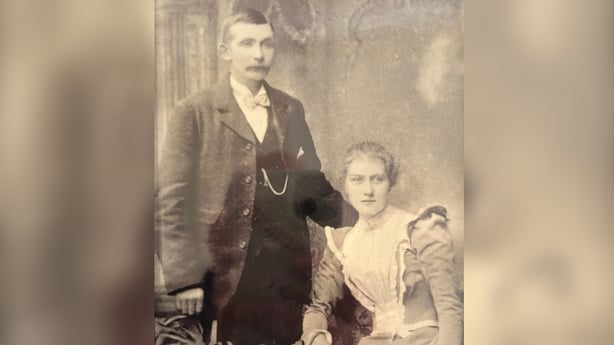
"It brings the things we read about in history books alive," said the Argentine Ambassador to Ireland Ana Laura Cachaza.
She visited both counties this week and praised the project.
"For us, it's very important, because there are many historic bonds between our countries and we've always known about the people who travelled from Ireland to Argentina.
"This project is particularly interesting for us because it tells the real stories and it gives a human perspective to all this history and to all these numbers.
"It brings the things we read about in history books alive, and the bonds between Argentina and Ireland are very much alive because of this," said Ms Cachaza.
The project was a collaboration between Longford and Westmeath County Councils and the Longford-Westmeath Argentina Society.
The project was funded by the Heritage Council.
Interviewees were also asked to allow the digitisation of any photographs or other documents they hold and along with the recordings, they have now been handed over to the local authorities.
"This is about capturing living memories," said Melanie McQuade, Heritage Officer with Westmeath County Council.
"Some of those memories are generational, that is, they are memories of the previous generation that have been passed down.
"So, if we don't capture those memories now, they could be lost," she added.
We need your consent to load this rte-player contentWe use rte-player to manage extra content that can set cookies on your device and collect data about your activity. Please review their details and accept them to load the content.Manage Preferences