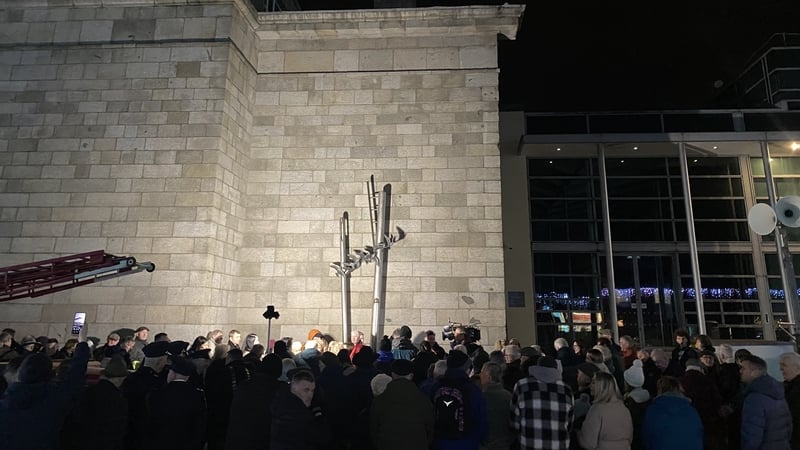
A memorial event to mark the 50th anniversary of the Dundalk bombing was held this evening.
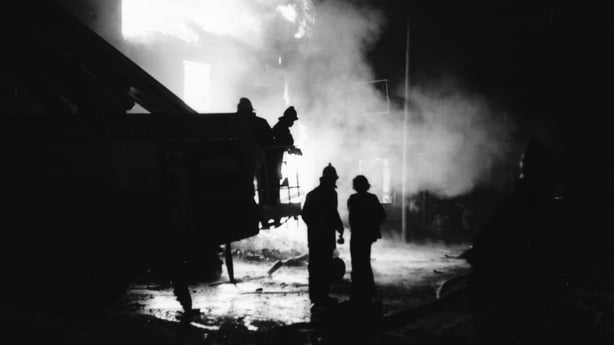
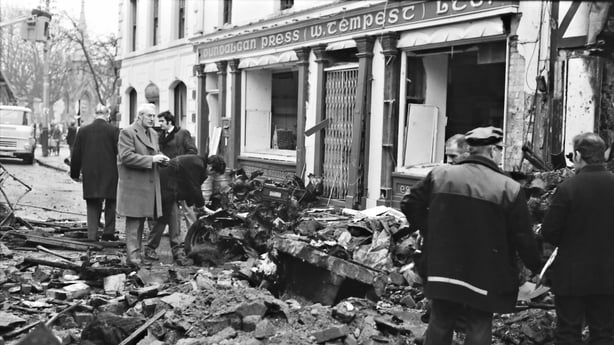
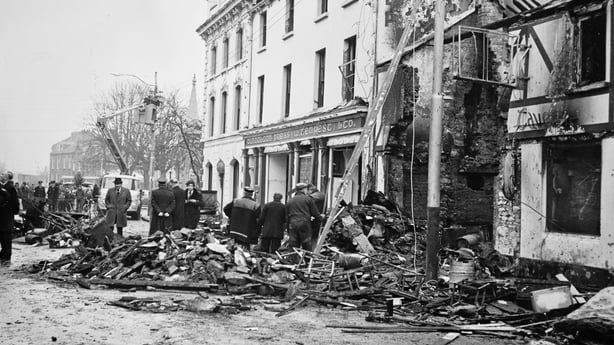
Two men were killed when a no-warning car bomb exploded outside a pub in the centre of the Co Louth town on 19 December 1975.
The bomb went off outside Kay's Tavern on Crowe Street at approximately 6.20pm that day.
A minute's silence was observed at the same time this evening.
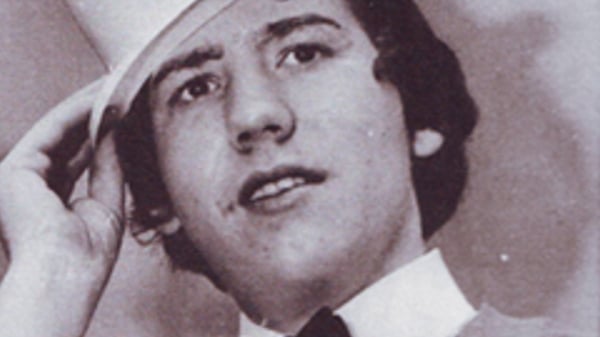
Two men, 60-year-old tailor Hugh Watters and 62-year-old council employee Jack Rooney, were killed in the blast, with many more injured.
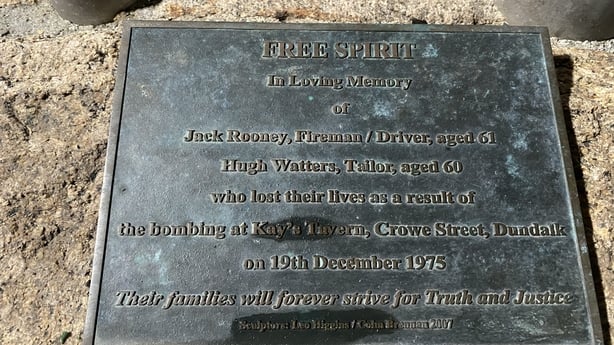
Mr Watters was killed instantly, while Jack Rooney died from his injuries three days later.
Later that evening, three other people were killed in a gun and bomb attack at Donnelly's bar in Silverbridge, Co Armagh.
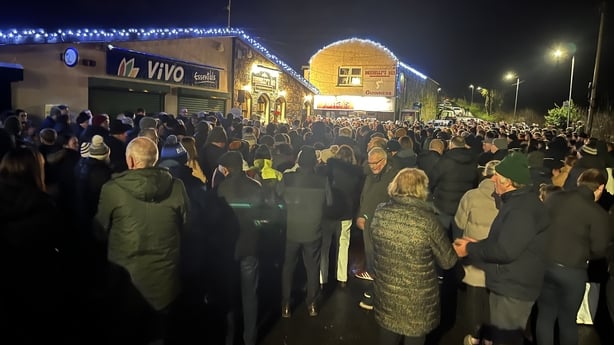
Hundreds of people attended a candlelight vigil outside Donnelly's Bar in Silverbridge this evening, to remember Michael Donnelly, Patsy Donnelly and Trevor Brecknell, who lost their lives in that attack.
A minute’s silence was observed and wreaths laid at a memorial to those killed in the loyalist attack 50 years ago.
GAA president Jarlath Burns was the key speaker.
It is believed that the notorious Glenanne Gang was behind the bombings.
Nobody has ever been brought to justice for the Dundalk or Silverbridge attacks.
Following the minute's silence this evening, wreaths were laid at the memorial site at Dundalk Courthouse by members of the Watters and Rooney families, along with representatives from Louth Fire Service, the local authority and the Justice for the Forgotten group.
Watch: Margaret English, daughter of Hugh Watters, details when she last saw her father
Families who lost loved ones in the series of attacks linked to the so-called Glenanne Gang are currently awaiting the full publication of Operation Denton.
This was launched in March 2020 after a judge ruled there should be an independent review into the group's activities and allegations of collusion.
The gang is said to have consisted of members of the loyalist paramilitary group, the Ulster Volunteer Force, and members of the RUC and Ulster Defence Regiment.
The Glenanne Gang has been implicated in the Dublin-Monaghan bombings, as well as the Miami Showband massacre, and bombings in Dundalk, Belturbet, Castleblayney and Dublin Airport.
It has been linked to 127 sectarian murders in the 1970s and 1980s.
Last week, a summary of the findings of Operation Denton was released as part of the Kenova Final report.
It found no evidence of collusion on the part of the British state in the 1974 Dublin-Monaghan bombings, which claimed the lives of 34 people.
"The review has not identified any evidence or intelligence which would indicate that British Security Forces colluded with the UVF to carry out the attacks in Dublin or Monaghan, nor has any evidence of state collusion been identified," the report says.
It also said it found "no specific intelligence" which, if acted upon, could have prevented the atrocity.
It said the UVF possessed the necessary materials, knowledge and expertise to carry out the bombing without any support from the British security forces.
The report says the UVF in Belfast planned and carried out the double bombing with the help of the organisation in mid-Ulster.
Operation Denton summary 'deeply shocking'
Minister for Foreign Affairs Helen McEntee has said that it remains deeply regrettable that no one has been held responsible for the attacks, on either side of the border, to date.
In a statement she said that the Dublin Monaghan bombings, the Dundalk bombing, and the Silverbridge attack, all linked to the Glenanne Gang, "are currently the subject of Operation Denton, an independent police review into a series of serious crimes linked to that terrorist group".
She said that the summary of Operation Denton, included in the full Kenova Report published last week, was deeply shocking.
She added that the publication of the full report of Operation Denton, "which I hope to see in the near future, will give renewed impetus to this work".
Minister McEntee said that the Joint Framework on legacy, agreed between the two governments in September, will also provide for the fullest possible cross-border co-operation on legacy cases, including the attacks of 19 December 1975, once implemented.
"Families have waited too long for answers," she said.