



The family of a Co Offaly woman who died from a rare, life-threatening skin condition triggered by an adverse reaction to medication has expressed concern about delays among medical staff in diagnosing the severity of her illness.
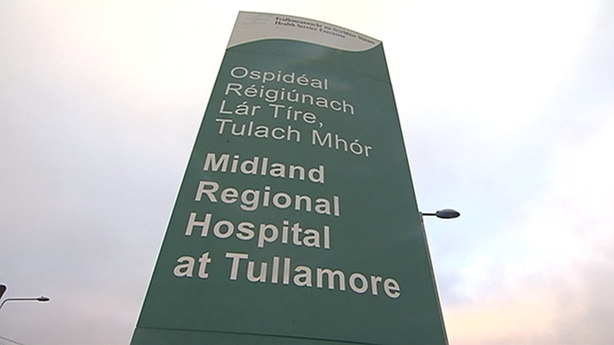
Gertie Rodgers, 70, who was from Banagher, died at St James's Hospital in Dublin on 20 August 2020 after being transferred from the Midland Regional Hospital, Tullamore, two days earlier.
An inquest at Dublin District Coroner’s Court heard that a post-mortem examination confirmed Ms Rodgers had died as a result of multiple organ failure due to toxic epidermal necrolysis (TEN) which was caused by an adverse drug reaction.
TEN is the most severe form of a rare but well-documented skin condition known as Stevens-Johnson syndrome (SJS) which causes peeling and blistering of the skin on large areas of the body. It has a mortality rate in excess of 25%.
The inquest into the death of the mother-of-eight heard she had been receiving ongoing treatment for advanced breast cancer at the Midland Regional Hospital in Tullamore since June 2020.
Coroner Cróna Gallagher was told that Ms Rodgers also suffered from psoriasis.
Consultant oncologist in MRH Tullamore, Saira Nasim, told the inquest that Ms Rodgers had presented at the hospital's emergency department on 11 August 2020 with a suspected urinary tract infection and was treated with different medication over the following days.
Dr Nasim said the patient developed blisters on her arms and legs and other parts of her body on 16 August 2020, which was suspected could be due to Stevens-Johnson syndrome.
Although Ms Rodgers was able to breathe unassisted, Dr Nasim said she was transferred to the hospital’s intensive care unit in order to better monitor her skin condition.
The consultant explained that she was unable to get specialist advice about the patient’s skin condition from a consultant dermatologist as there was none based in Tullamore, while no on-call dermatology services were provided by St James’s Hospital to other hospitals over weekends.
Dr Nasim said she had contacted a doctor in the burns unit of St James’s who agreed that nothing specific should be done and advised that Ms Rodgers could be examined during a scheduled outpatient appointment three days later.
She said she was unable to contact a consultant dermatologist in St James’s on 17 August 2020 but had left an urgent message to be called back about Ms Rodgers’ condition.
Dr Nasim also said she was unable to send a photograph of Ms Rodgers’ skin to specialists in St James’s later that day because the individual responsible for forwarding such material was unavailable.
The inquest heard medical staff were not allowed to send images of patients via their own mobile phones for GDPR reasons.
However, Dr Nasim said the immediate transfer of the patient to St James’s Hospital was arranged without delay the following day once a consultant dermatologist in Dublin had reviewed photos of Ms Rodgers.
Ms Rodgers' son, Cathal Rodgers, questioned why his mother was noted by Dr Nasim as having "mild to moderate" Stevens-Johnson syndrome when there were blisters and lesions on up to 50% of her body.
He told the coroner that separate nursing notes had also recorded at an early stage that there were "layers of skin sliding off" the patient, while his mother had been examined one day without having her bandages removed.
Mr Rodgers also criticised communications between the two hospitals, which are both part of the Dublin Midlands Hospital Group, about his mother’s condition.
Although he accepted that earlier information about her suffering from TEN would not have changed the outcome for his mother, he said his family would have had extra days to come to terms with what was happening.
A consultant dermatologist at St James’s Hospital, Bairbre Wynne, said one of the antibiotics being given to the patient would have caused Stevens-Johnson syndrome, with Tazocin the most likely drug to have resulted in the adverse reaction.
Dr Wynne said one of her colleagues had advised the Midland Regional Hospital by phone on 17 August 2020 to discontinue all antibiotics.
The inquest heard that Ms Rodgers' family were informed that their mother had a 35% chance of mortality following her transfer to the intensive care unit in St James’s, which subsequently increased to 67% as her condition worsened with large new blisters breaking out on her body.
Dr Wynne said TEN was a condition that could progress very rapidly over a few hours, while Ms Rodgers' age and breast cancer were not in her favour.
However, she reassured her relatives that she had been very comfortable and not in pain.
In reply to questions from the coroner, Dr Wynne stressed the importance of being able to see photos of a patient's skin condition to be able to diagnose TEN.
Asked if the situation regarding the restriction on doctors sending photos of patients to each other was unsatisfactory, Dr Wynne replied that staff at St James's were now able to use a special app on their own phones for transmitting such images.
The consultant also pointed out that there was no treatment for TEN and that it was "a disease that will run its course" with staff trying to provide the best care to patients.
She also confirmed that there was no link between Ms Rodgers having psoriasis and contracting TEN.
Coroner to forward findings to HSE, HPRA
Returning a verdict of death due to an adverse drug reaction, the coroner said it was "a dreadful condition" which had caused great distress and trauma for Ms Rodgers' family.
Dr Gallagher said Ms Rodger’s breast cancer would also have been a contributory factor.
She noted the antibiotic which caused such a rare skin condition was given correctly to treat a urinary tract infection.
Dr Gallagher said she could not say if there would have been a different outcome but she acknowledged the importance of a specialist doctor being able to provide a remote consultation for such cases.
The coroner said she would endorse the changes already made that allowed the transfer of photos of patients "at every hour of the day or night".
Dr Gallagher said she would also contact the Health Service Executive and the Health Products Regulatory Authority to notify them about her findings in the case.
