


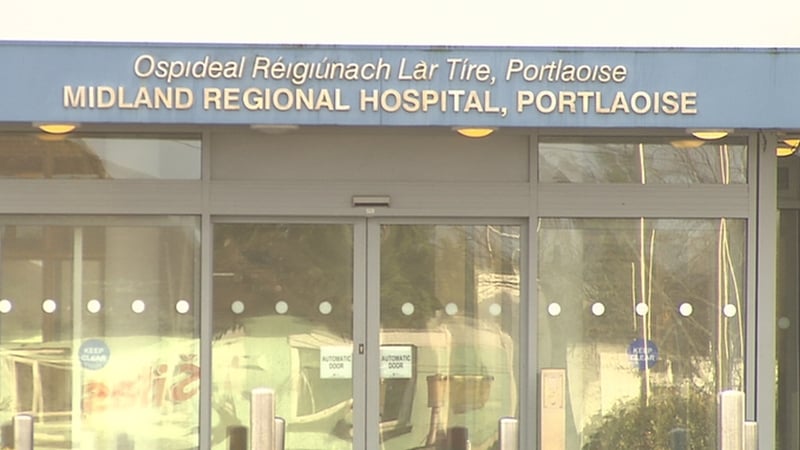
There are no provisions for investment in the emergency department at the Midland Regional Hospital in Portlaoise.
However, the new Health Service Executive strategy for the Dublin Midlands Hospital Group contains plans instead for an expansion of endoscopy services at Portlaoise.
The strategy has already been rejected by Co Laois-based Minister for Justice Charlie Flanagan and local protest groups.
It confirms that the HSE hospital group has held initial consultations with the major stakeholders and is in the process of developing proposals to highlight the strengths of a Tallaght Hospital and St James's Hospital partnership in seeking the major trauma centre designation and the strengths of the hub and spoke models between St James's Hospital, Midlands Regional Hospital, Tullamore and Tallaght Hospital for designation as major trauma units.
As expected, Portlaoise has been omitted from this network link.
The Portlaoise hospital has recently completed the development of a new medical assessment unit and day ward.
Once staffed, the HSE says this development will comprise a 20-bed day ward unit and a ten-bed medical assessment unit with expanded endoscopy capacity.
The new strategy includes provision for increased capacity for benign urology services in the Midland Regional Hospital, Portlaoise, Midland Regional Hospital, Tullamore, Naas General Hospital and Tallaght Hospital, but says this is contingent on the recruitment of additional consultants and nurses.
In collaboration with the National Endoscopy lead, the 2018/19 focus will be on recruiting staff for the Midland Regional Hospital, Portlaoise and meeting equipment requirements for St James's Hospital.
The strategy was launched by Dr Susan O'Reilly, who has now left her position as manager of the Dublin Midlands Hospital Group.
Ms O'Reilly confirmed late last year she was retiring from the HSE in 2018.
The executive summary of the strategy refers indirectly to the closure of emergency department services:
"Re-aligning how and where services are provided across our seven hospitals, such as high volume but low complexity services versus lower volume but higher complexity services, will ensure patient treatment is delivered in a more efficient, effective and collaborative way across the Group.
The consequence of addressing this issue is that some high complexity services may move from regional hospitals, in particular, emergency care services. However, these hospitals will benefit from the addition of new facilities and a broader scope of services of lesser complexity.
Developing the specialist capacity of regional hospitals within the Group such as in the areas of endoscopy, diabetes care, geriatrics or elective surgery will ensure that these hospitals remain vibrant and critical parts of their local healthcare network and improve access and reduce waiting lists across the Hospital Group"
