


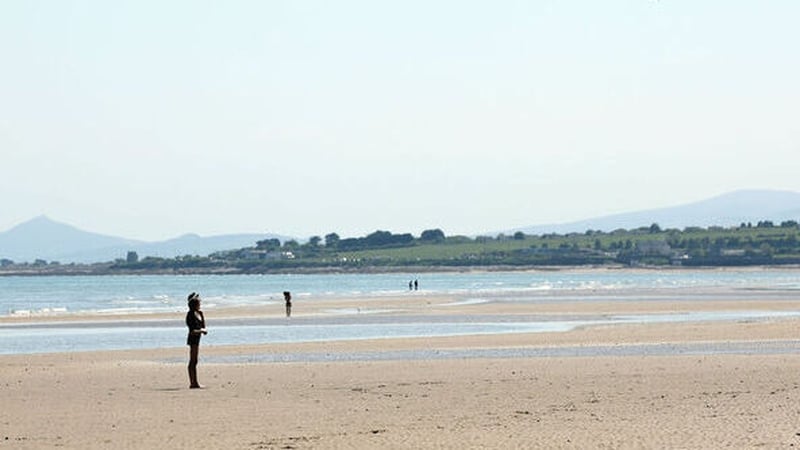
Met Éireann has forecast that temperatures could rise to as high as 31C after the Irish record for the month of May was broken three times in two days.
Eight counties remain under a Status Yellow heat warning until 6pm.
The record for the month of May in Ireland was broken at Shannon Airport yesterday, where the mercury hit 30.6C.
It followed another record earlier at the Oak Park weather station just outside Carlow town, with 29.7C recorded.
28.6C was recorded at Shannon Airport in Co Clare on Monday, breaking the previous May record of 28.4C, which was set at Ardfert in Co Kerry on 31 May 1997.
Met Éireann said that temperatures above 27C, along with night-time temperatures above 15C, were likely for Clare, Kerry, Limerick, Tipperary, Galway, Kilkenny, Laois and Offaly.
The warning is in effect until 6pm, when highest temperatures nationwide will range from 22C to 31C.
The forecaster said this could lead to heat stress, difficult sleeping conditions and water safety issues due to increased use of lakes and beaches.
Forest fires are also a possibility with the Department of Agriculture issuing an orange level advisory.
Speaking on RTÉ's Morning Ireland, Met Éireann meteorologist Gerry Murphy said today will be the last of the very hot weather.
"After today it will be back to a typical mix of Irish weather and not as warm," he said.
Mr Murphy said temperatures should drop to the high teens or low 20s by the bank holiday weekend which is more "typical of May weather".
It will still be very warm in the east and southeast tomorrow, he said, but the airflow will change gradually over the next 24 hours and will result in a drop in temperatures.
More: How to stay safe in the summer heat
He said tomorrow will be cloudier with some showers possible in the south and west, and while it will probably be dry generally on Friday, rain will move in on Saturday and Sunday and rain is also likely on Monday.

Mr Murphy added that it is hard to know why Ireland is experiencing such hot weather early in the year, but it is likely that it is the result of climate change.
"The likelihood of more increased intense heat events has been increasing, and is forecast to increase, which means that the possibility of weather events like this are more likely as we go forward, and this is typically one of them, and it is quite a significant one."
A so-called "heat dome" of warm air from northern Africa trapped under a high-pressure system over western Europe is behind the high temperatures not usually seen until high summer.
The RNLI has said that despite the hot weather, the water temperature is still "very, very cold" and warned people to be aware of cold-water shock when swimming.
RNLI Water Safety lead Linda-Gene Byrne said cold-water shock occurs when the water temperature is below 15 degrees Celsius.
Speaking on RTÉ's Morning Ireland, she said people should try to acclimatise slowly instead of jumping straight in.
"If you hit the water...if you jump straight into the water or if you accidentally fall in the water, you have a good chance of this affecting you.
"And what happens is you get that involuntary gasping kind of a panic and a loss of breathing control as your body gets a sudden shock of that cold water hitting it."
She explained that "what you need to do if you get this cold water shock is remain calm. You go onto your back in the water, you stay calm and fight any instinct you have to panic or thrash around."
Ms Byrne also said that if anyone spots someone in trouble in the water they should call the emergency services first, then try to shout out to the person to float on their back.
She added that if there is anything like a buoyancy aid, or long pole that might reach the person, that should be used, while staying safe on the beach or riverbank.
