


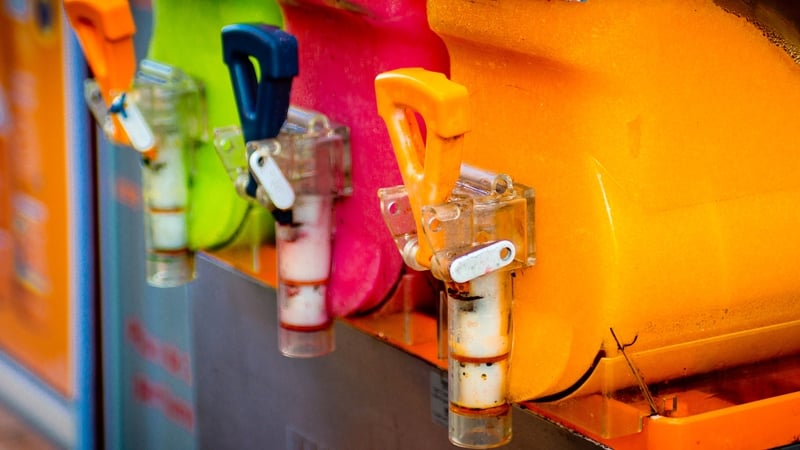
The Food Safety Authority of Ireland (FSAI) has said that children aged 10 and under should not consume slush ice drinks containing glycerol due to potential side effects.
The warning follows a new risk assessment published by the European Food Safety Authority (EFSA).
It said that children in that age category may experience headaches, nausea and vomiting, and on rare occasions it could potentially lead to severe symptoms such as shock, low blood sugar and loss of consciousness.
"Glycerol gives ice drinks a slushy effect and while it is generally not harmful, there are concerns about its effects on children aged 10 years and under when used at high levels in slush ice drinks," the FSAI said.
Glycerol is an EU-approved additive and is being used in food reformulation to lower the sugar content of drinks.
The FSAI has also updated its voluntary guidelines for the industry which require it to only use a safe quantity of glycerol when making slush ice drink concentrates.
"Manufacturers of prepackaged slush ice drinks and make-at-home syrup concentrates containing glycerol should carry a warning on the pack in keeping with the FSAI advice," the FSAI said.
It also said that retailers who sell unpackaged slush ice drinks containing glycerol should display permanent point-of-sale warnings stating that the product contains glycerol and is not recommended for children aged 10 and under.
FSAI Chief Executive Greg Dempsey said their advice to consumers is "always based on the most up-to-date scientific data available".
"The recent risk assessment by EFSA has led to us reassessing our advice and we are now advising that all children aged 10 and under should not be consuming these slush ice drinks that contain glycerol," he said.
He said the Department of Health's healthy eating guidelines "has placed slush ice drinks on the top shelf of the healthy eating food pyramid" which means they are not part of a healthy balanced diet.
Mr Dempsey said that for the rest of the population, slush drinks containing glycerol should be limited and only consumed in moderation as a treat.
"The FSAI previously raised this issue with the European Commission and other member states which has led to the current EFSA risk assessment," Mr Dempsey added.
