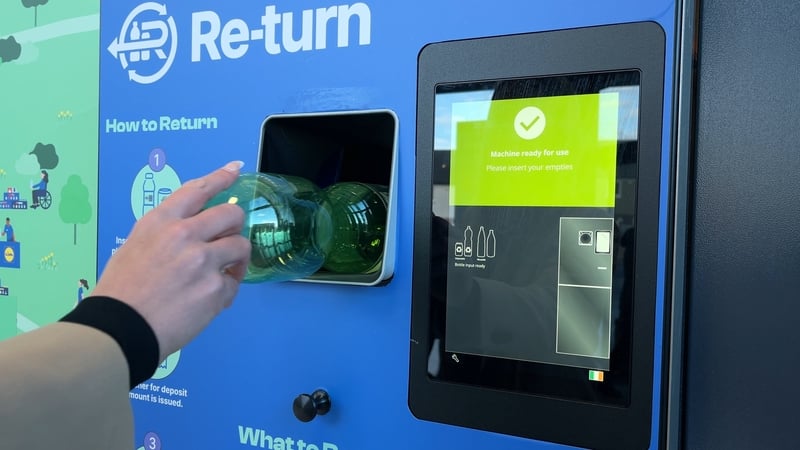
Medical experts have called for the introduction of infection-control measures in the Deposit Return Scheme (DRS), citing the risk of microbial growth and exposure to liquid residue on bottles and cans.
An emergency medicine consultant, a GP, and a public health expert warned that residues from alcohol and sugary drinks can support microbial growth, as well as attracting flies and rodents.
Writing in the latest issue of the Irish Medical Journal, they said issues relating to hygiene and infection control must be considered in parallel with the environmental performance of the scheme.
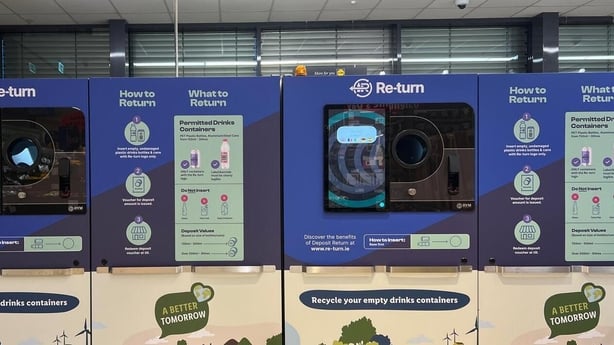
The authors said exposure pathways for retail staff, logistics staff and maintenance personnel who interact with reverse vending machines (RVMs) had to be considered and noted that no protocol regarding infection control had been published.
They called for relevant agencies, including Re-turn and the Health Service Executive, to jointly develop and publish evidence-based guidance on hygiene, safety and environmental health considerations around the DRS.
"Integrating practical infection-prevention measures alongside environmental objectives will help ensure that Ireland's DRS continues to operate successfully, safely, and with strong public confidence, minimising harm for all involved in the process," they wrote.
The warning came from Dr Mick Molloy, a consultant in emergency medicine at Wexford General Hospital; Nandakumar Ravichandran, a public health expert in the School of Medicine at University College Dublin; and Dr Walter Cullen, a GP and professor at the same university.
They noted that the DRS had resulted in strong environmental success since its introduction in February 2024, with increases in recycling rates for plastic bottles and aluminium and steel cans.
However, it was also important to consider the public health dimensions of the scheme, they added.
They said residual liquids in returned containers can support microbial growth, particularly at ambient temperature.
Risks associated with this phenomenon could be reduced by issuing simple public guidance encouraging consumers to empty and, where feasible, rinse containers prior to return, they said.
They noted that the Irish Waste Management Association had previously highlighted the risk of such residue attracting flies and rodents, they continued, especially in proximity to food storage areas.
However, they noted that containers are mostly processed through structured collection infrastructure in the DRS, rather than being stored for long periods in retail backrooms.
A spokesperson for Re-turn said in a statement that the company "is not aware of any recorded cases of illness arising from the operation of the DRS".
"Re-turn also issues regular guidance to retailers and operators, including seasonal advice during warmer periods to help manage issues such as residue, odours and insects," the spokesperson said.
They added: "We take all matters relating to public health, safety and environmental performance seriously and remain open to engaging constructively with medical, public health and environmental experts, as well as relevant agencies, on any evidence-based guidance that could further strengthen public confidence in the scheme."
Re-turn decides against increase retailer handling fee
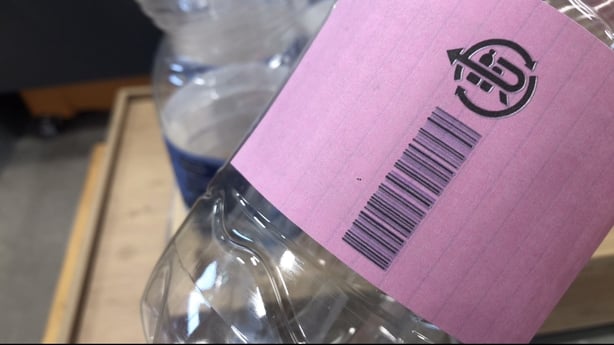
Re-turn has decided against increasing the 2.2 cent handling fee paid to retailers for each container returned through their stores despite complaints from shop owners that the DRS is costing them money.
The company had told retailers that it would review the handling fee in 2024 and reiterated this commitment at a Re-turn retailers forum last November.
However, Re-turn has opted against increasing the handling fee after commissioning an independent review by a specialist consultancy firm, the findings of which were validated by EY.
The company told retailers in correspondence obtained under freedom of information that the review had been commissioned "as part of our commitment to transparency and continuous improvement".
Re-turn, which recorded a pre-tax surplus of €51.3 million in 2024, reminded shop owners that the handling fee was operated on a not-for-profit basis and was intended to cover operational costs rather than generate commercial gain.
It concluded that the 2.2c fee for automated returns and 2.6c fee for manual returns would remain unchanged.
However, a targeted support of €2,000 per site would be introduced for retailers handling between 250,000 and 500,000 containers per year.
A spokesperson for Re-turn said the review "found that the current structure fairly supports cost recovery for retailers, while identifying a specific cohort requiring additional support".
They added: "A review mechanism is also being established for retailers who believe the proposal does not adequately reflect their individual circumstances."
The decision has been criticised by Aontú leader Peadar Tóibín, who said the scheme had proven a hardship for retailers and Re-turn should use some of its considerable resources to ensure that they break even.
"Re-turn is sitting on a cash pile of millions in unclaimed deposits, while the shop or supermarket is out of pocket. Recent figures show they banked €66.7m of consumers’ deposits in one year," he said.
"This scheme has been a drudge for consumers, but it has also been a hardship for retailers, constantly dealing with broken machines and needing manpower to monitor it. It’s an expense and a staff commitment," Mr Tóibín said.
He added: "Small retailers have found it particularly tough. They’re doing their best to get on with it in the absence of any other option. They’ve realised 2.2c per container is not enough.
"If Re-turn did not have the money to raise this small handling fee, that would be different. But they do have it, and, certainly as a not-for-profit company, they should increase the retailers’ fee."
Records released under the Freedom of Information Act show that Alan Dillon, the minister with responsibility for the DRS, was contacted about the handling fee by a group of small retailers last year.
They had been assured that the scheme would be cost neutral when it was introduced but claimed that the experience of the vast majority of shops was that it was costing them money.