
"Coming here was like a dream for me. I thought 'Oh my God I can't wait to survive the genocide, to have a new start'. But when I arrived, I saw it was not that easy."
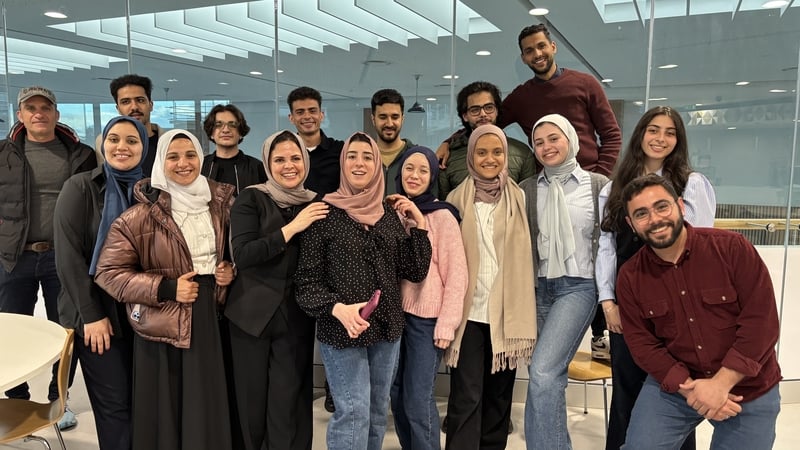
On Friday at Maynooth University, 21 young students who came to Ireland last year from Gaza were taking stock, looking back on their first year here and looking ahead too.
Niven Loubbad, quoted above, was among them.
They had just finished a day long 'bootcamp' at the university, where invited experts gave them advice on seeking employment in Ireland, how to navigate the immigration system and how to begin the search for accommodation.
Most of these students got out of Gaza in late August of last year, in an evacuation supported by the Department of Foreign Affairs.
Niven arrived earlier, in April 2025, as part of a similar operation.
Now these young people are all about to complete their one-year masters programmes. In August they will hand in their theses, and their stipends, and their university accommodation will come to an end.
These students have been through a lot, but now another daunting phase lies ahead.
"I'm thinking about a lot of things, my family back home, finding accommodation, finishing my thesis. Starting from scratch here in the Irish [jobs] market is a bit scary and overwhelming" said Niven, who is finishing a Masters in Applied Intercultural Communication at Trinity College.
She has a business and economics background, and in Gaza worked as part of the emergency response humanitarian programme.
Hamza Ibrahim is completing a master's in journalism at University of Limerick. "I have two challenges now," he said, "to focus on my future and to worry about my family".
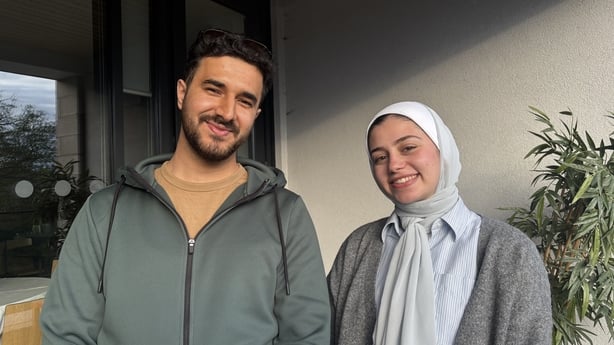
Hamza feels positive about his future. "Everything I have gone through I will transfer this to make it power for me, to have courage, to write, to speak," he said.
Adding: "I chose journalism because I have a goal. I want to tell the story of the people of my homeland."
Fear for their families
All of the students who spoke to RTÉ News on Friday feel the same burden of responsibility for their families back in Gaza.
Just an hour before I spoke to Niven she was frantic with worry.
There was an airstrike on the street where her family lives and she could not get through to them. Israel said the strike was targeting a Hamas commander.
In the end Niven managed to contact her brother, a doctor at Al-Shifa hospital in Gaza City, and he reassured her that the family was all right.
At least seven people were killed in that blast.
"Sometimes you lose contact with them and you feel insane," Niven said.
The students are in frequent contact with their families in Gaza, but it is hard. The internet connection is not good. There are frequent drop outs, and there are other barriers too.
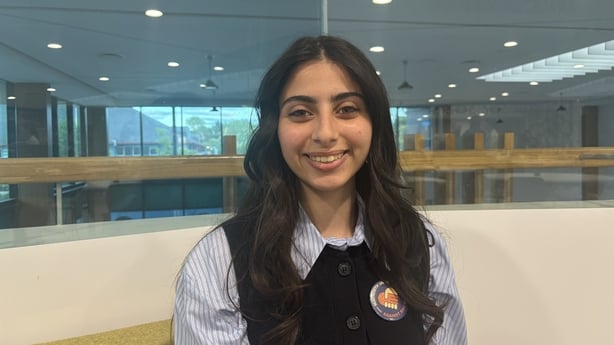
Lujayn Anan's family have returned to their apartment in Gaza City after being displaced.
Miraculously, she says, they found their apartment was "ok", despite all others in the same building being badly damaged by bombs. Her family have recently managed to restore electricity.
But Lujayn feels that she does not know how they really are.
"I feel like I never know the truth about them because you know, your family keeps hiding things. I know that they are not ok, and I know that they are lying to me," she said.
On video calls over bad internet connections Abdallah Aljazzar feels the same sense of disconnect; his family too, displaced and living in a tent in a camp, are reluctant to share their reality fully with him.
"Sometimes I ask them ‘how's it going in terms of politics? Is there some news?' They answer. 'Ask about your brother, ask about your mom'. Don't ask about the genocide," he said.
He added: "Every time I talk with them though, I see that they are losing weight while I am gaining weight".
All of the students are carrying traumatic burdens.
It is two years now since Nour, one of Abdallah's younger brothers, went missing during the bombardment of Rafah. The family does not know whether Nour is dead, or alive in an Israeli prison.
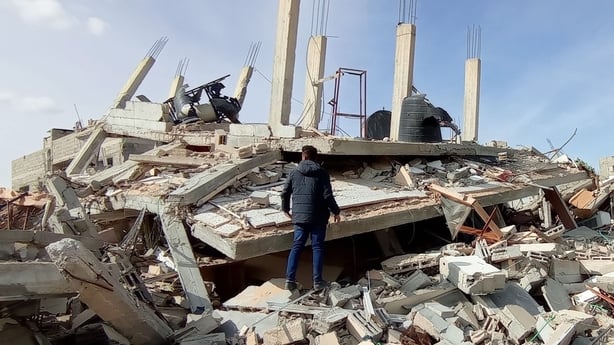
Some Palestinians released from Israeli captivity claimed to have seen him, Abdallah says, based on photos the family shared, but those reports have been sketchy.
Abdallah wrote about his brother in a moving article published in the Irish Times last October.
"At night I dream that my brother Nour is looking for me. I'm in Ireland, Habibi, I say back to him. Everything is green and lovely," he wrote.
A sense of disconnect pervades Abdallah's life in Ireland.
"My life here feels like a movie. It does not feel real," he said on Friday.
Describing that movie's plot he said, "you have a brother missing, you don’t know if he is alive or dead".
"You come here from a tent, where for two years all you did was just carry water back and forth. I would spend four hours each day getting water. Now here I just open the tap. It’s like a movie," he said.
Abdallah was one of the organisers of Friday's bootcamp, which also ran into yesterday morning.
Completing a master's in English literature at Maynooth University, and hopeful to secure employment in project management or youth development, Abdallah worked with Maynooth's Equality office to develop the event.
He said the bootcamp sprang from one idea: "I don't know what I don't know", the feeling that all of these students know so little about Irish life beyond the campuses that have given them sanctuary for the past nine months.
Like the other students, Abdallah feels driven. "I have to maintain the maximum effort," he said.
"I’m nervous [about the future], but there is a plan in my head, I’m not relying on anyone. I don't want to seek funds or anything. I just want to be the version of myself that I create."
Ireland is 'green and lovely'
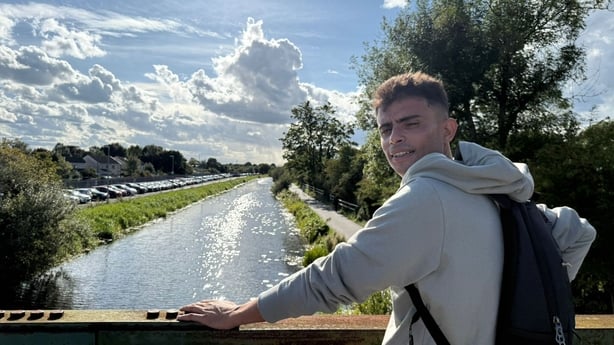
Watching the trees and hedgerows this month burst into bloom once again, Abdallah says his first impression of Ireland still holds. It is indeed "green and lovely".
Ireland took in around 100 students from Gaza last year, more than any other. Irish universities, with the backing of private donors from as far afield as the US, supported them here. These students are grateful.
"Coming from a place with no food, no water, no nothing, I feel I was born again in Limerick," Hamza said, adding "I feel Ireland is like home".
"I feel like we are so lucky to be in Ireland. I have been in other countries recently and I felt like I was just waiting to go back to Ireland because I have started to feel like I am belonging to this place," Niven added.
Although Ireland for her is still not 'home', nowhere is.
"I feel I have lost 'home' forever. Even if I go back to Gaza, there is no home, my university is gone, my school is gone," she said.
The students who gathered on Friday and Saturday in Maynooth all have backgrounds in humanities. Others who came have studied STEM subjects.
For them, the transition to the world of work should be more straightforward.
Some too are completing longer undergraduate courses, so their campus life will continue for some time yet.
Twenty-two-year-old Lujayn will finish her master's in creative writing at UL in August, one year after she first arrived. She did not want to leave Gaza.
She said: "I refused to go but [my parents] insisted. I was working and I didn't want to leave them, but when they insisted I felt 'maybe I have a responsibility now'."
Describing the journey and her arrival, she said: "I was empty, I was frozen. I felt in that time that I am not a soul, I am just a physical body, with no emotions. I felt like something had been cut suddenly, like a piece of string cut. It was really hard at the beginning".
But Lujayn has found strength from the hospitality of Irish people.
"People here, they are not ignorant about what is happening. They know. This makes me feel close to them. They read. They listen to the news. They've really shown nice solidarity with us. I don't feel like I'm a stranger," she said.
"The future is always scary, but I am somehow hopeful", she said.
"I'm trying not to panic, because I feel whoever made me escape a genocide can make me live."