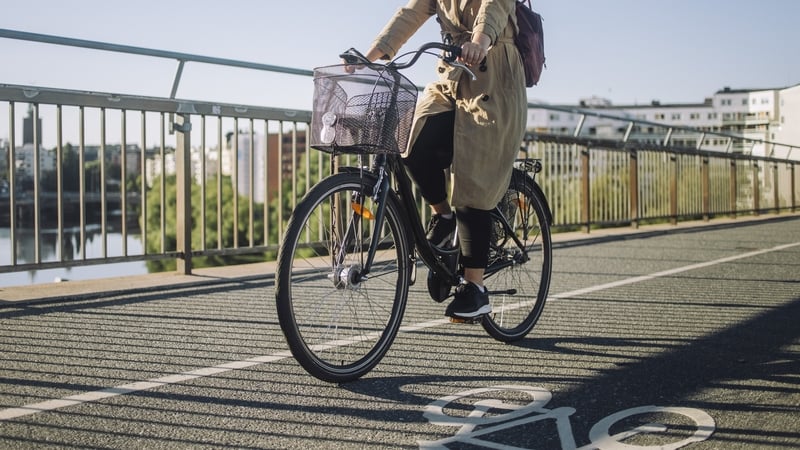

Women in Ireland are far less likely to cycle than men because of unsafe roads, aggressive driver behaviour and family responsibilities, according to a survey of 1,000 women for Transport Infrastructure Ireland (TII).
Three percent of all trips by men in Ireland are done by bike, but for women the modal share for cycling is just 1.3%.
The gender gap for secondary school students is even more stark, with 3.8% of boys cycling to school compared with 0.4% for girls.
The report notes that there is far less of a gender gap in countries with established cycling cultures, such as the Netherlands, where women are more than 20 times more likely to cycle than women in Ireland and have parity with Dutch men.
The survey heard from 1,047 women from the ages of 18 to 80 living in urban, suburban and rural areas.
Fifty-five percent said they can cycle and have access to a bike.
The report says the fact that women are more likely to have family responsibilities can be a barrier to cycling, as the "chain trips" - where they have to continue on to work, shopping or other destinations after going to one destination, such as dropping children to school -s combined with Ireland's urban sprawl and car dependent culture can push them into driving.
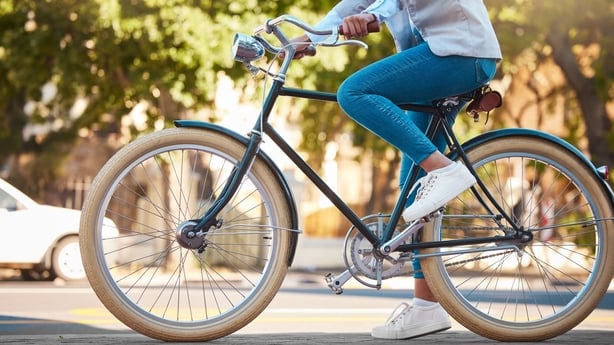
More than half of the women who responded - 54% - said safer roads would encourage them to cycle more, while 49% said unsafe roads are a barrier to cycling.
One woman living in an urban area told researchers: "Cycling, even this area, is just not safe. We have lanes that are supposed to be for cyclists and instead people park their car there."
Poor lighting on routes is also a barrier to women cycling after dark, with 27% saying they would cycle if there were more well-lit routes.
One woman living in a rural area told the survey: "There is no light and it's pitch black so it's scary and you worry for your safety. No woman is going to go down a pitch dark road with no cycle lane. It's just not going to happen. A man might do it, yes, but a woman, she's not going to do it."
Aggressive behaviour by drivers and harrassment are other barriers reported. One woman based in a suburban area said she does not believe the majority of Irish drivers know what it is like to be a cyclist in Ireland.
"I believe if they cycled Irish roads for even just a week they would understand cyclists much more," she said.
Harassment is another problem.
"Sometimes I just get unpleasant interactions with groups of men or groups of teenage boys that'll yell something at me as I'm going past," said one woman living in an urban area
"I once had some teenage lads try and step in front of me while I was cycling, and made to grab my bike, and I just had to yell at them and go round them."
Some women reported that they felt safer travelling by bike than walking, with one saying: "If I'm out and I'm passing a bunch of young lads and they're menacing or fooling or whatever, I find if I'm walking, it takes a while to get past them, but if I'm cycling, I'm past them fairly quickly. So, it kind of increases the safety in those situations."
Thirty-two percent of respondents said they are not confident or able to cycle, but almost half of that group - 47% - said they would like to improve their cycling skills. Around 66% of the women cycle regularly and two thirds of that group agreed that keeping "fit and healthy" was a motivation, while enjoyment was a motivation for 61%.
One workshop participant, Ailish, who lives in a city suburb with her husband and two primary school age children, said: "Once I've cycled, I don't feel like I have to go and do exercise in the afternoon because I feel like I've done it, I've killed two birds with one stone. And that takes a lot of time out of your day that, you don't have to go exercise for an extra hour."
However, she said she does not cycle as much as she could because while her commute is partly on a cycle lane, she has to use a relatively busy road when the lane ends.
The benefits for mental health was also mentioned. Another woman living in a suburban location said the impact cycling has on her mental health was "huge".
"I haven't been cycling for a little bit since I left the position I was at, and I can already tell that my mental health is affected," she said.
"Just being out and being on the bike really just makes me happy, honestly, there's no other way of saying it. It does me good."
Cost was another benefit mentioned, with one woman who lives in an urban area saying it is a money-saving measure for her family.
"We don't need two cars because of it [cycling]," she said.
Time saving was also reported, with a woman who lives in a suburb saying: "Not to be smug about it, but it is lovely when there's a massive traffic jam and you're just whizzing past it in the cycle lane."
The report recommends the needs of women be taken into account when planning cycling infrastructure. It says this would also benefit young cyclists, as they are often accompanied by woman, who are conscious of their needs. It says the lack of female representation in planning and decision making on cycling services and infrastructiure was a concern to those who took part in the survey.
It also calls for measures to address road safety and aggressive driver behaviour, as these are persistant concerns which affect women's propensity to cycle.
The research also point to the prevailing image of cycling, which is seen as a male pursuit, and calls for a shift in societal norms towards visible and positive images of women who cycle every day.