Three-hundred-and-forty-four Irish peacekeepers are preparing for their deployment to Lebanon with UNIFIL next month, which will be the final mission in this form.
As UNIFIL’s mandate in Lebanon is to be drawn down next year, and while it is hoped that Irish peacekeepers will continue to work in the region, how that may look is not yet clear.
Future deployments are unlikely to be at the same scale as previous ones, meaning the 128th Infantry Battalion marks the end of an era spanning almost 50 years.
In Geneva, the UN’s peacekeeping chief Jean-Pierre Lacroix said that he was consulting with all parties about what is possible once the mandate ends.
Meanwhile, members of the Defence Forces have been taking part in the final phases of preparation for next month's UNIFIL mission.
In the Glen of Imaal, Co Wicklow, personnel undertook what is known as the Mission Readiness Exercise, where they are put through different scenarios designed to replicate those they may face in Lebanon.
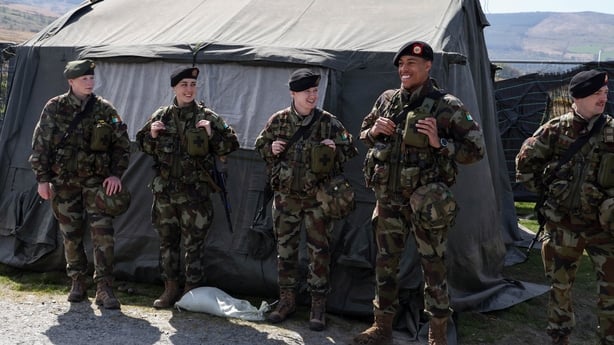
The scenarios included live firing, casualty evacuations, ambushes and patrolling among other exercises.
Those taking part in the mission are aware that they are arriving in a country where tensions have heightened, following Israel's ground invasion.
Peacekeepers have found themselves in the firing line on a number of occasions, while five have been killed this year - three from Indonesia and two from France.
Corporal Neil Walsh, who has previously served with the 121st Infantry Battalion, said that this time will be "a bit different". However, he added that the training has been geared towards the heightened situation.
Corporal Walsh, who is from Ballybrack in Dublin and now lives in Galway with his family, said that they are "a bit nervous" about him going to Lebanon, but are supportive.
"I’ve been out before, so they're used to the rotation of it and they know what to expect. It’s not like 40 or 50 years ago - [now] you have a phone and you can see their faces," he said.
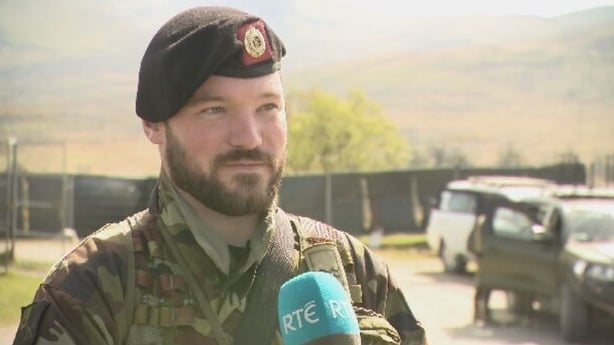
"I joined the army because it gives me a sense of pride, my uncle and my grandfather were in the army, so it is family legacy."
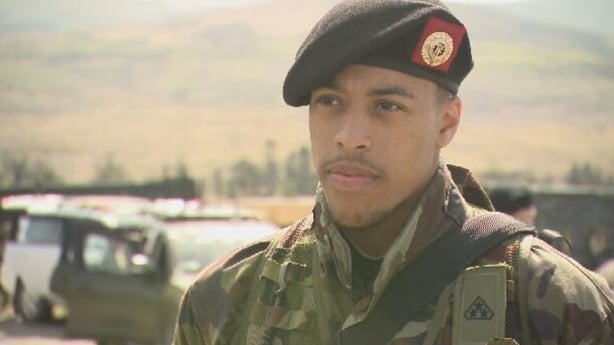
Private Michael Junior Chucks, 20, is from Togher, Cork, and has been in the Defence Forces for a year and six months. He said he was drawn to the career because he is interested in fitness.
"My parents are very nervous" he said, but added that his sisters "don’t really care" while his younger brother is nervous but has also made enquiries about his PlayStation 5 should something happen to him.
Private Chucks said he is confident ahead of his deployment, and believes the biggest challenge he will face is homesickness.
26-year-old Captain Bláthnaid de Gaillí joined the Defence Forces in 2018, and this will be her first deployment with UNIFIL.
"I’m very excited about it, this is what we train for and it’s the pinnacle of our career," she said.
"Obviously it’s an extremely kinetic environment and a volatile situation, but I’m looking forward to putting this training into practice as a group.
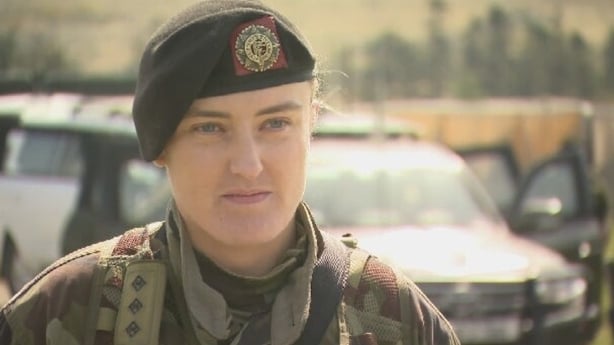
"My family are very nervous, but at the same time they are proud, they know that this is something that I want to do and have been looking to do since I joined the army."
Speaking to the media, Lieutenant Colonel Damian Carroll was under no illusion about what they are facing.
"The situation on the ground at the moment, absolutely, it is volatile," he said.
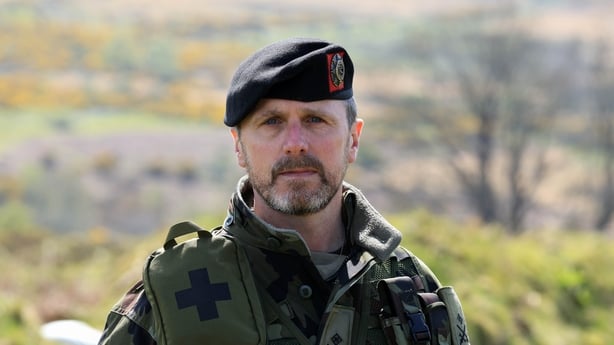
"The UNIFIL mission remains on post and on task, it’s fulfilling that mandate as best as possible.
"A key component of the mandate is to be the eyes and ears for the international community, to be that witness to history."
For those being deployed, getting there may be the first challenge. Israel has destroyed eight bridges that are key for access between Beirut and the southern half of the country.
Lt Col Carroll said "all courses of action" are being looked at, and that there has been a number of positive signs of late that they will be able to access the area via the airport in Beirut.
If that is not a possibility, they may travel by sea. Regardless, he said they are ready to deploy "in whatever manner".