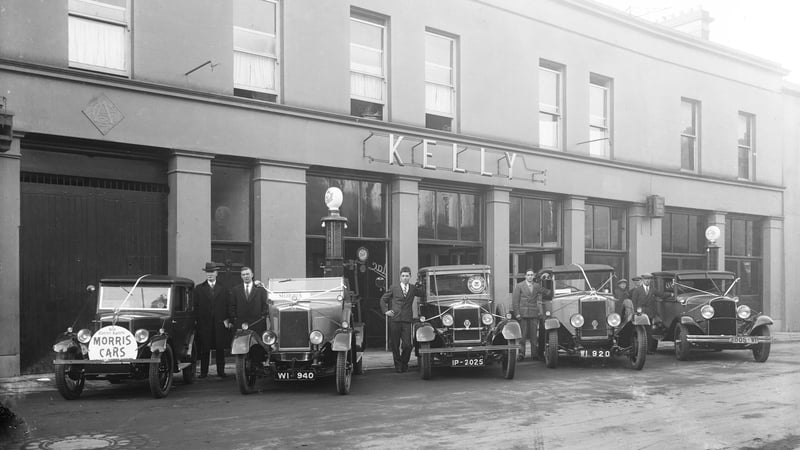

The 1926 Census returns have been released online in a landmark initiative that gives the public an insight into the lives of people living in Ireland 100 years ago.
The National Archives said there were four million hits in the first 12 hours since it went live at midnight.
Taken on 18 April 1926, the census was the first conducted after the establishment of the Irish Free State and provides the earliest comprehensive snapshot of an independent nation emerging from a period of profound upheaval.
It captures a country still shaped by the legacy of World War I, the War of Independence and Civil War, as well as by long-standing patterns of emigration and rural life. It shows Ireland at a formative stage, economically, socially and politically.
Unlike the earlier censuses conducted under British administration, Census 1926 was undertaken by institutions of the new State.
The National Archives has now made the entire census, comprising over 700,000 individual household returns, freely available and fully searchable online.
It will be accessible to genealogists, historians, and the public in Ireland and around the world on the National Archives website.
The National Archives of Ireland will also open a major exhibition that explores what life was like in the newly independent Ireland of 1926.
Using contemporary documents and images, audio-visual displays and, above all, the census returns themselves, 'The Story of Us' explores the 1926 census to present a picture of life in Ireland in 1926: from sport and entertainment to language, culture, religion, gender and the working lives of the inhabitants of the Irish Free State a century ago.
The National Archives of Ireland has also announced 48 'Centenarian Ambassadors' ahead of the historic release the 1926 Census.
The ambassadors have been chosen from almost 100 people who were alive at the time the census was taken in 1926 and who contacted the National Archives.
The selected ambassadors were born between 1920 and 1926, and today live all over Ireland, from Donegal to Waterford, and from Dublin to Galway.
There are also Centenarian Ambassadors representing the Irish diaspora living today in the US, Canada, Britain and Australia.
The programme has captured the first-hand personal testimony of each of the Ambassadors, which offers a unique, living perspective on the past century of Irish life.
These testimonies will be held by the National Archives as a permanent link to the past.
Ambassador video and photo stories will also be used in association with Census 1926 activities around the country, while each Ambassador has also been presented with a specially-designed commemorative mug and certificate.
We need your consent to load this rte-player contentWe use rte-player to manage extra content that can set cookies on your device and collect data about your activity. Please review their details and accept them to load the content.Manage Preferences